Drinking the Koolaide... 😊

  • Please note, the forum recently had a problem with outbound emails for notifications, registrations, etc. A new email provider has been set up which should resolve all email issues. If you have any further trouble, please DM Christo or reach out via the Contact Us link in the website footer.
Question....

With the water tank located above the propane bottle, has anyone removed both the propane bottle and generator, then opened-up the rear "dinette" bases to create a storage tunnel from side to side? You would want to close-up the vent slots and perhaps install a bulb gasket in the frame on both hatches (maybe build some type of floor if there isn't already something in those areas). That should provide quite a bit of easily accessed rear storage under a permanent double/RV queen bed. Just spit-balling....
 
Greetings! I'm probably going to purchase (did purchase!) a 1973 26' from a co-worker (test-drive and visual inspection happening Sunday). If all goes well, it's mine! (It's mine.... 😁) I've been looking into these vehicles for a few years, but this is the first time I've had one close to me at a reasonable price in usable condition. Granted, even a "usable" GMC Motorhome will need much TLC and work to make it truly reliable and highway-safe, but I've set aside funds for immediate repairs.

If anyone knows the history, it's the blue "Mr. T on a Unicorn under a Rainbow" vehicle. I have another co-worker familiar with the Olds 455 engine (former hot-rodder), so I may have a local support "group" (the previous owner once-removed of this vehicle has two others; his wife told him to lose one...). My co-worker had it for only 6 months, planning to turn it into an Air BnB (never going to drive it). His plans changed.
View attachment 7980
I'm told it's already "dry" (no leaks), so once it is verified to be highway-safe, planned upgrades are:
  • Astro/Safari steering column with wiper-delay, washer, and headlight dimmer on the "stalk" (new wiper motor and electronic cruise control)
    • Update: Electric wiper-motor modification was already installed!
    • Update: New "Lumina" wiper arms and nozzles installed, both sold by Dorman, plus new reservoir/pump
  • "GMC Supreme II" dashboard replacement
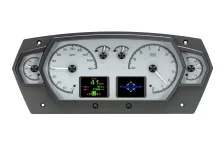
  • Dakota Digital instrument cluster w/EVIC
  • EFI that integrates into the Dakota instrument cluster
  • Vintage Air Gen IV HVAC with Dakota Digital temperature controls
  • MicroLevel rear suspension controls/auto-leveling
  • Android-based entertainment system in the dash, with heads-up navigation screen, etc.
Down the road, I intend to move to a lithium-based electrical system using a second alternator supplemented by solar panels (I've been using solar and lithium for my camping setup for some years; refrigerator, freezer, ice-maker, microwave oven, ceiling fans... in a tent...).

UPDATE!
  • 900W BougeRV Yuma CIGS (thin-film amorphous) and 165W flexible mono solar panels installed (1065W total)
  • 560AH lithium battery installed
  • 4KW Pure Sine Inverter installed
    • Rooftop heat-pump running from batteries!
Once that is accomplished:
  • Lose the old "roof-shakers" and install a quiet induction heat-pump
    • UPDATE! Installed; running from batteries!
  • Induction "hot plate" (700W is perfectly adequate for "medium" heat)
  • Combination air-fryer/convection/microwave oven
    • UPDATE! Installed; running from batteries!
In a perfect world, I'd love to get my hands on bumper covers and the "full" sliding front driver/passenger windows. Basically, this vehicle looks "futuristic" and I want to get the systems to match.

January 2024 UPDATE! Applied is now taking pre-orders for a production-run of the side-windows in 2024. I have placed my order. 😁

Probably re-paint (dove gray top, charcoal bottom) and new art....
View attachment 10286View attachment 10290View attachment 17145
(AI assisted image creation)

This has been a long-winded introduction, but... Hello from the Pacific Northwest!
Watch the Jim Bounds motorhome rehab ranch series on YouTube.
 
Okay, time to get serious about EFI.

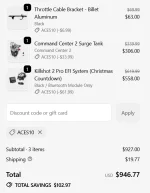
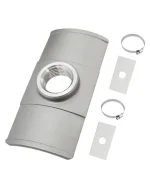
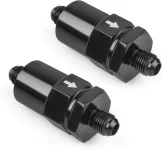
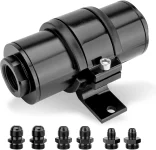
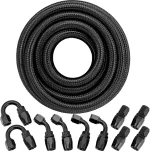
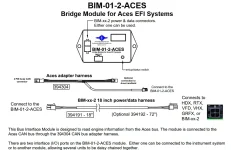
Here are images of a system I have put together along with accessories from Amazon to complete it.

Am I missing anything?

ACES.webp
1768935093363.webp1770748854726.webp1770748817847.webp
1770749061638.webp1770748950295.webp1770748895934.webp1771444821149.webp 1770749119470.webp
I'll use a temporary clamp-on O2 bung until I next go in for service work on a hoist, then I'll have a permanent bung welded into place. The 6AN fuel-line and connectors plus filters are a match for the Aces kit ($46 vs. $136).
 
Last edited:
Eventually, I want to connect this to a new instrument cluster from Dakota Digital.
1771444512702.webp
1771444550898.webp

After initial setup, the LCD windows can display monitoring information normally seen on the EFI programming screen.
 
Last edited:
For the return line, I used a copper pipe saddle tap (the thing designed to tap into a copper water pipe with a small hose to go to your water dispenser on your fridge). The saddle tap bracket provides a study mount for the hose connection. I then found a right-angle NPT to 5/16" brass hose connector that matched the saddle tap bracket.

Using a liberal amount of grease to catch the metal filings, I made a hole in the front fuel filler tube and tapped it to match the brass fitting. I threaded the brass fitting into the bracket a couple of turns then coated the hole and the inside of the bracket at the fitting with JB-Weld (cleaning everything well first of course). Then lined up the bracket with the fitting and the hole in the filler tube and tightened the bracket in place. I then tightened the fitting further into the bracket and into the filler tube. Then added some more JB-weld for good measure.

That connection has been there for 15+ years with no leaks. I did change the return line hose for good measure several years ago due to the heat in the engine compartment.

One thing to be aware of , most of the returned fuel will end up in the rear (Main) tank. So if you are running on the front (Aux) tank and below 1/2, you will notice the gauge dropping faster than you expect. Flip back to the Main tank and you will find it now has more fuel in it. Once I hit below 1/2, I'm usually switching periodically between tanks chasing the fuel movement.
 
For the return line, I used a copper pipe saddle tap (the thing designed to tap into a copper water pipe with a small hose to go to your water dispenser on your fridge). The saddle tap bracket provides a study mount for the hose connection. I then found a right-angle NPT to 5/16" brass hose connector that matched the saddle tap bracket.

Using a liberal amount of grease to catch the metal filings, I made a hole in the front fuel filler tube and tapped it to match the brass fitting. I threaded the brass fitting into the bracket a couple of turns then coated the hole and the inside of the bracket at the fitting with JB-Weld (cleaning everything well first of course). Then lined up the bracket with the fitting and the hole in the filler tube and tightened the bracket in place. I then tightened the fitting further into the bracket and into the filler tube. Then added some more JB-weld for good measure.

That connection has been there for 15+ years with no leaks. I did change the return line hose for good measure several years ago due to the heat in the engine compartment.

One thing to be aware of , most of the returned fuel will end up in the rear (Main) tank. So if you are running on the front (Aux) tank and below 1/2, you will notice the gauge dropping faster than you expect. Flip back to the Main tank and you will find it now has more fuel in it. Once I hit below 1/2, I'm usually switching periodically between tanks chasing the fuel movement.
Thank you. The tank issue was pointed out to me as an argument to run the line back to the tank instead. However, I want to keep the installation simple and contained to up-front. I do as you indicated; regularly swap between tanks once I get below half-full. So, I shouldn't ever have the problem. :)
 
Started EFI installation on Saturday the 14th. Got a lot of the support systems mounted/installed:
  • Surge tank mounted and plumbed
  • Fuel return fitting installed and plumbed
  • O2 and coolant sensors installed and wired to harness
As expected, I ran out of time this weekend. So I'm still using the carburetor, but the fuel is going through the unpressurized lines of the surge tank (the unpowered pressurized line is plugged for now, but the hose is installed). The fuel return hose is routed to the carb inlet.

I still have to connect the power for the ECU and pump (built into the surge tank). I also have to get a signal from the ignition coil.

So...
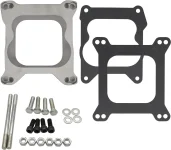
Power, timing, and the carb/throttle-body swap to finish (I already tested the throttle cable routing with good results). Remove the "jumper" fuel line connecting the carb to the return hose (AN6 couplers) and install the fine and course fuel filters before the TB and before the surge tank.

For backup, I will have a carb w/fuel line adapter/extension pre-installed for AN6 fittings (fast swap). Just remove the TB & adapter plate, unscrew the fuel return line from the fill tube (cap that fitting), cap the high-pressure fuel line, pull the main ECU/pump fuses, and the carb will be ready if needed.

Hope to finish next weekend.
 
Last edited:
  • Like
Reactions: RvRev2
Finished the EFI installation! It just works! No problems with the Aces KillShot 2 system and the Command Center high-pressure surge tank. Set up using the Wizard before starting the engine, then started right up.

The system is capable of 100pph. I recall reading the recommended flow-rate for the 455 is around 80-90? I set the Aces for 90 for now.

The system is capable of ESC, but for now I am using the existing distributor (already replaced with a no-points unit).

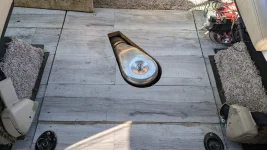
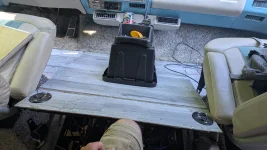
The pump is mounted to the step riser and is transmitting a bit of vibration noise into the cabin; looking at rubber isolation mounts. I just have to get used to the injector noise.....:ROFLMAO: Perhaps new carpet and pad at some point....
 
Last edited:
  • Like
Reactions: Kendra
Finished the EFI installation! It just works! No problems with the Aces KillShot 2 system and the Command Center high]pressure surge tank. Set up using the Wizard before starting the engine, then started right up.

The system is capable of 100 lb/hr. I recall reading the recommended pressure for the 455 is around 80-90 lbs? I set the Aces for 90 for now.

The system is capable of ESC, but for now I am using the existing distributor (already replaces with a no-points unit).

The pump is mounted to the step riser and is transmitting a bit of vibration noise into the cabin; looking at rubber isolation mounts. I just have to get used to the injector noise.....:ROFLMAO: Perhaps new carpet and pad at some point....
I had tons of injector noise under this aluminum plenum, even with the upside down mini tote sealing it off (temporary).
Injectors were the loudest thing.

PXL_20240826_002708800.webpPXL_20250703_184651272.MP.webp

Hatch and flooring were super heavy, and still loud. I went with fresh 1/2" plywood, boxed in the plenum, added butyl sound deadener underneath, foam deadener pad on top, then cheap peel and stick carpet tiles for now. Eventually I'll do a marine carpet under the seats and everything. No final pics, but the difference was astonishing. I'm still thinking about a different air intake plenum though.
PXL_20250725_213008783.MP.webp
 
  • Like
Reactions: Tybalt39
I recall reading the recommended pressure for the 455 is around 80-90 lbs? I set the Aces for 90 for now.
....

The fuel supply pressure? Or the flow rate? 90 psi seems very high for a TBI system but it depends on the injectors. What injectors does the Aces system use?
 
The fuel supply pressure? Or the flow rate? 90 psi seems very high for a TBI system but it depends on the injectors. What injectors does the Aces system use?
Flow rate (I corrected the term above). The pressure from the surge tank ("Command Center 2") is fixed at 58psi.

They appear to be proprietary; they inject in a vortex around the entire circumference of each barrel. But what do I know.... :LOL:

I ran across a post from Bruce from 2024 indicating 80pph is preferred, so I will try that instead of 90.
 
Last edited:
I had tons of injector noise under this aluminum plenum, even with the upside down mini tote sealing it off (temporary).
Injectors were the loudest thing.

View attachment 17845View attachment 17846

Hatch and flooring were super heavy, and still loud. I went with fresh 1/2" plywood, boxed in the plenum, added butyl sound deadener underneath, foam deadener pad on top, then cheap peel and stick carpet tiles for now. Eventually I'll do a marine carpet under the seats and everything. No final pics, but the difference was astonishing. I'm still thinking about a different air intake plenum though.
View attachment 17844
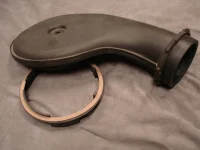
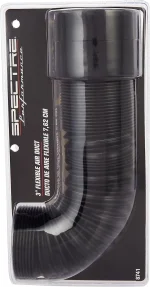
Looks like you used the Spectre plenum. I used the Jeep. My hatch closes but I will have to carve out around 1/8"-1/4" from the underside of the hatch as it is rubbing. Also, there is a "roar" coming from the new air filter in front of the driver's wheel well when I accelerate. Is that to be expected from this type of filter?
 
Digging deep into my memory... The 454 came with a Rochester throttle body with 80 pound per hour (PPH fuel flow rate at 13psi) injectors. My Rochester came with 90pph injectors which I believe were for Police applications.

Since one of the injectors did not work properly even after several cleanings, I replaced with with Standard Products injectors which were rated at 90pph (i believe). I'm not at home so I can't look up the PN.

So you need 80pph injectors (times 2 injectors = 160pph total fuel flow) to prevent the mixture from going lean under wide open throttle.

If you have a different EFI system, it will need the same total flow rate, but the fuel pressure is very likely higher to achieve that flow rate.
 
Flow rate (I corrected the term above). The pressure from the surge tank ("Command Center 2") is fixed at 58psi.

They appear to be proprietary; they inject in a vortex around the entire circumference of each barrel. But what do I know.... :LOL:

I ran across a post from Bruce from 2024 indicating 80pph is preferred, so I will try that instead of 90.


The "pph" rating is the pounds per hour of fuel the injector can flow when they are fully on 100% of the time, at the pressure they are designed to run.

This isn't a number you fiddle with, it just is what the injectors are rated at. The 'wizard' or your tuner will use that number to set up your tune. It needs to be the actual rating of the injector.

Bruce had an issue where the supplier sold him a TBI system and the injectors were supposed to be one rating, and they turned out to be different. That was throwing off the tuning b/c the number was wrong.
 
Also, there is a "roar" coming from the new air filter in front of the driver's wheel well when I accelerate. Is that to be expected from this type of filter?
Yeah, I think the cone filters typically roar a bit. I plan on looking for one of the Silverado air boxes eventually. Someone has posted here about it before.

I do have the aluminum Spectre. I have a tall throttle body stackup because I'm using the factory 454 coolant block for warming things up, since I filled my intake manifold exhaust crossover passage with aluminum.

Is your Jeep plenum plastic? That would probably be better. It would be even taller in my stackup though.
 
Yeah, I think the cone filters typically roar a bit. I plan on looking for one of the Silverado air boxes eventually. Someone has posted here about it before.

I do have the aluminum Spectre. I have a tall throttle body stackup because I'm using the factory 454 coolant block for warming things up, since I filled my intake manifold exhaust crossover passage with aluminum.

Is your Jeep plenum plastic? That would probably be better. It would be even taller in my stackup though.
I was going to get the Spectre but saw the Jeep and wanted the smaller plenum (3" vs. 4" hose). The Jeep plenum is physically less tall then the Spectre (and much less expensive!).