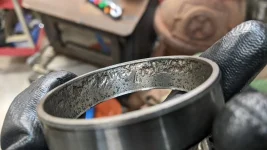
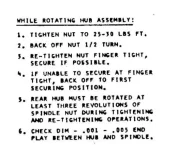
Since we're beating a dead horse....
I looked up the method that Dexter Axle has posted (b/c they are a similar setup) and they are a good quality company that's been making axles for a long time. Note that their instructions use 50ftlb! (I'm really going to have to up my torque game from now on

) , the hub is rotated only while torquing to 50ftlb (note the scientific torque spec ' full hand force' LOL, it's backed off and then hand snugged, then BACKED OFF again to the first spot available and specifically installed so the nut is loose and only retained by the pin. IE the whole thing goes together _loose_.
https://www.dextergroup.com/user_area/content_media/raw/LDServiceOnline.pdf on page 56
Bearing Adjustment and Hub Replacement
If the hub has been removed or bearing adjustment is required, the following adjustment procedure must be followed.
For standard grease or oil axles using cotter pin:
1. After placing the hub, bearings, washers, and spindle nut back on the axle spindle in reverse order as detailed in the previous section on hub removal, rotate the hub assembly slowly while tightening the spindle nut to approximately 50 ft-lb (12" wrench or pliers with full hand force)
2. Then loosen the spindle nut to remove the torque. Do not rotate the hub.
3. Finger tighten the spindle nut until just snug.
4. Back the spindle nut out slightly until the first castellation lines up with the cotter key hole and insert the cotter pin.
5. Bend over the cotter pin legs to secure the nut.
6. Nut should be free to move with only restraint being the cotter pin.
Seems like a good topic for a seminar at a GMCMI rally based on our spirited discussion