Converting to LiFePO4 batteries and Sailor Man's LiFePO4 Build

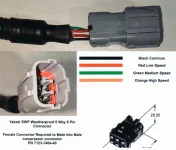
The ProAir II 12v dc compressor had 3 speeds depending on which combination of wires you used. In all circumstances, the black wire is connected and if you join it with this wire, you get :

Red wire Low Speed:
Low Draw @ 12.0v 20A 2000rpm
High Draw @ 12.0v 40A 2000rpm
0.92kwh or 3,150 btuH/hr
Green Wire Medium Speed:
Low Draw @ 12.0v 30A 3000rpm
High Draw @ 12.0v 60A 3000rpm
1.38kwh or 4,700 btuH/hr
Orange Wire High Speed:
Low Draw @ 12.0v 48A 4500rpm
High Draw @ 12.0v 96A 4500rpm
1.38kwh or 7,500 btuH/hr

However, when UndermountAC.com tested it;
Green Wire Medium Speed:
16,128 btuH/hr
Orange Wire High Speed:
19,918 btuH/hr---estimated
Undercount recommended using the Medium or Low Speed, so I am looking at 16,128 to 13,000 btuH. They said that the high speed used too much power.

Since I already have (2) 12,000 btuH mini-split 48v heat pumps, I would probably select the low speed for energy economy.

All of the are battery powered, so I would run them all off the 51.2v 300ah battery bank. I think that this is way more than needed because (2) 12,000 btuH rood ac unit units are considered sufficient.

Considering that this is just for the dashboard air conditioning, there is already a substantial reduction of solar heat by installing Llmar Stratos ceramic film on all glass surfaces with a brow over the windshield. The Stratos film blocks 97% of the solar heat.ProAIR 12v Electrical Connector.webp
 
Last edited:
Dometic has be selling the 12v Caddy II Marine air conditioner for years. It requires circulating sea water to accept the heat of rejection. They have had the ability to apply this decade to their rooftops. Why they have not is just beyond me.
Dometic has been producing 12v roof top for more than a decade but they refused to sell them in the USA until now. As a result, I stopped checking out on them.


They are now listed for sale on the VanLife website.

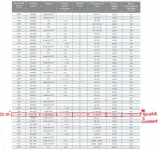
I have bought my Lithionics 51.2v batteries from VanLife and they have been very helpful. I found this 12v roof top analysis on their website.
VanLife 12v RoofTop HVAC Compariaon 030923.jpg
I have looked at the technical information on the SOK batteries and I am very put off by them. First os all, they seem to be a Chinese product and if ordered today, they say that they will ship on April 10th, one month from now. I guess you could count on at least a month or two for them to reach our shores, unless you can find a stocking dealer in the USA.
Secondly, I not very fond go a built in BMS anymore and they do not seem to like batteries connected in series.
Third, there are only three distributors in the USA. I have learned the hard way not to buy from sources outside this country. It is not possible to sue a company outside the US and a Canadian company walked off with with my $7,500 and I could not bring him to court.
 
Last edited:
Can't help you with that, but somebody here probabGMC Floridathetoly knows. Maybe talk to Jimmy K at Applied.Statesman
I went to the Florida Sunshine Statesman Rally last Saturday and I was not prepared to see Larry W there, but he was. What a gas. It was great meeting you in the flesh, Larry.

I had been wanting to meet the Statesman members but I have been delaying going until the coach was ready to bring it. I have been a member for 3 years and never met another member.


It was a gas to run into Kendra at the wake for the GMC COOP and she will be back for a visit next month. We are sort of planning a side trip to Florida Southern College in Lakeland, FL. We both love Frank Lloyd Wright’s work and this campus has the largest collection of his buildings. It is quite an experience. We may wait til the summer to go so that Kendra’s mom can join us. She is also an architect.

I am very pleased that you are apparently enjoying my messages and I am learning from you as well.

I do not take offense with any of your comments. Your comments help me because you often mention issues that I did not anticipate. Thank you so much for your help. You are only making me think harder and my coach benefits from your commentary.

I think it would be a benefit to people who own a GMC coach or have a dream to own one. Please spread the word around about this conversation.

The more the merrier!

Thank you.
 
  • Like
Reactions: dsmithy and Kendra
Sailor man,
It was indeed a gas to meet you. I've been following your progress on your GMC since you first posted and while your progress is not something that I could attempt, I applaud your efforts to bring the GMC into the future. You came to our rally without your GMC but with pictures and enthusiasm that will benefit our future. Can't wait to see you, your wife (a real honey) and your coach at some future Sunshine Statesman rally. Safe travels my friend.
 
  • Like
Reactions: Kendra
Larry

Claude and I have four reasons to visit Wisconsin in our coach.
First of all, we have family in Milwaukee. My son married into the Martin family and we have not seen all of them in one place since the wedding. Jim Martin is now retired, but he was the Head of the History Department at Marquette University and is a Civil War historian.
Next, Claude is a dual citizen, first generation born in the USA whose parents were born in Luxembourg. The Salomon family goes many generations back in Luxembourg. The Luxembourg American Cultural Society & Center is in Belgium, WI, which we want to visit. They tried to help Claude get her Luxembourg citizenship until they found out that she was already a dual citizen by birth.
There is certainly a very large congregation of Luxembourg Americans in Wisconsin.
Them there is Taliesin and the Frank Lloyd Wright Trail. Frank is my mentor, although I never met him. I have been in many of his buildings in the east, but I would like to experience those in Wisconsin. My son is on a mission to see all of wright’s surviving buildings, so he has already been there.
Murnick from the SOuth 012923.jpg
Murnick Expanded Dinng & LR 012923.jpg
2103 Residence Alteration 2000.webp

No this is not a FLLW residence. I is one of mine that I designed in 1975 and built with my client (no contractor) in 1975-1976, It is built on the ruins of a dam and forge built in 1715.

It has often been compared to FLLW’s Fallingwater, even by Kendra’s mom.

By the way, the largest number of Wright’s building are right here in Florida. He designed the Florida Southern College Campus in Lakeland, FL. Kendra and I are planning to take her mother there this summer, if it works out.
I think that it might be cool for the Sunshine Statesman to take one of the guided tours as part of a future rally.

And then, of course, there is you and your family.
 
Last edited:
  • Like
Reactions: Kendra
I am progressing on the dashboard, but I thought that it might be a good idea of letting you know the scope of the work that is needed to complete this project.
Dashboard Job Status 031123.jpg

Cliff and I have been able to wake up the ProAir II compressor, so I do not need to research its replacement any further. Wee will see how it works out as we test the system.

Installing and activating the camera and monitor systems has been very difficult. Like many products manufacturer in China, the installation and operating instructions are abysmal.

So far, the tech support from Tadi has been very helpful. One of the monitors had the image rotated 180° and mirrored, both up and down and side to side. I rotated the image 180°, so that is good. I next have to try to accomplish the correction to the mirroring.

Until all of these tasks have been completed, the driver and passenger seats con not be installed. Only then, can the coach be taken on the road. Then the transmission gearing can be defined and the optimal final drive ration can be selected.
Steve

Before I will discuss the battery issue, I need to advise you to replace all of the heavy energy users in you coach. If you do this, you will benefit much more by doing this.
ENERGY CONSERVATION FIRST!!!! ------ GET RID OF ALTERNATING CURRENT!
Inverters are not 100% efficient. -----Direct current motors speed can be controlled and are much more efficient.
I would replace you refrigerator with the Indel Combi that I have shown in this tread. Indel says that they estimate a 24 hour draw of 680 watts for the refrigerator and freezer. If you employ their dc motor controller, you will save an additional 30% of dc energy. You will also have more storage capacity and it is much more shallow.
I forgot to mention using an induction range. My wife is locked into seeing an open flame under a pot, so we won't have one. However, an induction range uses only 1/3 of the energy of other means of cooking, so you might want to look into it.
If you look at the two very small, compact expansion coils on the back of the inset, compare them to the massive expansion coil on the rear of your refrigerator.
I was able to locate a tankless lpg hot water heater and a hand held shower head for outside showering for a relatively reasonable cost in the space I saved with the Indel. Pul the electric 5 gal hot water heater and you gain storage space.
I find that most people not longer use the lpg furnace, but they do not remove the furnace or ducts. If you haven’t done that you are missing the opportunity to gain additional storage space.
People do not consider the substantial electrical draw of maintaining 5 gal of hot water in a tank through an inverter when you are not plugged in.
You can also replace your TV with a 12v dc Jensen TV. They are pretty reasonable in price and inverter use is down. DC is much more efficient.

If you are adverse to installing direct current mini-splits, you might be able to replace your roof top ac units with dc powered heat pumps which are far more efficient.
Once you consider using all of these energy conservation improvements you will be amazed at how much less solar collection and battery storage you will require.
I will research the dc roof tops for you. I was disappointed that Dometic did not produce their roof tops using dc power. Indel and Dometic are owned by the same corporation. Why they don’t use the same compressor as the Danfoss in the refrigerator/freezer is just beyond me!
Check all of this out and then take a look at how much smaller a solar panel and battery system you will really need.
Then get back to me,
I am sending all of you the specification along with other of the Indel Webastco CR195 that I am installing in my coach along with their other refrigeration, freezer and ice maker products. This line of products has been in production for a long time. I did not find the listing for the DR16 freezer.
Indel CR195Specs031223 031123.jpg
Indel CR195 Specs-2 031223.jpg
I do not think that you will find this depth of information on any other refrigeration product. In particular, the very large energy use of other refrigerators is just too embarrassing to mention.
If you compare the storage capacity to the Norcold, you will find that it is lacking in comparison.
The CR195 has two dedicated compressors with quite tiny expansion coils. The compressor was originally a Danfoss product, but is now Secop.
There is a separate upgrade that controls the speed of the direct current motors with other tweaks. The start up speed is around 65% of maximum to buffer the start up shock and current surge.
The ITC (Intelligent Temperature Control) works with either AC or DC power. The AC input is covered to DC via a dedicated internal inverter to power the motors, so one gets all the benefits of DC motors over AC motors.

The ITC System is supposed to save an additional 35% of the energy required. I have bought 3 of these for each compressor.
Therefore the 840 watts per day is reduced to 546 watts per day or 22.75 watts per hour.
In addition, despite the significant insulation built in to the Indel products, additional insulation can be employed.
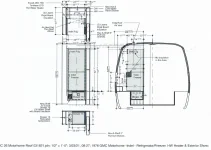
Indel CR195 in Cabinet 031223.jpg
The smaller depth allowed the installation of the lpg tankless hot water heater and the hand shower accessible from the exterior.
The small black boxes are the total space occupied by the compressor and expansion coil package.
To the right of the Indel units, there are (3) pull out pantry shelves.
However, because this space was designed to accommodate an lpg fired refrigerator, the refrigeration is exposed to the untempered exterior air that could at time be of either very high temperature, humidity or both at the same time. One of the biggest mistakes in rv, boat and residential installations id that the uninsulated space between the refrigerator/freezer and the cabinetry is ignored. It has been my practice to alway fill these spaces with board insulation to increase the efficiency of refrigeration. Sometimes, if it makes sense, I then use sprayed urethane foam to seal any left over air paces.
In this situation, I will not. I am making certain that the refrigeration unit cn still be pulled out for service when necessary,
As for the board insulation, I always use polyisocyanurate because it is the most efficient board insulation. The R value is 6.2 per inch. I can fit between 1" and 4" of this material various places around the Indel units, drastically reducing the minimal energy use even further.
A number of the Indel units allow the compressor/expqnsion coil unit to be separated from the refrigeration/freezer unit and located remotely while still fulled charged with refrigeration. However, using so little energy, the gas and liquid refrigerant lines are much thinner than a pencil. Great care must be taken to avoid kinking the very slender copper tubes.
Despite my very great care, I kinked the Indel Drawer 16's refrigerant lines when I relocated the compressor from its original location at the rear to the left side. There are three pre-engineered locations on the Drawer 16. I took the unit to a very good boatyard and they fixed it in less than a hour.
I did the same thing when I installed a drop in Indel refrigerator replacing the built in ice box. It took hiring a marine refrigeration tech to come to the4 boat.
Since there is a removable vent to access the rear of the refrigerator, it provide exterior air into the compartment which is then vented out through the large roof vent. However, here is no ventilation for the Drawer 16. I am putting a vent in the door tp the compartment below the bar, where the vacuum cleaner was once located. The built in fan will draw the cooling air past the compressor and through the expansion coil, ejecting the air to the coach's interior through another vent on the left of the Drawer 16.
Sorry for being so wordy. By designing this installation, I have saved so much energy that it allows an enormous reduction in the quantity of battery storage required.
While the Indel units are expensive, they are stainless steel and have reduced the size of the LiPO4 house battery bank.
One of the straggles I try to convince my client off is to favor life cycle cost over initial cost decisions. Almost everyone uses initial cost comparisons to determine what they purchase. However, this is a very poor financial method.
LiPO4 batteries are quite expensive, However, most of them can be recharged 3,000 times of more with little storage depreciation. Even the best lead acid batteries can only be recharged 300 to 500 times. You will ne at least 5 lead acid battery purchases to much the life of LiPO4 batteries.
Life Cycle Cost Analysis almost always results in a vary high quality, financially sound and lower matainace installation.
 
Last edited:
I am progressing on the dashboard, but I thought that it might be a good idea of letting you know the scope of the work that is needed to complete this project.
View attachment 7925

Cliff and I have been able to wake up the ProAir II compressor, so I do not need to research its replacement any further. Wee will see how it works out as we test the system.

Installing and activating the camera and monitor systems has been very difficult. Like many products manufacturer in China, the installation and operating instructions are abysmal.

So far, the tech support from Tadi has been very helpful. One of the monitors had the image rotated 180° and mirrored, both up and down and side to side. I rotated the image 180°, so that is good. I next have to try to accomplish the correction to the mirroring.

Until all of these tasks have been completed, the driver and passenger seats con not be installed. Only then, can the coach be taken on the road. Then the transmission gearing can be defined and the optimal final drive ration can be selected.

I am sending all of you the specification along with other of the Indel Webastco CR195 that I am installing in my coach along with their other refrigeration, freezer and ice maker products. This line of products has been in production for a long time. I did not find the listing for the DR16 freezer.
View attachment 7927
View attachment 7928
I do not think that you will find this depth of information on any other refrigeration product. In particular, the very large energy use of other refrigerators is just too embarrassing to mention.
If you compare the storage capacity to the Norcold, you will find that it is lacking in comparison.
The CR195 has two dedicated compressors with quite tiny expansion coils. The compressor was originally a Danfoss product, but is now Secop.
There is a separate upgrade that controls the speed of the direct current motors with other tweaks. The start up speed is around 65% of maximum to buffer the start up shock and current surge.
The ITC (Intelligent Temperature Control) works with either AC or DC power. The AC input is covered to DC via a dedicated internal inverter to power the motors, so one gets all the benefits of DC motors over AC motors.

The ITC System is supposed to save an additional 35% of the energy required. I have bought 3 of these for each compressor.
Therefore the 840 watts per day is reduced to 546 watts per day or 22.75 watts per hour.
In addition, despite the significant insulation built in to the Indel products, additional insulation can be employed.
View attachment 7929
The smaller depth allowed the installation of the lpg tankless hot water heater and the hand shower accessible from the exterior.
The small black boxes are the total space occupied by the compressor and expansion coil package.
To the right of the Indel units, there are (3) pull out pantry shelves.
However, because this space was designed to accommodate an lpg fired refrigerator, the refrigeration is exposed to the untempered exterior air that could at time be of either very high temperature, humidity or both at the same time. One of the biggest mistakes in rv, boat and residential installations id that the uninsulated space between the refrigerator/freezer and the cabinetry is ignored. It has been my practice to alway fill these spaces with board insulation to increase the efficiency of refrigeration. Sometimes, if it makes sense, I then use sprayed urethane foam to seal any left over air paces.
In this situation, I will not. I am making certain that the refrigeration unit cn still be pulled out for service when necessary,
As for the board insulation, I always use polyisocyanurate because it is the most efficient board insulation. The R value is 6.2 per inch. I can fit between 1" and 4" of this material various places around the Indel units, drastically reducing the minimal energy use even further.
A number of the Indel units allow the compressor/expqnsion coil unit to be separated from the refrigeration/freezer unit and located remotely while still fulled charged with refrigeration. However, using so little energy, the gas and liquid refrigerant lines are much thinner than a pencil. Great care must be taken to avoid kinking the very slender copper tubes.
Despite my very great care, I kinked the Indel Drawer 16's refrigerant lines when I relocated the compressor from its original location at the rear to the left side. There are three pre-engineered locations on the Drawer 16. I took the unit to a very good boatyard and they fixed it in less than a hour.
I did the same thing when I installed a drop in Indel refrigerator replacing the built in ice box. It took hiring a marine refrigeration tech to come to the4 boat.
Since there is a removable vent to access the rear of the refrigerator, it provide exterior air into the compartment which is then vented out through the large roof vent. However, here is no ventilation for the Drawer 16. I am putting a vent in the door tp the compartment below the bar, where the vacuum cleaner was once located. The built in fan will draw the cooling air past the compressor and through the expansion coil, ejecting the air to the coach's interior through another vent on the left of the Drawer 16.
Sorry for being so wordy. By designing this installation, I have saved so much energy that it allows an enormous reduction in the quantity of battery storage required.
While the Indel units are expensive, they are stainless steel and have reduced the size of the LiPO4 house battery bank.
One of the straggles I try to convince my client off is to favor life cycle cost over initial cost decisions. Almost everyone uses initial cost comparisons to determine what they purchase. However, this is a very poor financial method.
LiPO4 batteries are quite expensive, However, most of them can be recharged 3,000 times of more with little storage depreciation. Even the best lead acid batteries can only be recharged 300 to 500 times. You will ne at least 5 lead acid battery purchases to much the life of LiPO4 batteries.
Life Cycle Cost Analysis almost always results in a vary high quality, financially sound and lower matainace installation.
How does life cycle cost analysis impact the decision of which LiPO4 battery to use. First of all, buying a battery that is UL certified is a very big deal. It is very difficult and expensive to get that certification. As far as I know, only the Lithionics batteries have it.
Also, always select batteries with external BMS because you can always upgrade the software and communicate with all of the electrical and electronic devices in the system.
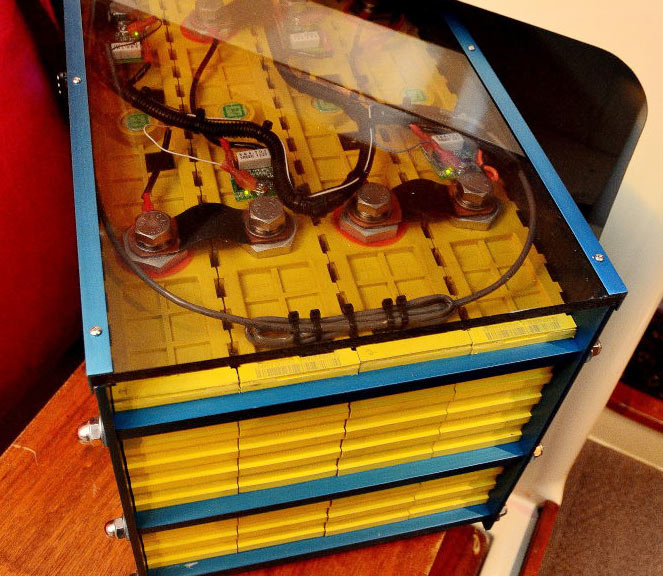
LiPO4 batteries sort of look like the old lead acid batteries from the exterior, but they are far different. There is a lot of air inside the batteries. In the case of Lithionics' 51.2 volt battery there are groups of 16 cables, each looking like a C battery. Each individual battery is rated about 3.2 volts and they are racked and wired in series to produce 51.2 volts. There are a number is these 16 cell groups that are then wired in parallel. The number of amp hours are determined by how many of the 16 cell group are in the battery case.
One of the things that makes the Lithionics batteries special is the UL rating. To achieve that, each individual cell is corrected directly to the BMS. Every cell is pinged every 6 seconds to determine its status. If one of the cells is damaged or failed, the BMS shuts down the entire 16 cell circuit that the damaged cell is electrically connected to.
To confirm how important that is as a safety value, Lithionics has produced a video, no hard to find, on a functioning battery that is powering some appliance, usually a light or fan. Then none or more nails are driven into the battery ands the battery keeps powering the light or fan. The BMS has just shut down the damaged area.
Lithonics used to advertise that it is American made, However, the Federal government file a lawsuit and Lithionics was fined. They could not prove that 70% of the battery is actually American made. That is the definition,
Please do not make you decisions based on the lowest first cost or availability. Make the decision based on
Please do not make you decisions based on the lowest first cost or availability. Make the decision based on what is the lowest life cost and quality.
If you perform energy conservation first, you will wind up with a more modest electrical system at a more attractive cost. It is the Traditional Quandary, "Pay me now or pay me late!" Pay me later is always more expressive,
Any questions?
what is the lowest life cost and quality.
If you perform energy conservation first, you will wind up with a more modest electrical system at a more attractive cost. It is the Traditional Quandary, "Pay me now or pay me late!" Pay me later is always more expressive,
Any questions?
 
Looking at earlier posts I didn't spot the model number of LPG tankless water heater you installed July 2021. If we can please have that model number I'd like to install same or similar tankless after I swap existing propane/110v fridge for 12v. Your exterior shower behind existing fridge vent cover is a slick design.

The Webasto CR195 refrigerator/freezer (also marketed as Isotherm Cruise 195) is a proven marine-grade manufacturer but I can't quite handle the cost. I'm about to order a Dometic DMC4081 12v fridge/freezer for about 1/3 the price. When my new fridge fails in 2 or 5 years I'm hoping for improved 12v appliances at that price point.

The CR195 has a more efficient enclosure compared to what I'm about to order. The CR195 has a flush-mounted door and about 3" less cabinet depth compared to the Dometic. But I prefer the side-mounted door latch on the Dometic, so I can potentially add a custom wood panel to cover the entire door surface.
 
Last edited:
My original post in this thread (which is buried 15 pages back now) was a link to some good info on converting to LiFePO4 batteries.

Here is another link to similar info.

I thought I might bring it back to the top of the thread.
 
Looking at earlier posts I didn't spot the model number of LPG tankless water heater you installed July 2021. If we can please have that model number I'd like to install same or similar tankless after I swap existing propane/110v fridge for 12v. Your exterior shower behind existing fridge vent cover is a slick design.

The Webasto CR195 refrigerator/freezer (also marketed as Isotherm Cruise 195) is a proven marine-grade manufacturer but I can't quite handle the cost. I'm about to order a Dometic DMC4081 12v fridge/freezer for about 1/3 the unforitThistomorrow.coachtheatamIwhenprconfirmD batteries(2)useswillIbutheater,waterhotlpgtheisthisthatice. When my new fridge fails in 2 or 5 years I'm hoping for improved 12v appliances at that price point.

The CR195 has a more efficient enclosure compared to what I'm about to order. The CR195 has a flush-mounted door and about 3" less cabinet depth compared to the Dometic. But I prefer the side-mounted door latch on the Dometic, so I can potentially add a custom wood panel to cover the entire door surface.
I think that this is the hot water heater that I installed. This may be the photo of an updated version. It doesn’t require venting but It is located in a vented compartment. It doesn’t require electricity. It uses (2) replaceable D batteries.

It is an Excell EX93FR at eTrailer for $300.65 includes batteries.

I will verify when I am at the coach tomorrow.
Excell LPG HW Heater+battery 031323.jpg

The shower is a Osculati Adriana recess-fit shower enclosure.
Adriana recess-fit shower head 031323.jpg
The control knob in the holder determines water temperature. The lever on the shower head provides section of the type of shower spray.
Adriana shower head dimensions 031323.jpg
I thought that this was pretty neat too!

It is better to not advertise this capability and it requires far less installation time and cost. This is certainly a very minimal piece of equipment.

I am now thinking of how to design an inflated kiddy pool with a grating to stand on with a folding sushi screen for privacy. If I can plumb it to a recirculating hot water tank, through a good filter to remove soap and soil, I can have an endless shower which can be reheated. I would use this device for the interior shower as well. Then I could periodically replace the permanent circulating water.
Since there is no need for the black tank, I can replace it with a smaller grey tank and recirculating hot water tank. I do not have to worry about the water in the recirculating tank cooling because I can instantly heat it trough the lpg tankless heater.
It will need its own dedicated on demand pump. There will be some water loss, so there needs to be a way to top off the permanent water in the system and a way to drain and replace the water.
What do you think?

By the way, the area behind the refrigerator where this plumbing will be installed is subject to water damage from this improvement. When you return the shower head to its nesting position, you have finished your shower, it will be wet and have some water still within the shower head. Therefore it is very likely to drip and wet the wood cabinetry.
The tankless lpg hot water heater is also nearby and over its life, small leaks may develop.
Therefore, I am taking some precautions. The leak will not be discovered until significant damage has already developed.
First of all, I am protecting the cabinetry by treating the horizontal surfaces and the lower 12" of the vertical surfaces with penetrating epoxy. In this way the cabinetry will not be absorbing leaking water and over time leaking and rotting the wood.
With the cabinetry not absorbing water, it will puddle and try to find its way somewhere and cause damage. It will likely settle somewhere on the wood substrate fastened to the aluminum floor joist on top of the chassis. This will compromise the coach's body over time until there is a failure and may generated mold.
Again, I want to provide an easy way for leaked water to exit the coach before it can accumulate and cause damage. I am therefore providing small "shower" drains pipe through the floor frame and chassis to the ground.
I know that this is unusual, but attention to details like this can maximize pleasure and reduce heart break.
 
Last edited:
Looking at earlier posts I didn't spot the model number of LPG tankless water heater you installed July 2021. If we can please have that model number I'd like to install same or similar tankless after I swap existing propane/110v fridge for 12v. Your exterior shower behind existing fridge vent cover is a slick design.

The Webasto CR195 refrigerator/freezer (also marketed as Isotherm Cruise 195) is a proven marine-grade manufacturer but I can't quite handle the cost. I'm about to order a Dometic DMC4081 12v fridge/freezer for about 1/3 the price. When my new fridge fails in 2 or 5 years I'm hoping for improved 12v appliances at that price point.

The CR195 has a more efficient enclosure compared to what I'm about to order. The CR195 has a flush-mounted door and about 3" less cabinet depth compared to the Dometic. But I prefer the side-mounted door latch on the Dometic, so I can potentially add a custom wood panel to cover the entire door surface.
Kendra

The Dometic costs $1,385.99
The Prices of the Indel CR195 @ Defender are:
INOX (Stainless Steel) $2,804.80
Classic $2,520.00
I have a professional account @ Defender Industries, so my cost is a bit lower. Defender charges for shipping but does not collect state sales tax.
I could check out what my cost is if you are interested. If you want, I could buy it for you and have it shipped to you as long as you can send me the funds.
 
Kendra

The Dometic costs $1,385.99
The Prices of the Indel CR195 @ Defender are:
INOX (Stainless Steel) $2,804.80
Classic $2,520.00
I have a professional account @ Defender Industries, so my cost is a bit lower. Defender charges for shipping but does not collect state sales tax.
I could check out what my cost is if you are interested. If you want, I could buy it for you and have it shipped to you as long as you can send me the funds.
Sailor Man, I greatly appreciate the offer to purchase through your professional account but I've already ordered the 12v Dometic ($1,200 including freight). The CR195 is a marine-proven design and has additional efficiency but I prefer the smooth Dometic door (side latch instead of front). Yeah I know I'm being less practical ...form over function.
 
This is the updated sketch to make this more compact and neater>View attachment 7798
Lithionics is going to fabricate the BMS harness with (2) different lengths of the positive and negative cables to allow for this configuration. I am using the modified busbars instead of custom cables.
View attachment 7799
I had already made (4) busbars to connect the two pairs of negative and positive BattleBorn GC3 batteieis in series. For that installation, I had already removed the black plastic base and ground off the posts. I had wrapped the positive and negative modified busbars with red and black electrical tape for insulation and identification purposes.
These busbars are rated for 600 amps. Pretty robust.
With the elimination of the BattleBorn batteries, I thought that these (4) modified busbars would just go to waste and then I had a new idea.
What about modifying them again to connect the Lithionics BMS to the new positive and negative busbars. This modification would take cate of the connection od one vertical post to one horizontal post.
View attachment 7801
Pretty neat, huh?
At least I have been able to use a couple of the components that I thought had become useless. A bonus is that I had already set aside the (4) black plastic bases but I did not throw them away. I am just one of the chronic pack rats that always thinks to never throw something away, because you might find another use for it.
Well it has worked here!
In order to line up the elevation of the covered busbar with the post on the BMS, I was going to fabricate custom Starboard shims. However, I now have (4) unused matching busbar bases To elevate the covered (4) busbars.View attachment 7802View attachment 7804
Whoops! These busbars were made from (6) post MaxiBus BusBars. The bases can be modified to still function as shims. However, I will have to cut the two unused into (3) equal segments, which can stack at one end to provide the thickness to bore a horizontal hole.
This is the updated sketch to make this more compact and neater>View attachment 7798
Lithionics is going to fabricate the BMS harness with (2) different lengths of the positive and negative cables to allow for this configuration. I am using the modified busbars instead of custom cables.
View attachment 7799
I had already made (4) busbars to connect the two pairs of negative and positive BattleBorn GC3 batteieis in series. For that installation, I had already removed the black plastic base and ground off the posts. I had wrapped the positive and negative modified busbars with red and black electrical tape for insulation and identification purposes.
These busbars are rated for 600 amps. Pretty robust.
With the elimination of the BattleBorn batteries, I thought that these (4) modified busbars would just go to waste and then I had a new idea.
What about modifying them again to connect the Lithionics BMS to the new positive and negative busbars. This modification would take cate of the connection od one vertical post to one horizontal post.
View attachment 7801
Pretty neat, huh?
At least I have been able to use a couple of the components that I thought had become useless. A bonus is that I had already set aside the (4) black plastic bases but I did not throw them away. I am just one of the chronic pack rats that always thinks to never throw something away, because you might find another use for it.
Well it has worked here!
In order to line up the elevation of the covered busbar with the post on the BMS, I was going to fabricate custom Starboard shims. However, I now have (4) unused matching busbar bases To elevate the covered (4) busbars.View attachment 7802View attachment 7804
Whoops! These busbars were made from (6) post MaxiBus BusBars. The bases can be modified to still function as shims. However, I will have to cut the two unused into (3) equal segments, which can stack at one end to provide the thickness to bore a horizontal hole.
The new 1/4” aluminum plates are now in place waiting for the Lithionics batteries, BMS and 3 post combination box. The BMS, covers busbars and combiner box will all be mounted on the vertical panel.
IMG_1838.jpeg
I have a confirmed pick up date of March 24th.
The (4) BattleBorn GC3 battereis have been boxed and shipped back to Dragonfly for refund.
 

Attachments

  • IMG_1839.webp
    IMG_1839.webp
    1.2 MB · Views: 2
  • Like
Reactions: Kendra
The ProAir II 12v dc compressor had 3 speeds depending on which combination of wires you used. In all circumstances, the black wire is connected and if you join it with this wire, you get :

Red wire Low Speed:
Low Draw @ 12.0v 20A 2000rpm
High Draw @ 12.0v 40A 2000rpm
0.92kwh or 3,150 btuH/hr
Green Wire Medium Speed:
Low Draw @ 12.0v 30A 3000rpm
High Draw @ 12.0v 60A 3000rpm
1.38kwh or 4,700 btuH/hr
Orange Wire High Speed:
Low Draw @ 12.0v 48A 4500rpm
High Draw @ 12.0v 96A 4500rpm
1.38kwh or 7,500 btuH/hr

However, when UndermountAC.com tested it;
Green Wire Medium Speed:
16,128 btuH/hr
Orange Wire High Speed:
19,918 btuH/hr---estimated
Undercount recommended using the Medium or Low Speed, so I am looking at 16,128 to 13,000 btuH. They said that the high speed used too much power.

Since I already have (2) 12,000 btuH mini-split 48v heat pumps, I would probably select the low speed for energy economy.

All of the are battery powered, so I would run them all off the 51.2v 300ah battery bank. I think that this is way more than needed because (2) 12,000 btuH rood ac unit units are considered sufficient.

Considering that this is just for the dashboard air conditioning, there is already a substantial reduction of solar heat by installing Llmar Stratos ceramic film on all glass surfaces with a brow over the windshield. The Stratos film blocks 97% of the solar heat.View attachment 7891
The good news is that the dashboard ac is blowing hard and cold without the engine running. It is being fully controlled by the original controls in the dashboard, so no one will ever know that the system is very different than what it was when it was new.
Also, it is much quieter with no vibration like what we are accustomed to from the roof top. There is a small hum from the 12v compressor and the vacuum pump, which was not noticeable when masked by the 455's considerable rumble.
However, when pushing the envelop, there is always unanticipated consequences that have to be addressed.
First of all, the new 12v dc vacuum pump is running constantly to power the air dampers in the duct system. We are installing an switching system to limit the time that the vacuum pump runs because it uses energy unnecessarily and gets hot.
Secondly, to run the ac now the air conditioner only runs if the ignition key is turned on, so we must wire it directly through the house battery bank so it now is part of the 12v system like the rest of the coach without the key turned on.
With this now proven to work successfully and the 19.918 btu being greater that the 12,000 btu capacity surpassing that of the standard salon roof top unit, I think that it is an improvement over common method method all other GMC motorhomes air condition the front end.
Naturally, before everyone jumps in, I would like to recommend that we wait a while, unless you are very adventurous, to get the results of my long term experience with this new approach.
If there is no functional furnace, this system will not provide heat to the front end of the coach unless the engine is running.
Some of the forward roof tops were either reversible heat pumps or had electrical resistance heating coils in them.
It is posible to install an electrically functioning refrigerant valve in the system to make the ac unit function as a reversible heat pump, but this is not what I am doing because the YMGI for this area will address the heating issue.
Another consideration is that the dash board system does not have to compete with the 455's radiator heat disposal so it will probalby function much better than when it runs in competition with the far larger engine heat.
 
Last edited:
I’m new and just bought a GMC. Really enjoying this thread as I would like to remove the generator and hopefully the propane as well. I want to remove all the things on the roof that spoil the lines of the coach and add drag.
You could eliminate that power steering pump by using the electric power steering pump out of a late model Dodge Challenger or Charger. They’re about $300 on FeeBay and also have the benefit of power steering if you engine quits.
A company called Hot Shot I believe makes a product that uses the waste heat from the air con units to heat water. It makes the air conditioner more efficient and free hot water.
I have heard the thin flexible solar panels transfer a fair bit of heat to the surface they’re mounted to (I don’t know if this is actually true or not), if they do perhaps a system like was used on older Land Rovers, the Safari Roof would help. All it was was another aluminum roof spaced up an inch above the roof and open all around the edges. If sealed at the front edge you wouldn’t add any drag to the coach and it would work to keep the actual coach roof cooler.
 
I’m new and just bought a GMC. Really enjoying this thread as I would like to remove the generator and hopefully the propane as well. I want to remove all the things on the roof that spoil the lines of the coach and add drag.
You could eliminate that power steering pump by using the electric power steering pump out of a late model Dodge Challenger or Charger. They’re about $300 on FeeBay and also have the benefit of power steering if you engine quits.
A company called Hot Shot I believe makes a product that uses the waste heat from the air con units to heat water. It makes the air conditioner more efficient and free hot water.
I have heard the thin flexible solar panels transfer a fair bit of heat to the surface they’re mounted to (I don’t know if this is actually true or not), if they do perhaps a system like was used on older Land Rovers, the Safari Roof would help. All it was was another aluminum roof spaced up an inch above the roof and open all around the edges. If sealed at the front edge you wouldn’t add any drag to the coach and it would work to keep the actual coach roof cooler.
With everything off the roof, you will have the GMC as it was originally designed and the entire roof is taking all of the solar energy. It will reradiate at least a sizable portion of the solar radiation, particularly if it were shiny like the Airstream’s which will reflect instead of adsorb energy.
Therefore, the Airstream and the GMC Motorhome are very different from almost all of the other RVs and you need to ignore any of the comments about installing solar panels from those who do not have an aluminum RV.
I have read much about their various installations. Some recommend adding insulation between their roof and the solar panel. This is a very bad idea because it will prevent the heat from being adsorbed by the substrate and will actually increase the temperature of the solar panel.
The GMC Motorhome aluminum roof will quickly adsorb energy from the solar panels because aluminum is a very good conductor of heat and electricity. Therefore, it acts as a heat sink as the collected heat will be disbursed throughout the entire aluminum exterior and welded frame. Since the mass of the aluminum frame and enclosing sheets is far larger than that of solar panel’s, there will be little increase of temperature of the aluminum.
In addition, SunPower’s Maxxim cells convert about 24% of the energy to direct current energy, so the solar heat load on the coach is accordingly diminished and so is air conditioning cooling load.
If you want to add insulation, spray it on the inner surface of the aluminum or better yet use Polyisocyanurate board insulation, which has been the best insulation value for a very long time.
You really want to achieve maximum contact of a solar panel to the GMC’s aluminum roof.
That is also the best way to reduce air drag.
I will shortly be posting on how I plan to mount and wire the SunPower Semi-Flexiable solar panels.
Do not copy the Land Rover. That is is a low vehicle driving speed accessory.
Do not use “Hot Shot”. They know nothing about dc air conditioning motors, which is far more important than their solution.
Air conditioners and heat pumps that use direct current run directly off batteries without inverters, generators or shore power. The motors are often running for a very long time at low speeds. They are far more efficient at controlling humidity than the common alternating current versions. With lower humidity, higher air temperatures actually provide increased human comfort.
I cannot speak to converting to electric power steering. It only helps when maneuvering at low speeds and is designed to cut out a higher speeds. I don’t think that there is much parasitic load on the engine.

As far as propane is concerned, the elimination of the propane driven driven generator has reduced its purpose. If my wife, Claude, were not so in love with the open flame of a cooktop, I would install an induction cooktop (which uses 1/3 of the energy to cook).
However, propane works the best for heating water and BBQ, so it is still part of my coach.
 
Battery w Lift Straps 033023.jpgI have ordered the new 51.6v Lithionics batteries with lift stairs. They are large and weight 155 lbs.


Since I was troubled about how to secure the (2) batteries in the generator compartment, it occurred to me that the lift straps had little use once the batteries were in place. Therefore, if I cut one side of the lift strap closed to the bolt, which itself count not be tightened or removed, I could use the strap as a tie down.
51.6v Battery Tie Down Sketch 032923.jpg
M6 Open SS Turnbuckle 032923.webp
 
Matt:

This is my 37 foot sailboat Mistral in the 1990 Stars & Stripes race in the Outer New York Harbor. We are second around the first mark and outclassed by very serious racers with professional crew. Mistral is a 1984 Elite 37 sailboat that I bought new and is still at the dock behind my house undergoing its own upgrade including electric propulsion.
View attachment 6985
I am at the helm with a pick up crew. Mistral is US41834. We are amateur vs. professional crews.
I am Sailorman for a reason and have a number of projects in the works. I like to research, design and build things.
View attachment 6986
This is a view of the (3) Lithionics LiPO4 batteries powering a 9000 Those 48v direct current motor that becomes a generator when the propeller turns under sail. The elimination of the diesel motor, diesel tanks, transmission, etc. took about 1,000bls off the boat.
There are (2) 24v 400ah batteries in series for the 48v propulsion bank. The battery on the left is a 12v 400ah battery for use loads.
There are (2) 30amp shore power inlets connected through 30amp, 120v ac ECLI circuit breakers.
View attachment 6987
In my view, the GMC is just a "Land Yacht" and there are a number of similarities that can make my approach to upgrading the GMC Motorhome to bring it into this century.
In 1995, as an architect also involved in restoration of historic buildings, I was commissioned to restore and add another 50 years to the life of the oldest remaining building at the US Military Academy at West Point. Quarters 101, on the Parade Ground, was built around 1817 as one of the (4) "Captain's Quarters", two on each side of the Supretendant's Quarters.
It was a very difficult project as the structural problems were driving the building close to collapse.
If you are interested, look it up on the West Point website. It is sometimes part of guided tours, if you are interested.
When I was picking up the Lithionics batteries, I found out from Reuben that Lithionics will help me out with the (3) unused Lithionics batteries in my sailboat. They have never been used or charged since I picked them up at the Lithionics s factory about 5 years ago. After they were placed in Mistral, Covid-19 hit and I was unable to go to the boatyard for nearly 3 years. Then my heart issues started and I could not work on her. Then a sale of the yard forced me to have Mistral towed to the dock behind my house. The new owner works only on power boats and he evicted all of the sailboats.
I spoke with the CEO of Lithionics two years ago and he told me not to use them, so I sort of gave up. It would be too dangerous.
Now I know that Lithionics will test and recondition the batteries, chargers and BMS, so I can put them into service. They will also be upgrading the wire harnesses to what they are currently using.
I am very pleased and grateful that Lithionics has proved to be a far more reliable manufacturer than I(had thought.
The last time I was there. before the GMC battery pick up, they were in one small building. Since then, they have expanded into two much larger buildings and will be adding two more large additional adjacent buildings. I think that they are here to stay which gives me confidence in purchasing their products.
Oh, I forget to mention that 5 years ago I was awarded a Lithionics distributorship that lasted two years, so you might consider that i might have a bias. However, I took the distributorship to get better prices on my Mistral purchase. I was retired and did not expect to go back to work and I did not seek to start a new business. My arrangement ended after two years and I did not seek reinstatement.
However, it is still my judgement that their products are better than those of their competitors and I am glad that my relationship with them has been mended.
There is no doubt that their products are likely to be the most expensive in the market, so please take that into consideration.
 
This is the proposed layout of the SunPower SemiFlexible Panels on the roof. One of the problems with using the SunPower panels is that there is a systems limit of 45 volts and a maximum panel fuse rating of 15 amps.

Therefore, connecting (2) SPR-E-Flex-110 in series will generate 5.9 amps @ 37.6volts. Wiring (6) pairs will produce 35.4 amps @ 37.6 volts = 1,320 watts. Each (2) pairs will have to fused with a 15 amp breaker, (3) breakers in total.

This system should generate 1,470 watts. We can compare this output to the 6,000 watt output of the Onan. The original models only had a 4,000 watt Onan.

Also, As far as I know, only Sterling makes a 12 volt to 48 volt battery to battery charger. There is no 48 volt to 12 volt battery charger that I know of.

Therefore, it makes the most sense to charge the 12 volt battery bank with the solar panels and use the excess to charge to 48 volt bank through the Sterling.

The only 48 volt loads are for the (2) 12,000 btuh YMGI Mini-split heat pump systems.

Therefore one of two Mastervolt 48v to 12v dc to dc convertcancaners will provide backup 12 volt house power for the other users.

All lighting, including the headlights, have been converted to LED.

The YMGI mini-split have a SEER of 32 when connected to solar panels. The normal roof top air conditioning unit likely have a SEER of 7.5 when new.

Since the furnace and the electrically heated hot water heater have been eliminated, electrical use has been substantially reduced.

In the pace of the Onan 6000, there is now a Firman 3200 DF using primarily LPG with a gasoline back up. This is a very quiet and efficient generator. The mounting tray must be pulled out to use the generator, so the coach must be parked to use it. If necessary, second Firman generator can be paired with the permanently mounted unit.

With the solar array and significant electrical energy loss reduction, I doubt if the generators will ever needed to be used.
My right knee is acting up, so I am unable to travel to the coach. Therefore, I am starting to assemble the components needed for the solar roof top installation.

The first component that I will address is the wiring. I have purchase at lot of solar cables that are specifically designed for solar insertions, They are plug-in, dust and water proof. However, I do not like the prospect of trying to fasten down a lot of loose wires all over the roof.
Solar Cables 033123.webpSolar Cable Y Connector 033123.webp
When I was faced with the difficulty of finding a pathway for the cables from the (2) visor monitors, each with (2) screens, I decided to purchase a case of LeGrand AL2000 aluminum 1” Wiremold for an accessible raceway. It is not much larger than the center mullion of the GMC’s windshield. I cut one section and had the base and cap painted to match the mullion, so it really doesn’t seem to be there at all.
I did not anticipate any problems, but when placing the piece next to the windshield, I realized that the AL2000 member had to be bent to match the windshield’s curvature. I did j=know from previous projects, that Wiremold, of various sizes could be easily bend and remain accessible.
WireMold AL-2000 Cap+Base 033123.webp
This is the anodized extruded aluminum base and cap.
IMG_1855.webp
The are the components that I am using.
From upper left to right:
Plastic wire organizers to snap on to the base
mounts for the raceway to be installed legs up fastened to the roof with a screw, that the base snaps in to
below, end caps
center below, T connection
lower left, Connecting plates
middle left, Conduit connectors

However, I had nearly a full case of Wiremold left over. I thought that I might find some use for the excess in the house, boat or even the GMC.
Then I started thinking about the wiring for the solar array and I incorporated the WireMold raceway in my roof design.
All of the solar cables will be contained in the AL2000 except the short run of the panel cables to the raceway.
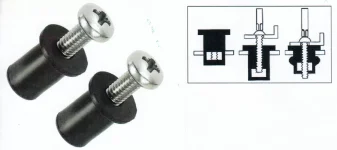
The mounting clips and the solar panels will be fastened to the coach's roof using EPDM well nuts that are a variation of rivet nuts.
Wellnuts 033123.webp
Since the threaded receiver is brass, I will be using brass screws to eliminate galvanic corrosion. Where the cap of the brass screw could negatively impact the aluminum WireMold clip a nylon washer will keep them separated.
Unlike rivets, no special riveting tool is required, only the screw.
 
I will also be using the well nuts to secure the SunPower panels to the roof. The 50 watts panels needs (4) fasteners and the 110 watt panel needs (6). The panel’s grommet is stainless steel, So another thicker nylon washer will separate the brass washer and screw head from the grommet. Again, I am eliminating galvanic corrosion.
In this case, however, I have to consider the likely prospect of replacing a failed or compromised solar panel in the future. I have already purchased one spare 110w and one 50w panel for that eventuality.
Since that may happen well into the future, I have to deal with the likelihood that the screws may be difficult to extract. There is a way minimize that problem.
Many years ago, I learned from the writings of Rod Stevens of Sparkman & Stevens, yacht designers, of anhydrous lanolin, a natural material extracted from sheep’s wool. This is a very sticky waxy substance that sticks to everything, never dries, isolates and lubricates. He recommended to use it for fasteners, particularly for using them on stainless steel fasteners, that often are threaded into aluminum spars.
So I tried it. I bought a one pound jar from a pharmacy as a special order. That was about 30 years ago and I have dipped every screw and bolt in lanolin since then. Surprisingly, I still have about 80% of the substance.
I all these years since, no fasteners has ever fallen out or frozen despite the very stressful sailing conditions.
I will be dipping every one of the screws into the lanolin before I screw things down.
So now I have a way to fasten the solar panels to the coach’s aluminum roof, but is that enough? It is pretty protected against corrosion and water leakage. Should I be doing more.
Well there is a wellnut lip protruding above the roof surface preventing direct contact of the solar panel in that area. Are there more places which may complicate matters?
Well there are! In addition to the wellness, I am using a series of of high strength, UV resistant, exterior grade, 2” Velcro to additional secure the panels.
IMG_1859.webp
This is the back of a 110 watt SunPower panel. I have installed the "hook" portion of the Velcro. The hoop half is notorious for having everything in the world stick to it. Once the Hook tape engages with the loop tape and the screws are tightened down, almost nothing will move this panel.
However, there is a problem in the installation. How do you get these things aligned? How am I going to align this stuff before the Velcro touches and makes it very difficult to shift around.
Well, I have purchased (2) 3 foot lengths of brass threaded rod which I will cut to 12" lengths and screws into the wellness with lanolin. I have done this with all (6) of the wellnuts and I hook the panels over the rods about 12" above the roof.
I slide the panels down and the rods keep the panels aligned and as soon as the velcro makes contact, I press the panel down to fully engage the velcro. I then remove the threaded rods, insert the brass screw, nylon washer and brass washer and tighten. Great job, right?
Not so fast! There is a thickness to the Velcro and there is that lip of the well nut. The panel is not in good contact with the aluminum coach roof and cannot function as a heat sink.
When engaged the velcro is about 1/8" thick and that is a bit more than the well nut lip.
I guess I need to epoxy 1/8th inch thick plates to the coach's roof. That will make the heat sink work and I do not it to pass electricity.
IMG_1862.webp
Wow, there need to be two different sizes because the grommets are not equally spaced.
IMG_1861.webp

How am I going to locate where to drill the holes in the roof? Well I guess that I will have to fashion a large template no only for a single panel but for the first row of holes on the side and bottom for the adjacent panels. The bottom of the panel will most often be in contact with the top of the next panel, but on one side there may be the Wiremold AL2000, so I must leave space for it and drill holes for the Wiremold's mounting clips.
This is going to be some template, but I have not started work on that yet.