MPG question

tmsnyder

Well-known member
Jan 15, 2014
3,378
1,268
113
Buffalo NY
I have an mpg question. These GMCs are supposed to get great mileage compared to standard box shaped RVs on truck chassis. 10-11 mpg seems to be a common figure. I've also experienced about 10mpg as well.

For my previous brick shaped motorhome with a frontal area of 8x9' and a coefficient of drag ~1.0, I calculated the max mpg possible at various speeds and assuming only aerodynamic drag, I found that the mpg I was experiencing was not that far off from what I calculated could be the best case scenario. I measured 7.5 - 8.0 (reality) mpg over many 1000s of miles, and my calculations (theory) said the best I could possibly see was 8.5-10.0 mpg. This was with an unpublished drag coefficient, mine was slightly wedge shaped so I used numbers from 1.0 to 0.7. The RV was carbureted and used an HEI distributor, similar to the GMC.

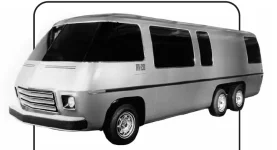
On the new to me GMC, it has a drag coefficient of 0.31 supposedly. It was designed in a wind tunnel, purportedly, to 'slip through the air'. LOL And, it's waaaay smaller than my previous class A. I put my old RV cover on it and it looks comic, there's so much extra material. But I digress. In my calculations, if I use 8' tall and 7' wide as the frontal area, and 0.31 for a drag coefficient, at 60mpg (which is what I typically drive) , the absolute max I could ever expect to see, in theory, should be 21.4 mpg.

Huh?! 21.4 mpg in theory vs 10-11mpg in reality? That's a significant difference between theoretical and observed mpg! It's only getting about 1/2 the mileage it should be getting.

So ........., what's happening here? Why is the GMC not delivering better fuel economy than it should in theory?

I don't think it's the engine delivering sub-par efficiency. If it were, we'd see much higher mpg reported from people that have swapped in other gas engines.

I think it has to be the coefficient of drag. It simply can't be 0.31. Did the wind tunnel tests include mirrors, and roof A/C units, and storage pods, refrigerator and plumbing vents? Or was it just a clean model with a smooth bottom and top? I'd be willing to bet it was a clean model.

To get anywhere reasonably close to the observed mpg of 10-11 at 60mpg, I have to raise the drag coefficient to almost double it's purported value, 0.5 to 0.6.

Where else could the MPG's have gone? We should be getting 20! :)
 
  • Haha
Reactions: Carl Stouffer
Maybe it’s the 455 engine, and not the body. I remember my dad had a Buick Rivera back in the early 70’s. It had a 455 engine, and I remember him getting about 10 mpg. Even with with the Rivera’s sleek body.
but just a guess on my part..
Scott.
 
  • Like
Reactions: tmsnyder
I have an mpg question. These GMCs are supposed to get great mileage compared to standard box shaped RVs on truck chassis. 10-11 mpg seems to be a common figure. I've also experienced about 10mpg as well.

For my previous brick shaped motorhome with a frontal area of 8x9' and a coefficient of drag ~1.0, I calculated the max mpg possible at various speeds and assuming only aerodynamic drag, I found that the mpg I was experiencing was not that far off from what I calculated could be the best case scenario. I measured 7.5 - 8.0 (reality) mpg over many 1000s of miles, and my calculations (theory) said the best I could possibly see was 8.5-10.0 mpg. This was with an unpublished drag coefficient, mine was slightly wedge shaped so I used numbers from 1.0 to 0.7. The RV was carbureted and used an HEI distributor, similar to the GMC.

On the new to me GMC, it has a drag coefficient of 0.31 supposedly. It was designed in a wind tunnel, purportedly, to 'slip through the air'. LOL And, it's waaaay smaller than my previous class A. I put my old RV cover on it and it looks comic, there's so much extra material. But I digress. In my calculations, if I use 8' tall and 7' wide as the frontal area, and 0.31 for a drag coefficient, at 60mpg (which is what I typically drive) , the absolute max I could ever expect to see, in theory, should be 21.4 mpg.

Huh?! 21.4 mpg in theory vs 10-11mpg in reality? That's a significant difference between theoretical and observed mpg! It's only getting about 1/2 the mileage it should be getting.

So ........., what's happening here? Why is the GMC not delivering better fuel economy than it should in theory?

I don't think it's the engine delivering sub-par efficiency. If it were, we'd see much higher mpg reported from people that have swapped in other gas engines.

I think it has to be the coefficient of drag. It simply can't be 0.31. Did the wind tunnel tests include mirrors, and roof A/C units, and storage pods, refrigerator and plumbing vents? Or was it just a clean model with a smooth bottom and top? I'd be willing to bet it was a clean model.

To get anywhere reasonably close to the observed mpg of 10-11 at 60mpg, I have to raise the drag coefficient to almost double it's purported value, 0.5 to 0.6.

Where else could the MPG's have gone? We should be getting 20! :)

My thoughts:

First of all, I don't even get 20 MPG in my 2018 Wrangler with an 8 Spd automatic and efficient V6.

Secondly, when I remember reading the articles about the development, they always quote that 0.31cd.

"A mahogany block was modeled to the designed shape, and a fiberglass model was then made from this master. Holes were drilled about one inch apart over the fiberglass body, and flushmounted, hollow tubes were installed and connected to pressure-measurement devices. Time was purchased at the Guggenheim wind tunnel facility in California, and the test was performed. Was the shape clean? You bet! The CD was .310, better than that era’s Corvette, which was .312."

Nowhere have I read that the finished project went to a wind tunnel.
Screen Shot 2020-03-12 at 2.49.19 PM.png


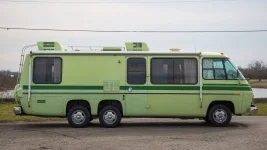
I believe ^^^that^^^ GMC could have a 0.31. Now go outside and look at yours. Huge bumpers, huge mirrors, AC units, cargo boxes, windshield wipers, drip rails, roof rails, ladders, spare tires, tank clean out pipes, etc... It is just not as clean as everybody thinks it is. Look at a Tesla. They go out of their way to even flush mount the door handles for less drag. Everything would have to be taken into account.

You also have rolling resistance. If I understand the math correctly, the rolling resistance is calculated by the weight x the coefficient of rolling friction. A typical vehicle's car tires on asphalt is coefficient of rolling friction of .02.

So the GMC at 11,000 lbs is (11000x.02) or 220 lbs of rolling resistance. On my Jeep, it would be 90 lbs.

So the rolling resistance doesn't matter too much.

Modern Chevy Suburban with a modern V8, displacement on demand, and 5500 lbs is rated at 15/22. I will promise you that it's overall cd is less than the GMC as most of us drive them with all of the stuff bolted to them.
 
  • Like
Reactions: RonaldPottol
Tom,
To provide an honest answer to your basic question, our 73 -23 could be counted on to run all over hill and dale at 9.2 MPG. That stay good from Michigan to Yellowstone and all the in between. After the required overhaul because the #7 piston shed about 120° of rings into the pan, and that seemed true, but I only have about 3K of data from a that years runs from SE Mi to Amana and then the other way to Albany. It was still good fro predicting fuel inventory for the next run to Tallahassee, but since then, I do not have enough data to confirm the second significant figure. I suspect it may have improved because she has an actual RV cam now and the difference is notable.
And yes, the block that was used in the wind tunnel testing did not have mirrors or a roof top A/C unit. I believe that model is on the top of a cabinet at the RV Hall of Fame in Elkhart.
Matt
 
  • Like
Reactions: Mike Perez
220 lb force of rolling resistance is equal to 35 hp at 60 mph
Not totally insignificant then. Assuming it takes a 100 HP or so to move down the road at 60 mph, then that number is significant. Not surprised that heavy vehicles get bad mileage. So on the GMC, it is a combination of weight and drag. You can get a more efficient engine, but it won't make that big of a difference.
 
  • Like
Reactions: Eric S.
I've been able to achieve near 14 mpg economy on a pretty consistent basis solo and averaged about 12.65 pulling a towd on a 5000+ mile trip that included a RT66 run with lots of stop and go traffic. While there have been out liners of 15+, 14 has been more the norm. Diesel fuel does provide a 30% improvement over gasoline right off the top and an optimized 2.82 ratio puts the motor right in its sweet spot for efficiency. The extra gear (4l80e trans) with true locking converter capabilities as well as PCM control over all engine performance and optimized computer shifting makes it all work. Trying to get a gas engine to deliver much over 10 will be a real challenge I'd guess.
Hal
 
I've been able to achieve near 14 mpg economy on a pretty consistent basis solo and averaged about 12.65 pulling a towd on a 5000+ mile trip that included a RT66 run with lots of stop and go traffic. While there have been out liners of 15+, 14 has been more the norm. Diesel fuel does provide a 30% improvement over gasoline right off the top and an optimized 2.82 ratio puts the motor right in its sweet spot for efficiency. The extra gear (4l80e trans) with true locking converter capabilities as well as PCM control over all engine performance and optimized computer shifting makes it all work. Trying to get a gas engine to deliver much over 10 will be a real challenge I'd guess.
Hal
Which diesel do you have Hal?
 
With our 77 /403 combo.....running light (no water, no generator, no black water, no a/c q etc) and keeping it around 60mph we averaged about 12 coming home from out east when we bought it...... my fuel verses miles calculation said 15 but im.sure thats BS although i guess the math doesnt lie.
 
Last edited:
  • Like
Reactions: RonaldPottol
Hal, what transfer case are you using which is up to that task? I'd love to see a build thread on that, probably everyone here would.

Also, what was the impact on the living space? Raised hatch? Elongated stairs?


Not totally insignificant then. Assuming it takes a 100 HP or so to move down the road at 60 mph, then that number is significant. Not surprised that heavy vehicles get bad mileage. So on the GMC, it is a combination of weight and drag. You can get a more efficient engine, but it won't make that big of a difference.

Yeah, but I didn't include this in my best case scenario for my other RV, which was very big and very boxy, and the best case mpg I calculated wasn't far off from my observed mpg, observed mpg was 75% of best case theoretical mpg. If the drag coefficient on the GMC were actually 0.31, we'd all be getting around 16mpg interpolating from observations from my big box rv. Since we're only getting 10-11 (with gas), then the drag coefficient must actually be around 0.5 once we strap on the mirrors, wipers, antennae, roof A/Cs and storage pod, rear bumper, etc etc, and build it with a non-smooth bottom.

Still, 0.5 is really good for an RV.
 
  • Like
Reactions: 1976GMC
Hal, what transfer case are you using which is up to that task? I'd love to see a build thread on that, probably everyone here would.

Also, what was the impact on the living space? Raised hatch? Elongated stairs?


Yeah, but I didn't include this in my best case scenario for my other RV, which was very big and very boxy, and the best case mpg I calculated wasn't far off from my observed mpg, observed mpg was 75% of best case theoretical mpg. If the drag coefficient on the GMC were actually 0.31, we'd all be getting around 16mpg interpolating from observations from my big box rv. Since we're only getting 10-11 (with gas), then the drag coefficient must actually be around 0.5 once we strap on the mirrors, wipers, antennae, roof A/Cs and storage pod, rear bumper, etc etc, and build it with a non-smooth bottom.

Still, 0.5 is really good for an RV.

I used a 6.5TD sourced from an H1 Hummer. I inter cooled the engine to try and improve cooling/performance which allowed boost pressures and fuel/timing to be adjusted which most certainly helps in every performance measure. The transfer case is a B/W Morse unit that Revcon used on their late model slant nose RV's with a 454 Chevy and TH475 trans. The 475 was in reality a TH400 with upgraded internals and the 4l80/85e are pretty much a modern version with a .75 overdrive. These transfer cases used a chain very similar to the GMC TH425 and are a nice compact, quiet unit. They can be configured either as a 1.1 under drive or .9 overdrive simply by reversing the two gears. The down side is they are very difficult to source as there were very few produced. (I managed to find a NOS unit I keep as a spare) Adapting the TC to the trans was a pretty simple task because of them being in the same transmission family.
I raised the body 2.5" to keep the engine hatch flat. I added a step about 3.5" tall and 22x24 inches behind the lower step to accommodate the longer trans with TC . Not much different than what Avion did in their interiors for the ski compartment. A drive shaft runs forward to a 9.25 AAM differential liberated from the front of a 2012 1 ton GMC independent front suspension. The gear set is 3.42 ratio, with 1.1 under driven TC and .75 OD the final works out to a 2.82
I did a build thread when I built it on the GMC Birdfeeder site.
Hal

The rear engine swap has been a little slow going but I should be back on it in a week or so. Lots of thought on this one.....
 
Last edited:
  • Like
Reactions: Mike Perez
I used a 6.5TD sourced from an H1 Hummer. I inter cooled the engine to try and improve cooling/performance which allowed boost pressures and fuel/timing to be adjusted which most certainly helps in every performance measure. The transfer case is a B/W Morse unit that Revcon used on their late model slant nose RV's with a 454 Chevy and TH475 trans. The 475 was in reality a TH400 with upgraded internals and the 4l80/85e are pretty much a modern version with a .75 overdrive. These transfer cases used a chain very similar to the GMC TH425 and are a nice compact, quiet unit. They can be configured either as a 1.1 under drive or .9 overdrive simply by reversing the two gears. The down side is they are very difficult to source as there were very few produced. (I managed to find a NOS unit I keep as a spare) Adapting the TC to the trans was a pretty simple task because of them being in the same transmission family.
I raised the body 2.5" to keep the engine hatch flat. I added a step about 3.5" tall and 22x24 inches behind the lower step to accommodate the longer trans with TC . Not much different than what Avion did in their interiors for the ski compartment. A drive shaft runs forward to a 9.25 AAM differential liberated from the front of a 2012 1 ton GMC independent front suspension. The gear set is 3.42 ratio, with 1.1 under driven TC and .75 OD the final works out to a 2.82
I did a build thread when I built it on the GMC Birdfeeder site.
Hal

The rear engine swap has been a little slow going but I should be back on it in a week or so. Lots of thought on this one.....


I found the build pictures if there is any interest.

http://www.gmcmhphotos.com/photos/g6691-65-engine-swap.html

http://www.gmcmhphotos.com/photos/u42137-hal-stclair-page1.html

Hal
 
  • Like
Reactions: 6cuda6
I was recently towing a small trailer with 2000 lb of water, about 3000 lb total, behind my 7000 lb suburban with the 6.5L diesel. So the total weight was in the 10,000 to 11,000 lb range. Just like a GMC motorhome.

0-60 time? 38 seconds LOL 190 to 210 hp stock from the factory, mine has 345,000 miles on it though so it might not be putting out all the stock ponies. :)
 
The transfer case is a B/W Morse unit that Revcon used on their late model slant nose RV's with a 454 Chevy and TH475 trans. The down side is they are very difficult to source as there were very few produced.

I wonder if an Atlas transfer case from Advance Adapters could handle being run FWD only in a GMC. They are supposed to be really tough t/c's That might solve the rare transfer case problem for others wishing to duplicate your swap, Hal.

Those are 2 speed t/c's, the GMC would get a creeper low gear out of it. Great for backing into a sloped campsite, or up onto blocks etc.
 
My mileage is all over the place and depends a lot on my driving habits. I’ve noticed that if I keep the vacuum above 10Hg (avoiding WOT as much as possible) my mileage is anywhere between 8-10 mpg or even a bit higher. If I drive more aggressively, I’ve been as low as 5-6 mpg.
 
My mileage is all over the place and depends a lot on my driving habits. I’ve noticed that if I keep the vacuum above 10Hg (avoiding WOT as much as possible) my mileage is anywhere between 8-10 mpg or even a bit higher. If I drive more aggressively, I’ve been as low as 5-6 mpg.


I'm sure driving habits have a lot to do with mpg. However, it's impossible to get a read on the mpg with a single tank of gas. Especially in a GMC. Too much chance for error in the fill-up.

I like the Fuelly.com app b/c it keeps track of every drop of fuel I put in all my vehicles.

If I kept my foot out of it and drove that way for 3-4 tanks of gas in a row and recorded 10mpg, I might start to believe that number. One tank, definitely not. Two tanks, I might believe 1/2 the improvement.

My last two tanks were 9.97 and 10.26. I don't have a lot of faith in those numbers b/c of the inconsistency of filling the tanks. You can see the noise in the fuelly data.

The 8.5mpg over 7200 miles of driving, _that_ number is accurate. That's 27 fill-ups, so any inconsistent fills are averaged into the overall volume pumped. If the final fill-up was off 5-10 gallons vs the total pumped (857 gallons) it's only going to be off 0.5 to 1% on the mpg number.