Transmission cooling issues

This. I run the same cooler as Jon and am always around 180/190. Highest is 210 after cresting a long hill but the temps shoot down very quickly on the other side of the hill.

Thanks. Do you mean the Tru-Cool 40,000 gvw? I can't find it in stock anywhere. It claims a 45,000 btu on their specs so will try and source something similar in Europe as I'm not in US.
 
 
Add an electric fan to the external Tx cooler so you can keep good airflow through it when on a long hill climb. And if you have to drive less than 25 MPH in first gear, do it.
 
  • Like
Reactions: werewilfs
You can adapt AN line to the radiator, trans oil cooler or the trans. A plus to AN lines is you can get stainless steel coved and not have to run a ground to the radiator. Check with the vender of the cooler you are looking at. You can loop the radiator heat exchanger in and use a thermostat, so you do not over cool when it is cold out. FYI AN numbers are in 1/8" sizes so an6 is 3/8"
Sorry for being pendantic, but AN fittings (Army, Navy) are actually in 16ths. AN6 = 6/16 -> 3/8. If they were in 8ths, then an AN6 would be 3/4" line (6/8 = 3/4).
 
The adapter I used for my 3/8" custom stainless lines is:

NAPA NOE800754.

It screws into the original transmission cooling line ports (remove the factory installed 5/16" adapters). Then you can use 3/8" double-flared lines to upgrade the flow to/from the radiator transmission ports.

Make sure to use a copper crush washer to seal the fittings as the thread is NPS (National Pipe STRAIGHT, as opposed to NPT, National Pipe TAPER, which seals itself).
 
  • Like
Reactions: tmsnyder
The adapter I used for my 3/8" custom stainless lines is:

NAPA NOE800754.

It screws into the original transmission cooling line ports (remove the factory installed 5/16" adapters). Then you can use 3/8" double-flared lines to upgrade the flow to/from the radiator transmission ports.

Make sure to use a copper crush washer to seal the fittings as the thread is NPS (National Pipe STRAIGHT, as opposed to NPT, National Pipe TAPER, which seals itself).

Thats great - thanks for digging that out. All options are well appreciated!

I think, but not committed to yet, going to AN6 braided ptfe lines using this adaptor to my new oil cooler;
https://www.ebay.co.uk/itm/396749933298

The steel lines are hard to source in Europe so this seems a good alternative.
 
So I did some installation and am reporting results for future googlers here;

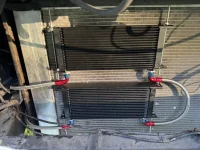
I added a 19 Row setrab cooler and kept the "Superior" radiator cooling in line after this cooler and it made no difference to my temps. Still climbing up to 200F fairly easily. BTU rating for this cooler was something like 15,000 - 27,000 depending on airflow etc.

So I added a second identical cooler and removed the radiator from being involved at all. After first 1 hour test drive temps did not go above 150F.

So either removing the radiator, or adding the second cooler did the trick. Probably a bit of both. Engine temp is solid 180F all the time.

1759221537782.webp

Next up is to remove the old hardline in full just so I know it is all serviceable in the future.

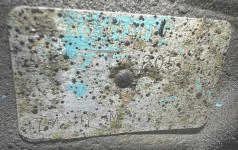
I also noticed this plate on my transmission - but can't fully decipher what it says. I was just curious as my transmission has a temp sender in it which many others seem to say they don't have. I assume maybe these earlier versions had them and it was removed in later versions maybe.

1759221764720.webp
 
  • Like
Reactions: Kendra
Add an electric fan to the external Tx cooler so you can keep good airflow through it when on a long hill climb. And if you have to drive less than 25 MPH in first gear, do it.

What is the general rule for hill climbing in the GMC? I usually just go slow and leave it in D but should I be shifting down. I never use the 2-1 selectors but if I should on big hills I'll start too.
 
So I did some installation and am reporting results for future googlers here;

I added a 19 Row setrab cooler and kept the "Superior" radiator cooling in line after this cooler and it made no difference to my temps. Still climbing up to 200F fairly easily. BTU rating for this cooler was something like 15,000 - 27,000 depending on airflow etc.

So I added a second identical cooler and removed the radiator from being involved at all. After first 1 hour test drive temps did not go above 150F.

So either removing the radiator, or adding the second cooler did the trick. Probably a bit of both. Engine temp is solid 180F all the time.

View attachment 16682

Next up is to remove the old hardline in full just so I know it is all serviceable in the future.

I also noticed this plate on my transmission - but can't fully decipher what it says. I was just curious as my transmission has a temp sender in it which many others seem to say they don't have. I assume maybe these earlier versions had them and it was removed in later versions maybe.

View attachment 16683
Where is the temp sender located, case or pan?
 
So I did some installation and am reporting results for future googlers here;

I added a 19 Row setrab cooler and kept the "Superior" radiator cooling in line after this cooler and it made no difference to my temps. Still climbing up to 200F fairly easily. BTU rating for this cooler was something like 15,000 - 27,000 depending on airflow etc.

So I added a second identical cooler and removed the radiator from being involved at all. After first 1 hour test drive temps did not go above 150F.

So either removing the radiator, or adding the second cooler did the trick. Probably a bit of both. Engine temp is solid 180F all the time.

View attachment 16682

Next up is to remove the old hardline in full just so I know it is all serviceable in the future.

I also noticed this plate on my transmission - but can't fully decipher what it says. I was just curious as my transmission has a temp sender in it which many others seem to say they don't have. I assume maybe these earlier versions had them and it was removed in later versions maybe.

View attachment 16683

For the tag, the 205 is the Julian date code for when it was made (205th day starting from January 1, 1973). The 74 is the year of vehicle it was made for and I believe the GM means it was built for a GMC motorhome. The 1253 would be the transmission serial number.
 
In the case, not in the pan.
The temp sender is in the line pressure tap. As the pressure increases the temp will increase. You should put the temp sender in the pan to get a better idea of what is going on. As a general rule of thumb, the trans will run 100'F over outside air.
 
In the case, not in the pan.

For the tag, the 205 is the Julian date code for when it was made (205th day starting from January 1, 1973). The 74 is the year of vehicle it was made for and I believe the GM means it was built for a GMC motorhome. The 1253 would be the transmission serial number.

Wow that’s so cool - thank you so much for that!

Its probably outside of Warranty then. :)
 
The temp sender is in the line pressure tap. As the pressure increases the temp will increase. You should put the temp sender in the pan to get a better idea of what is going on. As a general rule of thumb, the trans will run 100'F over outside air.

Thanks. I tested pan temps with a laser gun and got lower readings but still quite high above 200s so maybe I didn’t need to be quite as concerned. Anything over 230 had me worried.

I’m now not going above 150F even on hills so will keep this setup.
 
What is the general rule for hill climbing in the GMC? I usually just go slow and leave it in D but should I be shifting down. I never use the 2-1 selectors but if I should on big hills I'll start too.

I like to use the gear where I can keep the engine 2500-3500 rpm and not wide open throttle (WOT). I like 1/2 to 2/3 throttle. That's where these engines are happy; plenty of oil flow and pressure, plenty of fan and air movement, plenty of coolant flow. There's absolutely nothing wrong with climbing a hill in 1st gear at 30 mph if that's what you have to do.

If you lug the engine at WOT and low rpms, that's where you get into trouble b/c you'll have low oil pressure, low oil flow, low coolant flow, low radiator air flow. The oil pressure and flow is what keeps the metal parts of your rods and crankshaft journals from physically touching, metal on metal. There's a 0.002 - 0.003" film of oil there, and without that pressure and flow it can become 0.000" Especially if you are WOT which maximizes the force on that oil film. And without plenty of coolant flow and air flow over the radiator, the heat will build up in your engine. To get rid of it quickly, you need both flows to be maximized.
 
I like to use the gear where I can keep the engine 2500-3500 rpm and not wide open throttle (WOT). I like 1/2 to 2/3 throttle. That's where these engines are happy; plenty of oil flow and pressure, plenty of fan and air movement, plenty of coolant flow. There's absolutely nothing wrong with climbing a hill in 1st gear at 30 mph if that's what you have to do.

If you lug the engine at WOT and low rpms, that's where you get into trouble b/c you'll have low oil pressure, low oil flow, low coolant flow, low radiator air flow. The oil pressure and flow is what keeps the metal parts of your rods and crankshaft journals from physically touching, metal on metal. There's a 0.002 - 0.003" film of oil there, and without that pressure and flow it can become 0.000" Especially if you are WOT which maximizes the force on that oil film. And without plenty of coolant flow and air flow over the radiator, the heat will build up in your engine. To get rid of it quickly, you need both flows to be maximized.

That makes a lot of sense. I'll make sure to downshift on the long slow hills. I never do WOT anyway so thats all good too.
 
The temp sender is in the line pressure tap.
X2 on this.

I asked Manny directly what kind of temperature readings this port would give me, and whether it was a circulating passage or not. He said it's a dead-end passage, not a circulating one. As such, it's not great for temperature readings.

This is just 2nd hand info from Manny, via yours truly. I did not sit down to analyze the circuits/passages first-hand. Manny's opinion was good enough for me.
 
  • Like
Reactions: tmsnyder
That makes a lot of sense. I'll make sure to downshift on the long slow hills. I never do WOT anyway so thats all good too.
I have a switch pitch that is controlled by Bruce's "black box" controller. I believe that it is actually an automatic down shift from 3rd gear to 2 1/2 - 2 5/8 gear, not all the way down to 2nd gear.
In Florida, there are no mountains, so I don't know how well works.

I have a 3.20 final drive and a FiTech fuel inject4ed Jim Bound's COOP 455.

Is there anyone with experience with the switch pitch and Bruce's black box?
 
I have a switch pitch that is controlled by Bruce's "black box" controller. I believe that it is actually an automatic down shift from 3rd gear to 2 1/2 - 2 5/8 gear, not all the way down to 2nd gear.
In Florida, there are no mountains, so I don't know how well works.

I have a 3.20 final drive and a FiTech fuel inject4ed Jim Bound's COOP 455.

Is there anyone with experience with the switch pitch and Bruce's black box?

Was this switch pitch already in your transmission or did you have to swap out the transmission with a model that had this already? This wasn't standard on GMC Motorhomes as I understand it?

Still very much learning a lot of this stuff. I didn't know I needed external cooling until recently!