Here it is: https://www.facebook.com/groups/classicgmcmotorhomes
Classic GMC Motorhomes is Billy Massey's group and is the biggest GMC group on FB.
Hmmm, last post was in 2018.... would love to read some more about the Mustang e-motor swap
Here it is: https://www.facebook.com/groups/classicgmcmotorhomes
Classic GMC Motorhomes is Billy Massey's group and is the biggest GMC group on FB.

2018? John's post about his Mach-E swap was on 7/27/23Hmmm, last post was in 2018.... would love to read some more about the Mustang e-motor swap
 www.facebook.com
I have participated in lots of meandering conversations on this so I thought i would put all my silly thoughts in one place.
I think a 300-400 mi range electric GMC is totally doable.
Some of these numbers are just guesses so feel free to challenge them.
A Tesla S weighs 4200 lb with a 1200 lb battery. A GMC weighs around 11,000 lb give or take.
The engine, transmission, exhaust, cooling, tanks, generator and fluids weighs over 2300 lb.
One Tesla motor only weighs 110 lb. So, by my guess, two motors and three batteries would only add 1700lb net after you removed all the ICE stuff.
The drag coefficient of a GMC with a clean roof is .30 - the Tesla S is .24
To do this today would be at least $60,000 in used parts but in a few years when there are a pile of EV parts in junkyards the math is there and the GMC is an excellent candidate.
I used Tesla because the numbers are readily available but Amazon ordered 100,000 Rivian electric trucks. That will also contribute the parts supply.
Electric cars may be at the point where they can do short hops but the technology is not even there for trucks. They have severe limitations when trying to travel. Here in Arizona there is a article where people tried to drive between Phoenix and Flagstaff and with the steep grade, bumper to bumper trafic it took them three days to drive what should have been a few hours.I have participated in lots of meandering conversations on this so I thought i would put all my silly thoughts in one place.
I think a 300-400 mi range electric GMC is totally doable.
Some of these numbers are just guesses so feel free to challenge them.
A Tesla S weighs 4200 lb with a 1200 lb battery. A GMC weighs around 11,000 lb give or take.
The engine, transmission, exhaust, cooling, tanks, generator and fluids weighs over 2300 lb.
One Tesla motor only weighs 110 lb. So, by my guess, two motors and three batteries would only add 1700lb net after you removed all the ICE stuff.
The drag coefficient of a GMC with a clean roof is .30 - the Tesla S is .24
To do this today would be at least $60,000 in used parts but in a few years when there are a pile of EV parts in junkyards the math is there and the GMC is an excellent candidate.
I used Tesla because the numbers are readily available but Amazon ordered 100,000 Rivian electric trucks. That will also contribute the parts supply.

 www.foxnews.com

Maybe to some people in a local/commuter sense. My pal in Calgary bought a Tesla. It takes him hours more than before to run down to Vancouver because he has to stop to charge up. Not sure how efficient that is.electric is kool, fancy and efficient,
Maybe to some people in a local/commuter sense. My pal in Calgary bought a Tesla. It takes him hours more than before to run down to Vancouver because he has to stop to charge up. Not sure how efficient that is.


If the fuel tanks are gone, then that 12k lb weight is reduced around 350-400 lbs (with full fuel).Using the Tesla X as a example and Just doing a little math. Our motorhomes already weigh 12, 000 lbs. To get about the same distance the Tesla gets you would need 4 battery packs bringing the weight up to 17,508 lbs.
Oh but then you would need to add a lot of steel to reinforces the frame, redesign the suspension, and do a completer re-engeering of the brake system (semi truck brakes?). So you will need a fifth 1377 lb battery, maybe a sixth, larger motor ect. Then still you will need a larger generator to charge the batteries since there are no charging stations with that kind of capacity. Could be done if you were the winner of the last big lottery.
In my estimation I left the fuel tanks in since you will need all of that and more (possibly have to add the third tank modification) to charge the batteries from the Generator. At the full output of the Onan it will take 45 hrs of run time to charge the batteries using Teslas figures.If the fuel tanks are gone, then that 12k lb weight is reduced around 350-400 lbs (with full fuel).
Hmmm. Kind of defeats the purpose of having an electric GMC, if you have to haul 50 gals of gas around to keep it charged.In my estimation I left the fuel tanks in since you will need all of that and more (possibly have to add the third tank modification) to charge the batteries from the Generator. At the full output of the Onan it will take 45 hrs of run time to charge the batteries using Teslas figures.

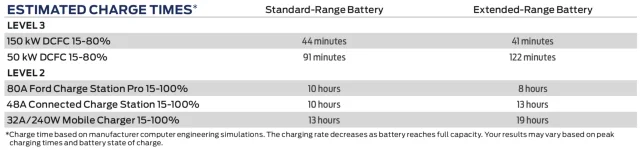
We are now going on about 6 months with a couple f-150 lightning at work.Using the Ford F-150 Lightning bolt as an example, and assuming you could put up with pulling 12,000 lbs with the motor in the Ford that was designed for 6015 lbs: The EPA estimate on the Ford is 0.87 kWh/mi (probably be twice that pulling 12,000 lbs) with a estimated range of 230 mi. I know two people that own these and they couldn't make it 75 mi to get to work every day in stop and go traffic which really takes a toll on the charge. The battery weighs over 1800 lbs. On flat ground you might get 110mi without adding a second battery. Of course charge times would be very inconvient.