Rear bogie spindle nut

  • Please note, the forum recently had a problem with outbound emails for notifications, registrations, etc. A new email provider has been set up which should resolve all email issues. If you have any further trouble, please DM Christo or reach out via the Contact Us link in the website footer.
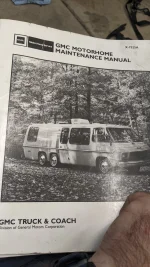
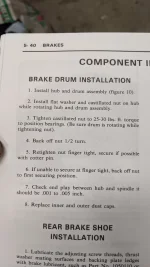
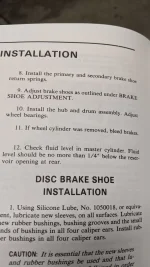
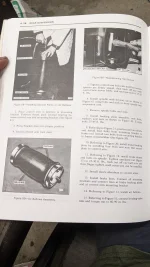
Ok, so to clear things up, we're all right--and yet, we're all wrong too. It seems it depends on which section you look in. This is all from the X7525 manual. Three different sections have three different directions. One as vague as "adjust the wheel bearings."

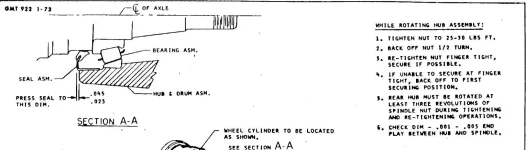
The other two both say 25-30 ft-lbs, then back half a turn, then forward to pin it. One goes on to say check for end play from one to five thousandths.
 

Attachments

  • PXL_20230629_051940792.webp
    PXL_20230629_051940792.webp
    1.3 MB · Views: 6
  • PXL_20230629_051931760.MP.webp
    PXL_20230629_051931760.MP.webp
    331.3 KB · Views: 6
  • PXL_20230629_052007429.MP.webp
    PXL_20230629_052007429.MP.webp
    357.3 KB · Views: 6
  • PXL_20230629_052210594.MP.webp
    PXL_20230629_052210594.MP.webp
    720.5 KB · Views: 6
  • Like
Reactions: Christo and Rdenney
@Rdenney
Rick, great to see you again.

I believe Ken Henderson posted this on the GMC MH photo site years ago and I saved it to my computer. Not sure where he got it from.
Hey, Bruce, it’s great to be seen. Thinking back, I remember when Christo created this forum and I even posted in it, but was still receiving GMCnet email and not able to spend time even with that. I’m still working so that may happen again, too, but it is good to be back in touch with old friends.

In March, the Redhead and I were going to Florida and rearranged our trip to attend Ada Galbavy’s memorial service. I saw a bunch of folks there and realized I was letting too much slip away. Can’t do that! My GMC friends are too important.

Rick “would rather be seen than viewed” Denney
 
Ok, so to clear things up, we're all right--and yet, we're all wrong too. It seems it depends on which section you look in. This is all from the X7525 manual. Three different sections have three different directions. One as vague as "adjust the wheel bearings."

The other two both say 25-30 ft-lbs, then back half a turn, then forward to pin it. One goes on to say check for end play from one to five thousandths.
 
Ok, so to clear things up, we're all right--and yet, we're all wrong too. It seems it depends on which section you look in. This is all from the X7525 manual. Three different sections have three different directions. One as vague as "adjust the wheel bearings."

The other two both say 25-30 ft-lbs, then back half a turn, then forward to pin it. One goes on to say check for end play from one to five thousandths.
"Tightening the Wheel Bearings": Its amazing how many errors can be found in GM Service Manuals and Literature. To correct these they put out "Service Bulletins", "Warranty Bulletins", "Service Updates", "Service Notices,"; posted updated "Service Procedures" in the "Service Newsletter", etc.

The correct procedure is to torque the wheel bearings to 25-30 ft. lbs. while rotating the tire. Then back the nut off one-half turn and then tighten it finger tight and insert the cotter pin. It may be necessary to back off the nut to the first position that the cotter pin may be inserted. Remember, there are several slots in the nut, and several holes in the spindle for the cotter pin, so it will not have to be backed off very much.

I almost hate to throw this in, but all new GM vehicles had the grease cups filled to the half way point, and a considerable amount of grease inside the cavity on the drums between the bearings. I found a "Service Update Bulletin" about the time when our coaches were new that confirmed this. The drum was to be filled with grease to the mid line of the outer bearing. This obviously was to keep the bearings well lubricated and allow the grease to flow into the bearings.

Before anyone screams; yes, I have seen many bearings that were greased and installed without all this grease, but since we are draging around 12000+lbs, on automobile bearings it might be a good practice.
 
"Tightening the Wheel Bearings": Its amazing how many errors can be found in GM Service Manuals and Literature. To correct these they put out "Service Bulletins", "Warranty Bulletins", "Service Updates", "Service Notices,"; posted updated "Service Procedures" in the "Service Newsletter", etc.

The correct procedure is to torque the wheel bearings to 25-30 ft. lbs. while rotating the tire. Then back the nut off one-half turn and then tighten it finger tight and insert the cotter pin. It may be necessary to back off the nut to the first position that the cotter pin may be inserted. Remember, there are several slots in the nut, and several holes in the spindle for the cotter pin, so it will not have to be backed off very much.

I almost hate to throw this in, but all new GM vehicles had the grease cups filled to the half way point, and a considerable amount of grease inside the cavity on the drums between the bearings. I found a "Service Update Bulletin" about the time when our coaches were new that confirmed this. The drum was to be filled with grease to the mid line of the outer bearing. This obviously was to keep the bearings well lubricated and allow the grease to flow into the bearings.

Before anyone screams; yes, I have seen many bearings that were greased and installed without all this grease, but since we are draging around 12000+lbs, on automobile bearings it might be a good practice.
I believe in the GMC Motorhome Photos site there are photos of someone modifying the rear hubs to use gear (bearing) oil for lube rather than grease. I'm not sure if there is an advantage to this but all large trucks seem to be this way.
 
Is your GMC motorhome red in the front or are you referring to your spouse??? LOL This is fantastic!
That would be my wife. Whether the red is natural as it surely was or chemically enhanced is not a question one would ask. Most of our GMC friends like her better than me, or more accurately they like me because of her. They would never admit it, of course. :)

The coach is Jaws. Named by the Redhead because it is a man eater.

Rick “and now you know” Denney
 
  • Haha
Reactions: tmsnyder
I believe in the GMC Motorhome Photos site there are photos of someone modifying the rear hubs to use gear (bearing) oil for lube rather than grease. I'm not sure if there is an advantage to this but all large trucks seem to be this way.
As you know, grease is just oil emulsified in soap. The soap keeps the oil where it belongs.

Rick “not maintenance-free but effective for all that” Denney
 
I believe in the GMC Motorhome Photos site there are photos of someone modifying the rear hubs to use gear (bearing) oil for lube rather than grease. I'm not sure if there is an advantage to this but all large trucks seem to be this way.
They had that posted on their website to. I looked at it a long time ago. Yes, there are several advantages to using gear oil: The bearings are better lubricated, they stay cooler because the heat is distributed throuout the oil, and the bearings stay cleaner because small particles migrate into the trough and centrifugal force removes them from the oil and keeps them there.
 
Hey, Bruce, it’s great to be seen. Thinking back, I remember when Christo created this forum and I even posted in it, but was still receiving GMCnet email and not able to spend time even with that. I’m still working so that may happen again, too, but it is good to be back in touch with old friends.

In March, the Redhead and I were going to Florida and rearranged our trip to attend Ada Galbavy’s memorial service. I saw a bunch of folks there and realized I was letting too much slip away. Can’t do that! My GMC friends are too important.

Rick “would rather be seen than viewed” Denney
Rick,
I "see" you and am glad you're back. I've missed your posts.
Doug "glad to see Rick" Smith
 
  • Like
Reactions: Rdenney
Here is a link to a diagram of the rear wheel spindle with nut tightening instructions.

PLUS... note that the seal must be left slightly proud of the hub to prevent the seal from hitting the inner bearing.

Hi Bruce,

In the cross-sectional drawing, which part of the seal is in danger of hitting the inner bearing. I currently have my hubs apart and am not sure where to look. Is it the innermost part of the seal that carries the rubber? It doesn't seem like the outer lip could be a problem.

regards
Gerry
 

Attachments

  • Rear Bearing & Seal.webp
    Rear Bearing & Seal.webp
    64.7 KB · Views: 10
Hi Bruce,

In the cross-sectional drawing, which part of the seal is in danger of hitting the inner bearing. I currently have my hubs apart and am not sure where to look. Is it the innermost part of the seal that carries the rubber? It doesn't seem like the outer lip could be a problem.

regards
Gerry
Hi Gerry,

I believe it is the outer casing that is curled in too far on some seals that can touch the race. The last set of seals I installed did not have an issue that I could see.

You want to leave the seal case slightly proud of the hub as shown in the diagram. I bought a tool from Dave Lenzi that installs the seal to the correct position.
 
Hi Gerry,

I believe it is the outer casing that is curled in too far on some seals that can touch the race. The last set of seals I installed did not have an issue that I could see.

You want to leave the seal case slightly proud of the hub as shown in the diagram. I bought a tool from Dave Lenzi that installs the seal to the correct position.
My seals seem okay on the outside. They came from applied so perhaps there’s no issue. I will recheck. Thanks for the reply!
 
Wow 30 ft-lb seems like a lot. I always do a lot less, just to get all the lash out of the bearings. Then without wiggling or turning the hub, back the nut off until it's loose, then turn it in by fingers until it just touches and you can't turn it with fingers, then back off to the first place you can get a cotter key in. That will give you the least amount of lash in the bearing without actually putting force on the bearing with the nut. All the force will come from the load it carries.
The 30 ft-lb torque is to make sure the bearing races are seated properly.
If they are not seated, they will seat during use and the play will increase.
 
  • Like
Reactions: tmsnyder
I ended up turning mine to 25 ft-lb, backing off half turn and then making them finger tight. I measured the endplay at that point with a dial indicator from the wheel mount face to the end of the axle. I got them all to about 3 or 4 thou and put the cotters in.
 
  • Like
Reactions: tmsnyder