New 280 Ah lithium battery

Larry Davick

Well-known member
May 9, 2007
3,778
23
48
Fremont, Ca.
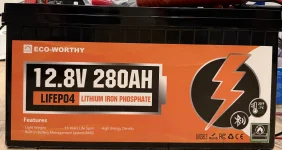
I ordered a “bargain” $273 lithium battery from AliExpress. It was a leap of faith, as I don’t have any confidence in AliExpress yet, but I think it paid off! Ordered on 11/21 and it arrived on 12/3. Not Amazon fast but long enough to sow doubts in my mind.
The battery is substantial, weighing about 67 lbs and I charged it slowly over 2 days with a 5 amp charger.
The BMS includes Bluetooth and an app that seem very good to this nuby
I’ve removed my Yandina combineru as well as the connection from the chassis battery to the battery isolator in preparation for installing a DC-DC charger. The only charge method I have at the moment is the new Progressive Dynamics PD 9300. 30 amp

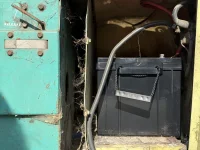
I was concerned that the battery was a scosch too wide to fit in the battery box, but after removing a few cobwebs and the clip-thread thingie it slid in like it was meant to be. See pix.

The big task ahead is to install the Renogy 30 amp DC-DC charger with MPPT and Bluetooth as well as the Renogy Core display. I’ve also bought a Renogy shunt with Bluetooth so that the Core might show SOC. I didn’t realize how good the information from the battery’s own software was.

Isee that I’ll have to run 4AWG from the chassis battery back to the DC-DC charger. It seems like overkill, but science is better insurance than intuition is. I sized this kind of small (30 amps) both for the converter and the DC-DC charger / MPPT.

Any thoughts or critiques are welcome.
 

Attachments

  • IMG_2141.webp
    IMG_2141.webp
    456.9 KB · Views: 15
  • IMG_2147.webp
    IMG_2147.webp
    1.1 MB · Views: 16
  • IMG_2148.webp
    IMG_2148.webp
    350.2 KB · Views: 16
I almost bought the same battery a few weeks ago, so I am glad to read yours seems good. I bought an ecoworthy 100 amp hour off ebay a year ago to experiment with and it has been 100% what it said it would be. I was more leery of aliexpress. Your report that it fits in the typical spot makes it more likely I will bite next time it is on sale! Thanks, and keep posting your setup, it is helpful to see what people are doing.
 
I ordered a “bargain” $273 lithium battery from AliExpress. It was a leap of faith, as I don’t have any confidence in AliExpress yet, but I think it paid off! Ordered on 11/21 and it arrived on 12/3. Not Amazon fast but long enough to sow doubts in my mind.
The battery is substantial, weighing about 67 lbs and I charged it slowly over 2 days with a 5 amp charger.
The BMS includes Bluetooth and an app that seem very good to this nuby
I’ve removed my Yandina combineru as well as the connection from the chassis battery to the battery isolator in preparation for installing a DC-DC charger. The only charge method I have at the moment is the new Progressive Dynamics PD 9300. 30 amp

I was concerned that the battery was a scosch too wide to fit in the battery box, but after removing a few cobwebs and the clip-thread thingie it slid in like it was meant to be. See pix.

The big task ahead is to install the Renogy 30 amp DC-DC charger with MPPT and Bluetooth as well as the Renogy Core display. I’ve also bought a Renogy shunt with Bluetooth so that the Core might show SOC. I didn’t realize how good the information from the battery’s own software was.

Isee that I’ll have to run 4AWG from the chassis battery back to the DC-DC charger. It seems like overkill, but science is better insurance than intuition is. I sized this kind of small (30 amps) both for the converter and the DC-DC charger / MPPT.

Any thoughts or critiques are welcome.
Looks like a great deal you got... time will tell. Will Prowse's YouTube has done a review of this battery and he seems quite happy with it.

The 30 amp DC-DC charger is a good choice for our 80-100A alternators. At 30 amp constant current charge, the DC-DC charger will consume somewhere around 35 amps. I'm not sure why you need a #4 wire from the chassis battery connection to the DC-DC charger. A #10 or #8 (preferred and is what I used) wire should be sufficient and any voltage drop in this wire is compensated for by the DC-DC charger.

The DC-DC and 120VAC chargers should be mounted as close to the LFP battery as possible for the shortest wiring. This is because the charge cycle depends on the battery terminal voltage readings. However both chargers measure these voltages at their output terminals, not at the battery terminals, so the lower the voltage drop across the charger to battery wires, the better. I installed my LFP batteries at the bottom of the closet, right beside the electrical cabinet. Both chargers are in the electrical cabinet, so I have only about 3 ft of #4 wire (6ft total), but I still get about 150mV of voltage drop when charging at my normal 40 Amp rate.

LFP batteries can be charged at a much higher current rate than lead acid. If you discharged your battery down to 10%, it will take your 30 Amp charger more than 8 hrs to fully recharge. You might want to consider trading up to the 60 Amp version to reduce the charge time in half while charging from shore power (or generator)

Let us know how you make out.
 
Ali Express is great. I've bought loads of salmon fishing tackle, OBDB2 code readers, night driving polaroids, Mercedes intake manifolds, wheel and O2 sensors and countless other items. Often the same stuff as Amazon sells at half the price!
 
I ordered a “bargain” $273 lithium battery from AliExpress. It was a leap of faith, as I don’t have any confidence in AliExpress yet, but I think it paid off! Ordered on 11/21 and it arrived on 12/3. Not Amazon fast but long enough to sow doubts in my mind.
The battery is substantial, weighing about 67 lbs and I charged it slowly over 2 days with a 5 amp charger.
The BMS includes Bluetooth and an app that seem very good to this nuby
I’ve removed my Yandina combineru as well as the connection from the chassis battery to the battery isolator in preparation for installing a DC-DC charger. The only charge method I have at the moment is the new Progressive Dynamics PD 9300. 30 amp

I was concerned that the battery was a scosch too wide to fit in the battery box, but after removing a few cobwebs and the clip-thread thingie it slid in like it was meant to be. See pix.

The big task ahead is to install the Renogy 30 amp DC-DC charger with MPPT and Bluetooth as well as the Renogy Core display. I’ve also bought a Renogy shunt with Bluetooth so that the Core might show SOC. I didn’t realize how good the information from the battery’s own software was.

Isee that I’ll have to run 4AWG from the chassis battery back to the DC-DC charger. It seems like overkill, but science is better insurance than intuition is. I sized this kind of small (30 amps) both for the converter and the DC-DC charger / MPPT.

Any thoughts or critiques are welcome.

This thread has a ton of stuff I found useful...
 
Looks like a great deal you got... time will tell. Will Prowse's YouTube has done a review of this battery and he seems quite happy with it.

The 30 amp DC-DC charger is a good choice for our 80-100A alternators. At 30 amp constant current charge, the DC-DC charger will consume somewhere around 35 amps. I'm not sure why you need a #4 wire from the chassis battery connection to the DC-DC charger. A #10 or #8 (preferred and is what I used) wire should be sufficient and any voltage drop in this wire is compensated for by the DC-DC charger.

The DC-DC and 120VAC chargers should be mounted as close to the LFP battery as possible for the shortest wiring. This is because the charge cycle depends on the battery terminal voltage readings. However both chargers measure these voltages at their output terminals, not at the battery terminals, so the lower the voltage drop across the charger to battery wires, the better. I installed my LFP batteries at the bottom of the closet, right beside the electrical cabinet. Both chargers are in the electrical cabinet, so I have only about 3 ft of #4 wire (6ft total), but I still get about 150mV of voltage drop when charging at my normal 40 Amp rate.

LFP batteries can be charged at a much higher current rate than lead acid. If you discharged your battery down to 10%, it will take your 30 Amp charger more than 8 hrs to fully recharge. You might want to consider trading up to the 60 Amp version to reduce the charge time in half while charging from shore power (or generator)

Let us know how you make out.
I’ve been watching Will Prowse since he lived in a van (at least it feels that way).

I feel as if 8awg would be overkill for the load, and I did specifically have the alternator capacity in mind when I bought the 30 amp unit. I may clean things up under hood with a bus bar.

As for 8 hours of charge, we rarely have been off grid for long and usually are on the road in a day or two. I plan to put some solar on the roof and that will keep them healthy and help top them up. The charge controller will output 30 amps in total and takes voltage from both solar and the alternator, prioritizing solar over the alternator. I think that’s cool.

She’s back in storage for the week, but it’s been a good weekend with lots of reminiscing and Christmas music! (I’m itching to buy something like this Boss radio https://www.crutchfield.com/p_104BE10WX/BOSS-Audio-Elite-BE10ACP-WX.html to display maps)

It’s nearly endless what we can add to our coaches!
 
This thread has a ton of stuff I found useful...
I had considered upgrading the alternator, but the coach wiring, being nearly 50 years old, made me pause.
 
From my mind's eye, the stator wiring of the OEM alternator is #14 (same as used in your house wiring limited to 15 Amps). So even at the 80Amp rating, the stator wiring is going to heat up fairly fast without sufficient cooling.

I'm not sure how these high current alternators are not that much larger to accommodate the larger stator wiring required. I haven't seen a duty cycle vs ambient air temperature chart for them.

I guess it's kinda like automotive engine HP ratings. You can get lots of power from them for a very short period of time, but ask them to deliver that power all day like like a diesel does and you will soon have parts all over the road.
 
I have been using the same battery (two of them in parallel) with excellent results. And yes, you got a bargain! Every review I could find at the time (including Will Prowse) indicated they were a good choice. My only complaint has been the BMS isn't accurate; two batteries in parallel using the same gauge/length cables to the primary bus-bars, but the batteries never read the same percentage of charge (yes, I fully charged them before connecting them). Both however do show the same voltage in each of their cells (4 per battery, eight total) and one battery isn't charging the other. So, the batteries are working fine, but the BMS isn't properly calibrated. Today one battery is at 86% while the other is at 95%; same voltage in all cells. :unsure:😣

If only I had waited, I could have purchased the "mini" 280AH batteries (now 315AH) that came onto the market later. :ROFLMAO: 😖

Regarding the wire back to the DC/DC... It seems to matter which calculator you use or what voltage-drop is acceptable. The manual for my 40A unit indicated 6ga, but a calculator indicated 4ga. I tend to go for overkill in wire gauges as I only want to run them once and too large was never a problem (just expensive and a pain to route).

So yes, you've got a good battery that should work well for many years.
 
Last edited:
I have been using the same battery (two of them in parallel) with excellent results. And yes, you got a bargain! Every review I could find at the time (including Will Prowse) indicated they were a good choice. My only complaint has been the BMS isn't accurate; two batteries in parallel using the same gauge/length cables to the primary bus-bars, but the batteries never read the same percentage of charge (yes, I fully charged them before connecting them). Both however do show the same voltage in each of their cells (4 per battery, eight total) and one battery isn't charging the other. So, the batteries are working fine, but the BMS isn't properly calibrated. Today one battery is at 86% while the other is at 95%; same voltage in all cells. :unsure:😣

If only I had waited, I could have purchased the "mini" 280AH batteries (now 315AH) that came onto the market later. :ROFLMAO: 😖

Regarding the wire back to the DC/DC... It seems to matter which calculator you use or what voltage-drop is acceptable. The manual for my 40A unit indicated 6ga, but a calculator indicated 4ga. I tend to go for overkill in wire gauges as I only want to run them once and too large was never a problem (just expensive and a pain to route).

So yes, you've got a good battery that should work well for many years.
The calculation is a function of distance, and I think the distance from the Chassis battery to the wiring closet, where the DC-DC charger will live, is about 25' (+/-). I now understand that Marine cable uses finer strands and a more flexible jacket. The cheapskate in me just can't swallow the $$ -- yet.
 
The calculation is a function of distance, and I think the distance from the Chassis battery to the wiring closet, where the DC-DC charger will live, is about 25' (+/-). I now understand that Marine cable uses finer strands and a more flexible jacket. The cheapskate in me just can't swallow the $$ -- yet.
Welding cable....
 
  • Like
Reactions: pvfjr
The calculation is a function of distance, and I think the distance from the Chassis battery to the wiring closet, where the DC-DC charger will live, is about 25' (+/-). I now understand that Marine cable uses finer strands and a more flexible jacket. The cheapskate in me just can't swallow the $$ -- yet.
Also remember you have the return path voltage drop, usually via the vehicle framework (unless you run a separate negative wire back to the engine block). I usually assume the return path to have the same voltage drop unless I am able to measure it.