Lithium Conversion of Living Area 12v System

JSanford

Well-known member
Sep 29, 2019
543
304
63
49
Sacramento, CA
I just completed a conversion of my living area 12v electrical system from lead acid to a modern LiFePO4 lithium battery.

This was a basic conversion, making as few modifications to the original GMC living area system as possible. I used consumer grade products that were simple and straightforward to install and setup. This was not the cheapest Lithium conversion and not the most expensive, but probably typical of what the average GMCer would want.

Here is what I purchased (April 2020 Prices):
Battle Born 10012 12v 100Ah - $899 from Battle Born
LI-BIM 225 Battery Isolation Manager - $150 from Battle Born
Victron BMV712 battery monitor - $175 from Battle Born
Progressive Dynamics PD9145ALV 12V Lithium Ion Battery Converter/Charger - $189 Amazon
Custom 4 AWH Battery Cables - $20 from Battery Cables USA
Gauge Bracket - $23 from NAPA

Total Parts Cost: $1456

Battle Born is a great company to deal with, do not buy online, if you call and talk to a rep they will discount everything below the online "sale" prices. Everything ordered from Battle Born was tax free and free shipping. Battle Born recommends and sells the PD9145ALV but could not match the Amazon price.

This is what came with my GMC when I got it, two GC2 6v batteries that were wired in series:
IMG_6293 1.webp

This one Battle Born LiFePO4 battery provides more useful energy per charge than a lead acid battery, is not as easily damaged as a lead acid battery, and weighs just 31lbs. While the upfront cost of the Battle Born is much higher than lead acid, the durability and longevity of the Battle Born makes it a better value.
IMG_6372 7.webp
IMG_6558 11.webp

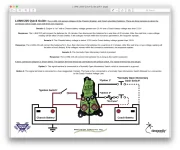
The LI-BIM 225 Battery Isolation Manager cycles the connection between the engine alternator and the living area battery when the engine is running so as not to stress the old 80 amp Delcotron. When the engine is off the LIBIM will connect if it detects the engine battery voltage is low and the living area battery is being charged. As you can see, I have wired mine a little differently than the manufacturer of the LIBIM recommends. For the time being I am retaining the original diode isolator and using a jumper when needed as a combiner. My current setup allows me to use the center post of the diode isolator as the ignition signal the LIBIM requires to operate. Eventually I will remove the original isolator and just use the LIBIM with a longer wire to a source of ignition voltage. Alternatively, you could replace the magnetic Boost solenoid with the LIBIM.
IMG_6427 9.webp
LIBIM.webp

The Victron BMV712 battery monitor has a shunt in the battery compartment connected to the monitor head unit with a telephone data cable. I had to remove the side panel in the rear lounge to fish the data cable through from the electrical compartment. I mounted the Victron head unit in a aluminum gauge holder placed at the front edge of the electrical cabinet. The monitor connects to the Victron app via Bluetooth to give me all the important info on the flow of energy and how much is remaining.
IMG_6334 4.webp
IMG_6323 2.webp
IMG_6592.webp
IMG_6483 10.webp

The new Progressive Dynamics PD9145ALV 12V Lithium Ion Battery Converter/Charger is a fraction of the size and weight of the one it replaced. Because the LiFePO4 batteries are more robust and have their own battery management system inside the Progressive Dynamics Lithium chargers do not have the Charge Wizard system their lead acid chargers have. In the electrical cabinet the charger tucks behind the 110 breaker panel out of the way.
IMG_6363 5.webp

IMG_6380 8.webp

There were a few additional items I replaced/installed for this project that were unique to my situation. I replaced the 1/0 AWG battery cable section from the magnetic Boost switch under the hood across the front crossmember to just above the driver side headlight. This wire sits completely exposed in this area and mine was cracking. I removed the sliding GC2 battery tray from my battery compartment and installed a cheap plastic tray and hold down. I restored the Battery Safety Cover to my living area battery compartment to keep prying eyes off my new Battle Born. I replaced the magnetic Boost switch in the living area battery compartment because it was badly corroded.
 
Your jumper-cable idea has me concerned. What happens when you are driving and the side on the LI-BIM falls off and grounds on the chassis?
 
Your jumper-cable idea has me concerned. What happens when you are driving and the side on the LI-BIM falls off and grounds on the chassis?

Oh don't worry, I just put the jumper on when parked with the GMC plugged into shore power at a camp ground. "Remove Isolator Jumper" is now #1 on my pre-flight checklist. Ultimately I will eliminate the diode isolator and maybe even the front Boost mag switch, but there is no convenient source of ignition signal in this area other than the alternator wire at the diode isolator.
 
  • Like
Reactions: bdub
Since the fuse panel is just on the other side of that aluminum plate, you can just drill through (checking whats on both sides) and pick up IGN from the fuse panel. Then wire the alternator to the chassis battery terminal and the Li-BIM between the chassis and house batteries and eliminate the isolator as you described.
Since my Victron battery monitor is pre-bluetooth, I wired mine over to the entrance where the Generator remote control and house gauges are. I really like it.
Nice work.
 
  • Like
Reactions: Daniel
Since the fuse panel is just on the other side of that aluminum plate, you can just drill through (checking whats on both sides) and pick up IGN from the fuse panel. Then wire the alternator to the chassis battery terminal and the Li-BIM between the chassis and house batteries and eliminate the isolator as you described.
Since my Victron battery monitor is pre-bluetooth, I wired mine over to the entrance where the Generator remote control and house gauges are. I really like it.
Nice work.

That was one of my thoughts, although I would run a longer wire and find an existing opening in the dash. Can you just plug on to one of those terminals in the center of the fuse block? It looks like there is zero clearance between the fuse lock and the glovebox when it is closed.

I have seen in some other GMC discussions that people use the oil pressure sender as a power source for their electric chokes, so that is an other option I think.

I intended to get the more basic Victron without Bluetooth (although still mount it hidden in the electrical compartment) but the Battle Born salesman did a good job.
 
There isn't an easy way to get through the firewall that I have found. Yes you can plug into the fuse panel for an IGNition source. Use a test light to find a connection that is live when in RUN but not in OFF/ACCY or START.
I have drilled a hole with a grommet bedside the fuse panel for these connections. Plug the hole after running the wires through.
 
  • Like
Reactions: jjdebarros
I just completed a conversion of my living area 12v electrical system from lead acid to a modern LiFePO4 lithium battery.

This was a basic conversion, making as few modifications to the original GMC living area system as possible. I used consumer grade products that were simple and straightforward to install and setup. This was not the cheapest Lithium conversion and not the most expensive, but probably typical of what the average GMCer would want.

Here is what I purchased (April 2020 Prices):
Battle Born 10012 12v 100Ah - $899 from Battle Born
LI-BIM 225 Battery Isolation Manager - $150 from Battle Born
Victron BMV712 battery monitor - $175 from Battle Born
Progressive Dynamics PD9145ALV 12V Lithium Ion Battery Converter/Charger - $189 Amazon
Custom 4 AWH Battery Cables - $20 from Battery Cables USA
Gauge Bracket - $23 from NAPA

Total Parts Cost: $1456

Battle Born is a great company to deal with, do not buy online, if you call and talk to a rep they will discount everything below the online "sale" prices. Everything ordered from Battle Born was tax free and free shipping. Battle Born recommends and sells the PD9145ALV but could not match the Amazon price.

This is what came with my GMC when I got it, two GC2 6v batteries that were wired in series:
View attachment 2955

This one Battle Born LiFePO4 battery provides more useful energy per charge than a lead acid battery, is not as easily damaged as a lead acid battery, and weighs just 31lbs. While the upfront cost of the Battle Born is much higher than lead acid, the durability and longevity of the Battle Born makes it a better value.
View attachment 2956
View attachment 2963

The LI-BIM 225 Battery Isolation Manager cycles the connection between the engine alternator and the living area battery when the engine is running so as not to stress the old 80 amp Delcotron. When the engine is off the LIBIM will connect if it detects the engine battery voltage is low and the living area battery is being charged. As you can see, I have wired mine a little differently than the manufacturer of the LIBIM recommends. For the time being I am retaining the original diode isolator and using a jumper when needed as a combiner. My current setup allows me to use the center post of the diode isolator as the ignition signal the LIBIM requires to operate. Eventually I will remove the original isolator and just use the LIBIM with a longer wire to a source of ignition voltage. Alternatively, you could replace the magnetic Boost solenoid with the LIBIM.
View attachment 2958
View attachment 2976

The Victron BMV712 battery monitor has a shunt in the battery compartment connected to the monitor head unit with a telephone data cable. I had to remove the side panel in the rear lounge to fish the data cable through from the electrical compartment. I mounted the Victron head unit in a aluminum gauge holder placed at the front edge of the electrical cabinet. The monitor connects to the Victron app via Bluetooth to give me all the important info on the flow of energy and how much is remaining.
View attachment 2959
View attachment 2960
View attachment 2961
View attachment 2964

The new Progressive Dynamics PD9145ALV 12V Lithium Ion Battery Converter/Charger is a fraction of the size and weight of the one it replaced. Because the LiFePO4 batteries are more robust and have their own battery management system inside the Progressive Dynamics Lithium chargers do not have the Charge Wizard system their lead acid chargers have. In the electrical cabinet the charger tucks behind the 110 breaker panel out of the way.
View attachment 2957

View attachment 2962

There were a few additional items I replaced/installed for this project that were unique to my situation. I replaced the 1/0 AWG battery cable section from the magnetic Boost switch under the hood across the front crossmember to just above the driver side headlight. This wire sits completely exposed in this area and mine was cracking. I removed the sliding GC2 battery tray from my battery compartment and installed a cheap plastic tray and hold down. I restored the Battery Safety Cover to my living area battery compartment to keep prying eyes off my new Battle Born. I replaced the magnetic Boost switch in the living area battery compartment because it was badly corroded.
nice work!
 
Nice job! Very clean and tidy. My electrical cabinet is filled with solar controller and associated equipment. I have the PD ALV waiting in the wings. I don't have the LiFePO4 batteries YET but intend to very soon. I'm especially interested in the Battery Isolation Manager which I didn't know was available and will be invaluable.

Thanks for sharing. :)

The LI-BIM 225 Battery Isolation Manager cycles the connection between the engine alternator and the living area battery when the engine is running so as not to stress the old 80 amp Delcotron. When the engine is off the LIBIM will connect if it detects the engine battery voltage is low and the living area battery is being charged. As you can see, I have wired mine a little differently than the manufacturer of the LIBIM recommends. For the time being I am retaining the original diode isolator and using a jumper when needed as a combiner. My current setup allows me to use the center post of the diode isolator as the ignition signal the LIBIM requires to operate. Eventually I will remove the original isolator and just use the LIBIM with a longer wire to a source of ignition voltage. Alternatively, you could replace the magnetic Boost solenoid with the LIBIM.
View attachment 2959
View attachment 2960
View attachment 2961
View attachment 2964
 
Went camping last week in far N CA and S OR, spent two of the days at a dry camp. After two nights of normal 12v electricity usage (exhaust fan when cooking, lighting(most still incandescent), water pump) I had used 38Ah. Pleased with the performance of the Battle Born.
 
  • Like
Reactions: bdub
I continue to be very impressed with the Battle Born. Have been on several trips this summer, including three nights dry camping last weekend, and have never come near depleting the battery. When I did this upgrade I planned to add an additional Battle Born down the line, but I see now that one is more than enough. 100Ah of LiFePO is much more usable energy than 100Ah of Pb.

Below is my state of charge after three nights camping, no engine running, no Onan. 49% of the battery left after three nights of running the water pump, range vent, furnace (with original worthless bathroom booster), and a mix of LED and incandescent lights.

I took the screen shot when only the furnace was running, so you can see how much power the original SolAire furnace and booster fan uses.

IMG_7162.jpg
 
Last edited:
Very cool indeed.

This stuff is a bit over my head, but if I get a GMC in this lifetime I plan on updating the battery bank like yours and adding solar. Off-the-grid woohoo!
 
Nice work Jeremy !!

i am considering the same implementation on my 73 23 footer. I have a compressor refrigerator so my consumption will be more than yours...

But here’s what I still need to sort out : storage and RV Parks with hookups.

I store my coach indoors and plugged in. This is super handy because the refrigerator is always on (With 120 VAC) and is stocked with often needed refreshments. And the batteries are always topped off via the PD9260 and a Yadina combiner. Somewhere I heard that lithium batteries do not like to be stored with charge current constantly applied... so I’m considering some circuitry where the refer gets constant 120VAC but the (new lithium model) PD converter/charger gets occasional 120VAC.

And the same issue applies to plugging in at RV parks.

I certainly don’t want to cook the new lithium batteries by having them constantly charging. And I haven’t yet found any definitive information on the subject. And I don’t recall where I heard the “don’t like constant charging” comment - it may have been from a discussion with BattleBorn.

Might you have any insight, comments, or advice ??

Thanks !!!

Steve W
Southern California
 
I certainly don’t want to cook the new lithium batteries by having them constantly charging. And I haven’t yet found any definitive information on the subject. And I don’t recall where I heard the “don’t like constant charging” comment - it may have been from a discussion with BattleBorn.

Might you have any insight, comments, or advice ??

Thanks !!!

Steve W
Southern California

Steve,

LiFePo Batteries don't need to be constantly topped off, they loose something like 1% per month. I think Battle Born says if you are going to leave them plugged into a charger for long periods it should "float" at 13.5V, but it is probably best to just unplug. In your situation you might just want to put a disconnect on your Battle Born for long term storage purposes.

I don't store mine plugged in (I actually find that kind of scary) and the only draw on my Battle Born is the Victron monitor. Mine never sits in storage for more than a few months, and the storage place will stick a charger on my chassis battery the day before I pick it up if I ask them to (I have a new AGM chassis battery so that is not necessary anyway).
 
I was under the (possibly mistaken) impression that the LiFePo batteries wanted a different charge voltage than PbHSO batteries. You don't seem to have included any accommodation for that and I was going to put a Renogy device of some description to account for that. Did I misunderstand something.
By the way, that is a nice install.

Matt
 
I was under the (possibly mistaken) impression that the LiFePo batteries wanted a different charge voltage than PbHSO batteries. You don't seem to have included any accommodation for that and I was going to put a Renogy device of some description to account for that. Did I misunderstand something.
By the way, that is a nice install.

Matt

Correct, to fully charge, LiFePO batteries need a higher voltage than lead acid. New lithium chargers, like the PD9145ALV I installed, charge at 14.6V, old lead acid chargers only go up to 14.4V.
 
Hey Jeremy,

You mentioned it briefly, but have you tried bypassing the diode isolator yet? It seems redundant to have both that with the LI-BIM. Unless I‘m missing something.

The PO removed my converter and house battery so I‘m in the re-design process for my house electrical system. I am planning to build it out with a battle born battery and am trying to learn more about how the LI-BIM works/can work in my system.

Brian
 
Hey Jeremy,

You mentioned it briefly, but have you tried bypassing the diode isolator yet? It seems redundant to have both that with the LI-BIM. Unless I‘m missing something.

The PO removed my converter and house battery so I‘m in the re-design process for my house electrical system. I am planning to build it out with a battle born battery and am trying to learn more about how the LI-BIM works/can work in my system.

Brian
I have not changed anything, just been using it as is. You should be able to wire the alternator wire and the chassis battery wire to the left side of the BIM and have it work just fine. Is your original combiner solenoid still there? If so you could eliminate it as well.
 
I have not changed anything, just been using it as is. You should be able to wire the alternator wire and the chassis battery wire to the left side of the BIM and have it work just fine. Is your original combiner solenoid still there? If so you could eliminate it as well.
Awesome. That was going to be my next question since it looks like the BIM is set up to wire a switch to connect the batteries. My coach does have the, I assume, original boost solenoid. The PO did all kinds of weird electrical mods that I’m undoing one by one.

I appreciate your write up about your set up.
 
Now that I have a pair of 100 Ahr LiFePO4 (LFP) batteries installed, I have a bit more real-life experience with them.

LFP batteries do not need to be charged to 100% (14.6V) all the time and will live longer if not pushed all the way to the maximum charge. I have my Samlex EVO set to charge to 14.2V @ 40 Amps, then constant voltage @ 14.2 for 10 mins, then float at 13.5V to carry the loads while on shore power. This will charge the batteries into the high 90's %. Periodically I will do a charge to 14.6V to help keep the cells in balance.

An alternator is a fixed voltage output device with the current limited only by the internal resistance of the alternator itself and the resistance of the wiring from the alternator to the loads. LFP batteries want to see a constant current charge, so an LFP charger reduces its voltage to limit the current to the desired level while charging. An LFP battery has a very low internal resistance and so will charge at a very high current if charged at a constant voltage. This current will vary with the difference in voltage between the charge current and the LFP battery state of charge voltage.

My reading of the BIM operation is it does not limit the current to the LFP battery (nor does it have any way to limit the current except by its own internal resistance). When charging a LFP battery, the current will only be limited by the resistance of the wiring to the LFP battery. I'm wondering if anyone with a BIM has read the charge current delivered to the LFP battery? The BIM uses a 15 minute ON then 20 minute OFF time cycle to allow the alternator to cool. The BIM specs also shows it only charges if the LFP battery reads less than 13.3V (about 70-80% state of charge) which might be a bit low if you are planning on doing some dry camping.

Also, from my reading of Progressive Dynamics's Lithium series chargers, they seem to be a constant voltage (14.6) with the current limited only by the maximum current rating of the unit. They also do not seem to reduce the output voltage to "Float" level, they just seem to sit at 14.6 forever.. From my understanding this is a very bad thing to do. This is from my reading on their website from last summer, I haven't checked to see if this has changed since.

I installed a Renogy DC-DC charger in the Murray. It charges the house batteries with the constant current profile that LFP batteries need for long life. We didn't get away much after I installed it, but so far, so good.

For the winter storage, I discharged the batteries to ~60% state of charge and disconnected them. So far they have been in storage for about 3 months and the voltage has dropped by 0.01V. The Murray is stored in a heated shop so I don't need to remove them.

Just my experience so far.

Attached voltage vs state of charge chart/graph.
 

Attachments

  • Like
Reactions: TwistyTony