Higher-Output Alternators

Seeing as my new electrical system is going in next week, finding the right Alternator became a priority.

I did several hours of AI powered research today. I have three AI’s I’ve used for various things to learn our GMCRV’s. I’ve found ways to instruct them about the various systems, giving them specific “knowledge” docs on mine, including the service records—books of them—the manuals. This most recent one is getting close to really freakin’ smart on my specific unit. But I wanted to share the research if your interested to deep dive.


The short of it is two specific companies that specialize is 6 phase Alternator Design, which makes more power with less heat (a key indicator of parasitic resistance).

Tucson Alternators: https://www.tucsonalternator.com
—Called this week. These guys are very helpful, and had some solutions, non of them bolt on.

Mech Man Alternators: https://www.mechman.com/
—Just said no, we don’t do any J-180 mounts.

I’ve got a call into Chad, before I get something from Tuscon and modify.

I’ll come back and edit this once I place the order. But wanted to take a minute to share my review of everything I’ve learned here, and then the research regarding parasitic resistance, avoiding belt and pulley changes or serpentine stuff risking reducing pulley wrap on the PS pump…. I tried to boil it all down, all experience shares and learnings, with my perceived goal of keeping things as close to original design, and capturing modern technology to make what we love about these magnificent beasts better through modern science.

Thanks so much for all the input. I’ll edit or update this with my final purchase, and system. I’ll be taking great pictures.
 
Last edited:
From Jim's Rehab Ranch Patreon post April 17

"Chad will offer this alternator both as a bracket kit for $175 or a complete kit WITH the 21si alternator for $500. Give Chad’s a call 423.737.4684 and for those attending the upcoming GMCMI convention can pick up your kit at the rally saving a pile of shipping on that big ole alternator."
Just Spoke to Chad, great guy… ordered the entire deal from him… thanks for digging up that link and phone number. So helpful.

So I ended up like this—front to back—I’ll post this in the other place where I was planning the system, and I’ll capture some great pictures.

Alternator from Chad.
into a couple of 12V batteries, just to make sure there’s enough capacitor function there, the second starter battery is just cheap insurance for a healthy charging function for the House batteries.

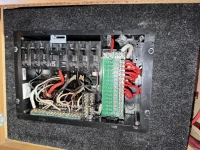
Sterling 12-24V unit, that will keep the starter boost, monitor both battery systems and allocate charging accordingly…. And send 24V back to the house LIon 24V 200Amp Group D battery for the house…. This keeps the Amperage Low enough on the factory installed and protected wire going back low enough not to have to change that wire for higher amperage charging on a 12V system…. Also the conversion up from anything higher than 12V is a plus in efficiency. I tried 48V, but Victron’s Quattro for 48V wouldn’t have four posts in for true 50amp pass through, and I didn’t wanna downgrade the 50 amp service—personal feeling—not supported by my actual consumption needs, but that ended up pushing me to the 24V Quattro, which DOES support the 50 amp passthrough, load sharing, load switching, one panel… it’s just very tidy installation. I’ll step down to 12V for house loads, with just a 300 watt 24 - 12 Dc To Dc Converter…. The into a modern RV style fuse box, DC and AC in there….

Changing out all lighting loads in coach to LED.

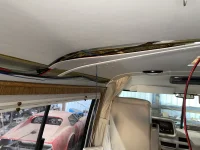
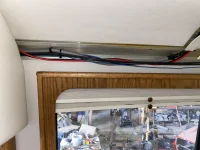
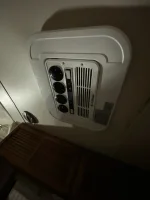
And to top it off, installing a new 24V Out Equip Pro DC Inverter style AC unit, with optional heat coils if I ever need it—but would probably just run propane furnace for heat… if it’s really cold, or I’m not plugged into shore power.

A Victron Shunt for monitoring battery and power in out, etc…

I’m very excited about how clean I expect this install to be. Can’t wait to share pictures…. Cleans up inside the engine bay, the back battery bay, the electric Cabinent inside…. And teh efficiency of the modern INverter AC and Heat options….

I’m pretty excited. Super grateful for this community help and education…

I think next year I maybe brave enough to remove my Onan 6kw —perfectly functional generator—if anyone is interested.

This winter spring headed to Mexico—if I don’t need it then—I’ll remove it, maybe add a second battery, and just carry my little Honda IU 2000 for back up…. We will see. No solar on it — this is a good start though — to see what it actually might need in future.

Thanks again. Excited, and Grateful.
 
  • Like
Reactions: Tybalt39
Just Spoke to Chad, great guy… ordered the entire deal from him… thanks for digging up that link and phone number. So helpful.

So I ended up like this—front to back—I’ll post this in the other place where I was planning the system, and I’ll capture some great pictures.

Alternator from Chad.
into a couple of 12V batteries, just to make sure there’s enough capacitor function there, the second starter battery is just cheap insurance for a healthy charging function for the House batteries.

Sterling 12-24V unit, that will keep the starter boost, monitor both battery systems and allocate charging accordingly…. And send 24V back to the house LIon 24V 200Amp Group D battery for the house…. This keeps the Amperage Low enough on the factory installed and protected wire going back low enough not to have to change that wire for higher amperage charging on a 12V system…. Also the conversion up from anything higher than 12V is a plus in efficiency. I tried 48V, but Victron’s Quattro for 48V wouldn’t have four posts in for true 50amp pass through, and I didn’t wanna downgrade the 50 amp service—personal feeling—not supported by my actual consumption needs, but that ended up pushing me to the 24V Quattro, which DOES support the 50 amp passthrough, load sharing, load switching, one panel… it’s just very tidy installation. I’ll step down to 12V for house loads, with just a 300 watt 24 - 12 Dc To Dc Converter…. The into a modern RV style fuse box, DC and AC in there….

Changing out all lighting loads in coach to LED.

And to top it off, installing a new 24V Out Equip Pro DC Inverter style AC unit, with optional heat coils if I ever need it—but would probably just run propane furnace for heat… if it’s really cold, or I’m not plugged into shore power.

A Victron Shunt for monitoring battery and power in out, etc…

I’m very excited about how clean I expect this install to be. Can’t wait to share pictures…. Cleans up inside the engine bay, the back battery bay, the electric Cabinent inside…. And teh efficiency of the modern INverter AC and Heat options….

I’m pretty excited. Super grateful for this community help and education…

I think next year I maybe brave enough to remove my Onan 6kw —perfectly functional generator—if anyone is interested.

This winter spring headed to Mexico—if I don’t need it then—I’ll remove it, maybe add a second battery, and just carry my little Honda IU 2000 for back up…. We will see. No solar on it — this is a good start though — to see what it actually might need in future.

Thanks again. Excited, and Grateful.
Looking forward to hearing your results from the system and especially from the upgraded alternator.
 
I recommend installing a Balmar XT/AT 170A alternator with either a Balmar Max Charge Regulator or a WakeSpeed external regulator. This unit only requires 5.2hp
.
On sale @ $984.00 with K6 pulley at PKS.
View attachment 16434

Most other alternators will not provide horse power information because they require so much more HP and are just very dumb. They don't want you to know how inefficient they are.

You may have to install another pulley if you are still using a V belt.


View attachment 16433
It is the red one although it is an earlier version producing 160amps.

This is a far more efficient arrangement.
As hot rodders say.....if more is better....too much is perfect...
 
Perhaps Your coach is wired differently, but every GMC I know of that has a 12V fridge has it wired to +12V at the 12V stud on the firewall, which is connected directly the alternator.
We replaced reefer on our 78 with 120/propane full auto unit.....the one in our 77 is 120/propane....not sure how many are still using the oem reefers...
 
Just Spoke to Chad, great guy… ordered the entire deal from him… thanks for digging up that link and phone number. So helpful.

So I ended up like this—front to back—I’ll post this in the other place where I was planning the system, and I’ll capture some great pictures.

Alternator from Chad.
into a couple of 12V batteries, just to make sure there’s enough capacitor function there, the second starter battery is just cheap insurance for a healthy charging function for the House batteries.

Sterling 12-24V unit, that will keep the starter boost, monitor both battery systems and allocate charging accordingly…. And send 24V back to the house LIon 24V 200Amp Group D battery for the house…. This keeps the Amperage Low enough on the factory installed and protected wire going back low enough not to have to change that wire for higher amperage charging on a 12V system…. Also the conversion up from anything higher than 12V is a plus in efficiency. I tried 48V, but Victron’s Quattro for 48V wouldn’t have four posts in for true 50amp pass through, and I didn’t wanna downgrade the 50 amp service—personal feeling—not supported by my actual consumption needs, but that ended up pushing me to the 24V Quattro, which DOES support the 50 amp passthrough, load sharing, load switching, one panel… it’s just very tidy installation. I’ll step down to 12V for house loads, with just a 300 watt 24 - 12 Dc To Dc Converter…. The into a modern RV style fuse box, DC and AC in there….

Changing out all lighting loads in coach to LED.

And to top it off, installing a new 24V Out Equip Pro DC Inverter style AC unit, with optional heat coils if I ever need it—but would probably just run propane furnace for heat… if it’s really cold, or I’m not plugged into shore power.

A Victron Shunt for monitoring battery and power in out, etc…

I’m very excited about how clean I expect this install to be. Can’t wait to share pictures…. Cleans up inside the engine bay, the back battery bay, the electric Cabinent inside…. And teh efficiency of the modern INverter AC and Heat options….

I’m pretty excited. Super grateful for this community help and education…

I think next year I maybe brave enough to remove my Onan 6kw —perfectly functional generator—if anyone is interested.

This winter spring headed to Mexico—if I don’t need it then—I’ll remove it, maybe add a second battery, and just carry my little Honda IU 2000 for back up…. We will see. No solar on it — this is a good start though — to see what it actually might need in future.

Thanks again. Excited, and Grateful.

Sounds cool - looking forward to those post install photos!
 
  • Like
Reactions: TwistyTony
As hot rodders say.....if more is better....too much is perfect...
From that post, looks like that bolted on directly to the factory mount? Can you confirm?
Balmar's are super nice, definitely a respected quality component. Did it bolt on? Where'd you locate the regulator? Did you have to mess with Pulley's? Love pictures and details.
 
double checking everythign here. Can anyone confirm the guage of the main wire running between the Starter Battery (Selenoid in front to selenoid in back) to the house battery Area?

I see 1AWG and 1|O (1 guage and one aught), can anyone confirm which it actually is?

For reference, if anyone is following along on my Electrical Refurb. I have the STerling BB1224120 and had planned on putting it in the engine bay, running only 60Amp on that main wire to charge the house battery at 24V.
however…embarrassed to say we forgot about needing 12V back there to start that generator.

We’re planning now, to put the Sterling Unit at the block behind the panel inside, shortening that 12V 120Amp load on that wire to 15’. This works at 1 Guage (1AWG) but it’s getting really warm and fuzzy if it’s 1|O (one aught).

I’ve been taking pictures, and as we actually get this equipment installed, I summarize in one clear place.

Thanks for any clarity and surety that can be offered here.
 
Wiring diagram shows #0 wire from the front boost solenoid to the terminal buried behind the electrical cabinet. From there to the rear boost solenoid is a #1 wire.

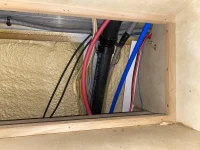
I think you will find the #0 wire is longer than 15ft, maybe closer to 25ft by the time it runs down to the front crossmember, along the front of the coach, then back up and into the body. The insulation on that wire is also old and crusty where it is exposed at the front. I put mine into some plastic loom for protection. Some have found the insulation has been chaffed where it goes through the aluminum frame work behind the walls. It's also buried in foam insulation so heat dissipation will be poor. It's on my todo to replace mine.

You could also install a small lead-acid battery near the generator for starting it. The early coaches had a separate starter battery and the Onan has a built-in charging alternator for it.
 
  • Like
Reactions: TwistyTony
Wiring diagram shows #0 wire from the front boost solenoid to the terminal buried behind the electrical cabinet. From there to the rear boost solenoid is a #1 wire.

I think you will find the #0 wire is longer than 15ft, maybe closer to 25ft by the time it runs down to the front crossmember, along the front of the coach, then back up and into the body. The insulation on that wire is also old and crusty where it is exposed at the front. I put mine into some plastic loom for protection. Some have found the insulation has been chaffed where it goes through the aluminum frame work behind the walls. It's also buried in foam insulation so heat dissipation will be poor. It's on my todo to replace mine.

You could also install a small lead-acid battery near the generator for starting it. The early coaches had a separate starter battery and the Onan has a built-in charging alternator for it.
Thank you. Yes, the small starter battery is an option being considered. You’re sure awesome in here—your contribution is very much appreciated. My wire looks pretty good. That’s why we were trying to utilize it vs. run a new wire…outside the factory run. I thought it would be worth preserving that “factory” wire run, over running a new wire down the frame somewhere. Any further thoughts?
 
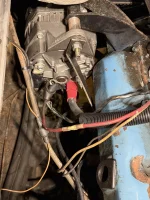
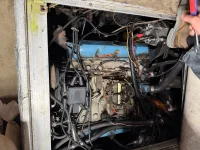
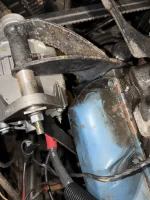
The Alternator from Chad bolted right on.
Using the power steering pump tensioner to loosen, then putting the belts all on, it came with two belts, so it’s running double belts now, without having to mess with pulleys or anything, it’s just two belts making that loop, not including the AC compressor. It was a pretty strait forward install. Especially once Chad explained to loosen the PS pump tension all the way, the put the belts on, tension what you can by hand with the PS pump, then finish the tension with the new Alternator tensioner in his new system.

We fired it up last night, everything is working as intended.

I’ll have some more finished photos—at some point I’ll need to learn how to do a project and give all details in one place.

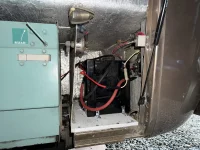
260 Amp Alternator new 2|O (2 Aught) alternator cable.
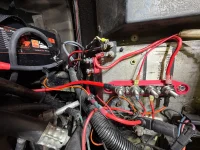
I removed the original alternator cable, just because I like things to be purposeful and clean. Too many cables to me, just begs for shorting and fire hazards, so I replaced the tiny little factory alternator cable with one big one.
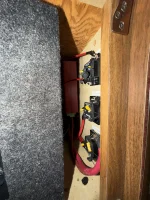
Put in a new distribution block above the Battery, and fuses…and all the smaller wires, I don’t know where go. But I’m learning and eliminating as I find opportunity to clean and simplify.

Again, thanks for the support here doing this.

From that main distribution block, I’m using the factory 1|O (one Aught) wire back to the distribution block behind the fuse box.

That goes to the Sterling Battery to Battery Charger, then from that 24V to charge the 24V 230Amp house battery.

The house battery runs the 24V DC Air Conditioner.
The house battery feeds a 24->12 DC to DC converter that feeds the 12 V fuse Box.

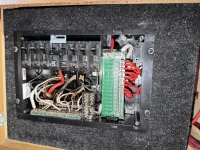
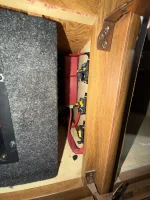
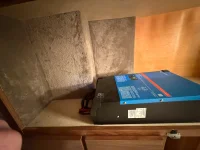
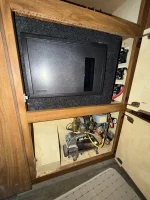
Victron Quattro Converter INverter…which handles charging the 24V house battery, and runs the 120V loads, through a modern RV breaker panel. I’ll have pictures of all this soon. The install is pretty tidy. Only the Victron Quattro taking up some closet space. Everything else neatly in the original electrical cabinet.
 

Attachments

  • IMG_8630.webp
    IMG_8630.webp
    1.2 MB · Views: 12
  • IMG_8631.webp
    IMG_8631.webp
    2.1 MB · Views: 11
  • IMG_8632.webp
    IMG_8632.webp
    1 MB · Views: 11
  • IMG_8623.webp
    IMG_8623.webp
    1.6 MB · Views: 12
  • IMG_8627.webp
    IMG_8627.webp
    2.5 MB · Views: 12
Managed to get this put together on Christmas Eve, in time to go North 4 hours to Dad’s, then tried to get over Santiam pass—unsuccessfully. We didn’t have chains, but I’m not sure that would have made me feel safe enough to go over the pass. the front wheels just spin, but this is a different story….

We ended up going south to San Diego, missed the funeral in Utah on the 29th. But caught it on Live Stream.

Painful not to have had any time to test run the systems before leaving for 5 months. We’re down in San Diego now, and I’m looking for resources to help me get the Water Heater working—woudln’t have known it woulnd’t work until power was put back in.

Also found a couple of hitches.
1. The Sterling Unit Battery to Battery Charger was pulling off the starter battery at rest, presumably because the resting voltage of the Lithium Combo Use Starter Deep cycle battery was high compared to Lead Acid. It never drained it enough for it not to start, but it took some pulling wires off the main 12V block (red) to determine where the parasitic drain was coming from. Doing that in my dad’s barn on Christmas Day. Evidently, there’s a dongle and some settings that can tell the Sterling Unit not to take charge unless there’s vibration or something. Meanwhile, I turn off the breaker when I stop for long periods to assure the Battery to Battery Charger is off line. Just turn it back on when I’m doing a long drive so it can top everything back up.

-the house battery at 230Amp hour seems AMPLE. We ran an electric heater all night and didn’t deplete it. So, still learning the system.

2. There’s another dongle to buy for the Victron Quattro to allow me to set it for the shore power plug max. It’s set to 50 amps now, charging the house battery at like 70 or 80 amps. So, it’ll pop a breaker if I happen to only be able to plug into a 15 or 20 amp shore power. So I have to manually tell it what its max power should be. It evidently will charge so fast, unlike a normal charger inverter, it’ll take up to 50 amps if it needs it. Great for un ing t he 24VDC Air Con, while plugged in. But needs to be gated down if plugged in only to 15 or 20 or ven 30 amps. Havent’ had any issues with this yet, the alternator keeps that house battery charged up really well.

here’s a bit of a photo dump. At some point I’d hope to get time to do a little project report, but not sure how to do that on here.

I hope to be able to help others with what I learned (and learned from this forum while doing it). Happy New Year.

The alternator—Not at all the crux for power anymore. Thanks Chad—that was easily installed. Belts were a little tight getting on, key was to loosen the water pump pulley all the way, get the belts one, then tighten the water pump pulley all the way, then finally use Chad’s new bracket and tensioner system to tighten them to spec. But that alternator, works great, no strain, no belt slip, no noticeable drag on the engine even at cold idle, where it’s taking 50-70 amps to charge that house battery. The Alternator—was what I thought would be the hardest thing to find, and thanks to Chad, that wan’t the hardest part.

The thing I learned—is maybe how I’d design the multi voltage system. A little more time on this, in planning might have made it different. But this is working great—power in the coach—charging and running a rooftop DC /AC while Driving will be no issue.
 

Attachments

  • IMG_8547.webp
    IMG_8547.webp
    740.6 KB · Views: 9
  • IMG_8548.webp
    IMG_8548.webp
    882.8 KB · Views: 8
  • IMG_8616.webp
    IMG_8616.webp
    309 KB · Views: 9
  • IMG_8627.webp
    IMG_8627.webp
    2.5 MB · Views: 8
  • IMG_8622.webp
    IMG_8622.webp
    1.2 MB · Views: 8
  • IMG_8641.webp
    IMG_8641.webp
    1.5 MB · Views: 8
  • IMG_8642.webp
    IMG_8642.webp
    1.3 MB · Views: 8
  • IMG_8647.webp
    IMG_8647.webp
    1.1 MB · Views: 7
  • IMG_8646.webp
    IMG_8646.webp
    1.2 MB · Views: 8
  • IMG_8546.webp
    IMG_8546.webp
    1.3 MB · Views: 9
  • Like
Reactions: Tybalt39 and Kendra
I live right on Santiam highway and have three sets of chains for a GMC I could've lent you. Too bad we didn't know beforehand. :(

Well, shoot, we’re almost neighbors…lol. So how does it do with chains? What tires do you run. Do you chain all 6 wheels, or you just happen to have multiple sets of chains? thanks Paul.
 
Looks like Chad's 200A kit is in my future later this spring.... :ROFLMAO:
Do you have a link to that heat pump? I put a 11000 BTU Out Equip Pro AC, has heat, not a heat pump…it’s in, having got through summer yet. I moved it to the front vent position in anticipation of putting a second on in in the rear. But my general use in other RV’s is I stay out of the heat…maybe one is enough, and the fan in the back, nice and new, pulling cool air back, and pushing hot air out… might be enough.
 
Do you have a link to that heat pump? I put a 11000 BTU Out Equip Pro AC, has heat, not a heat pump…it’s in, having got through summer yet. I moved it to the front vent position in anticipation of putting a second on in in the rear. But my general use in other RV’s is I stay out of the heat…maybe one is enough, and the fan in the back, nice and new, pulling cool air back, and pushing hot air out… might be enough.
I'm using the Gree/Tosot/ many other names non-inverter heat-pump. Inverter units came along about 6 months after I installed my chosen unit. Reviews indicate mine is still quieter than the inverter units, but they are more energy efficient (as expected). Then the DC units came along.... :ROFLMAO:
 
Well, shoot, we’re almost neighbors…lol. So how does it do with chains? What tires do you run. Do you chain all 6 wheels, or you just happen to have multiple sets of chains? thanks Paul.
All six is best. If I only had two I'd do the front. If I only had four, I'd do the mid axle next--it does more braking.
 
All six is best. If I only had two I'd do the front. If I only had four, I'd do the mid axle next--it does more braking.
I’m pretty nervous about traction—we’re headed to Mexico later this month, about anything not paved, I’m so concerned about getting stuck. How does it do on Santiam pass with chains? Do you worry about the chains getting tangled on the suspension stuff in teh rear? Looks pretty close. I’ve got 225 75 r 16’s on alcoas, and it looks super tight. When I get back up to Oregon this summer—I plan to be at the Coos Bay meet up in June. I look forward to meeting other owners and learning from their experience.

The tires are 8 years old, Michelin LTX’s, it was always stored inside, so they look like new. Wanted to get time to research a better traction set up for steep paved, or dang near anything—as Oregon is often wet, campsites not always level, etc. I’d sure value your experience on Tires, and Traction.