Heater hose routing

RF_Burns

Super Moderator
Staff member
Sep 7, 2008
5,198
1,395
113
Ontario Canada
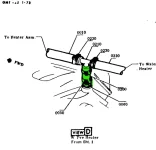
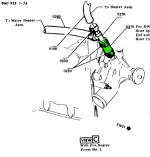
This coach does not have a hot water loop through the fresh water heater, so the connections to the back were just looped back at the passenger side rear of the engine. Looking at the hose routing, that just effectively provides a bypass from the heat exchanger in the dash HVAC causing less heat to be available.

Can I eliminate the hose going from the back of the engine to the "T" connection at the front of the engine near the water pump? I wonder if this would cause issues because this coach has a shut-off valve in line with the dash heat exchanger, so closing that valve in the summer would stop coolant flow from the rear passenger head coolant port.

What is the consensus on this?

Thanks,
 
This coach does not have a hot water loop through the fresh water heater, so the connections to the back were just looped back at the passenger side rear of the engine. Looking at the hose routing, that just effectively provides a bypass from the heat exchanger in the dash HVAC causing less heat to be available.

Can I eliminate the hose going from the back of the engine to the "T" connection at the front of the engine near the water pump? I wonder if this would cause issues because this coach has a shut-off valve in line with the dash heat exchanger, so closing that valve in the summer would stop coolant flow from the rear passenger head coolant port.

What is the consensus on this?

Thanks,
Toronados didn't have the extra hose loop so it's not needed as far as the engine is concerned. The question is whether you should lose the shutoff valve or relocate it and create a bypass at the heater core.

I see some advantages to being able to bypass both the water heater and the heater core separately.
 
Toronados didn't have the extra hose loop so it's not needed as far as the engine is concerned. The question is whether you should lose the shutoff valve or relocate it and create a bypass at the heater core.

I see some advantages to being able to bypass both the water heater and the heater core separately.
IIRC the vacuum-operated heater core shutoff on my '77 allows a tiny bit of coolant to flow when it's off to maintain the health of the heater core.
 
IIRC the vacuum-operated heater core shutoff on my '77 allows a tiny bit of coolant to flow when it's off to maintain the health of the heater core.
I've heard shutting off the flow prevents the desirable anti corrosion coolant additives from protecting the heater core, but I do not know the time frame of when that becomes a problem. Months, years...? 🤷🏻‍♂️
 
  • Like
Reactions: Christo
On my coach the heater bypass has 4 ports. A valve inside routes the coolant back the return hose when closed. Its not precision made so there is some coolant that gets passed the valving and through the heater core.

This coach has a vacuum operated valve on one hose and a ball valve on the other. So the ball valve if closed, no coolant will get through.
 
On my coach the heater bypass has 4 ports. A valve inside routes the coolant back the return hose when closed. Its not precision made so there is some coolant that gets passed the valving and through the heater core.

This coach has a vacuum operated valve on one hose and a ball valve on the other. So the ball valve if closed, no coolant will get through.
You are saying that the hot radiator water will circulate through the electrical 5 gal hot water heater when the engine is running. When the engine stops running, only the electrical coil will raise the domestic hot water temperature in the hot water heater.
I suspect that the addition of a separate 12vdc electrical water pump that is wired to be active only after the engine shuts down and the radiator water is hot enough to provide heat to the domestic hot water heater would delay the activation of the 120 volt alternating current resistance heating coil in the hot water heater.
As long as the radiator water is hotter than the water in the hot water heater the new pump could run. As soon as the radiator water cools down to the temperature od the water in the tank, the pump shuts down.
This should extend the length of time when hot water would be available when camping without shore power.
 
.As long as the radiator water is hotter than the water in the hot water heater the new pump could run. As soon as the radiator water cools down to the temperature od the water in the tank, the pump shuts down.
This should extend the length of time when hot water would be available when camping without shore power.
The 12v pump would circulate the coolant back through the radiator and I'd think the heat would be lost rather more quickly.
 
When I replaced the OEM electric/engine loop water heater with a stainless steel one, I insulated it with a section of insulated HVAC air handler hose. We have a timer on the electric side of the water heater. We crank ON the timer for about 45 minutes in the morning and it's amazing how long the water stays hot.
 
  • Like
Reactions: Christo
I did some investigating and it seems logical to eliminate the loop back of the water heater hoses, Just out from the rear port and back to the water pump. The rear port should have a flow restrictor in it to reduce pressures on the heater core.
Industrial engines had no heater core, so that rear port was plugged.
 
  • Like
Reactions: mech0001
This coach does not have a hot water loop through the fresh water heater, so the connections to the back were just looped back at the passenger side rear of the engine. Looking at the hose routing, that just effectively provides a bypass from the heat exchanger in the dash HVAC causing less heat to be available.

Can I eliminate the hose going from the back of the engine to the "T" connection at the front of the engine near the water pump? I wonder if this would cause issues because this coach has a shut-off valve in line with the dash heat exchanger, so closing that valve in the summer would stop coolant flow from the rear passenger head coolant port.

What is the consensus on this?

Thanks,
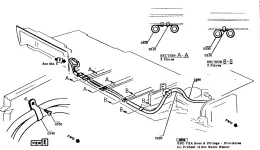
Hello, does anyone have a diagram on the heater hose routing from the radiator to the engine and to the hot wat heater? I am looking at installing a new water heater but I do not have the correct routing of the heater hoses. I did look in the maintenance manual but could not find a diagram.
 
Hello, does anyone have a diagram on the heater hose routing from the radiator to the engine and to the hot wat heater? I am looking at installing a new water heater but I do not have the correct routing of the heater hoses. I did look in the maintenance manual but could not find a diagram.
I think I'd lean toward the assembly manual for that one. I can say they're tee'd right under the passenger seat, barely off to the side of the hatch assembly.
 
Rear of intake manifold. My coaches had the green section lengthened toward the starboard side, so the long hose routings stay out of the hatch area. Leaves more space for reaching arms around engine while performing maintenance.

1784153882382.webp

Water pump end:
1784154055068.webp
 
  • Like
Reactions: Richard RV
I believe the engine water pump is the mechanical device used to circulate hot water through the engine, through the hot water heater and also through the heater core. I do not believe anything else is needed or required.

I have ball valves in the supply and return lines to the hot water heater. In case there's a hose failure , I can shut them both off and continue on.

I also, have a ball valve that I can shut the heater core off. So I can increase the efficiency of the air conditioning unit in the summertime. All our heavy diesel trucks have a ball valve to cut the hot water off to the heater cores for the same reason. We shut the heater core off in the summer and then reopen the ball valves in the autumn.

The engine only requires the upper and lower radiator hose.

Bruce , maybe the assembly manual will have the layout of the hoses. I believe this to be true.I just don't have access to it until Monday.

Everyone take care and have a blessed weekend.
Tom K.