Fitech fuel pressure drops when hot and engine dies

Richard RV

Well-known member
Jun 15, 2015
1,157
505
113
Whereabouts unknown
My 76 Eleganza II has been running fine for the last couple of months, drove down from Vermont mid January and I'm currently bopping around Florida. The coach has been heavily worked over by the PO, some good, some not so much, but it's been running well until 3 days ago.

The fuel pressure gauge had been steady at 38-40 psi since I've had it, then very recently after running for awhile at 55 mph in 85° weather I noticed psi dropping some and the engine would stumble. I'd switch tanks and flip the AUX fuel pump switch and it'd recover and run alright. I thought it might be vapor lock, but it's not that hot out and the coolant doesn't get above 180°. Then things deteriorated.

The pressure would drop to 20 psi and the engine would die. Early on I could restart it, but the last day running the pressure dropped to 10 psi and that was it. After cooling down for a number of hours or overnight I'd be able to restart it. Then when hot same same.

I've replaced the 2 spin on fuel filters by the low pressure pumps by the tank and they weren't clogged.

I'm not familiar at all with the FiTech, my other coaches have Howells and a carburetor, and I would appreciate input on the usual Fitech suspects.
 
I have the same system.
The two pumps are not the same pressure.
I have attached documentation that I have for reference.

The feed pump could be the fuel pump on the engine or an electric. I run an electric. Some folks run one for each tank. I replaced the tank switching valve and mounted my electric pump underneath, center, left.

The high pressure pump sits inside the canister which has to be full of gasoline to operate correctly. I have installed a return for this canister. Some folks have encountered problems with hot soak and running gas through the canister was the solution.

I don't believe my coach was ever run with the fuel injection system, but sat for years following it's installtion. Whatever the reason, I discovered the high pressure fuel pump was rusted on it's exterior. I bought a spare but haven't had to change it yet. I would expect a pressure drop if that pump rusted through. I can hunt down the part number for that if you need it.

Another thing to check is there is an inline filter in the feed to the injector assembly. Make sure that's not clogged.
 

Attachments

My 76 Eleganza II has been running fine for the last couple of months, drove down from Vermont mid January and I'm currently bopping around Florida. The coach has been heavily worked over by the PO, some good, some not so much, but it's been running well until 3 days ago.

The fuel pressure gauge had been steady at 38-40 psi since I've had it, then very recently after running for awhile at 55 mph in 85° weather I noticed psi dropping some and the engine would stumble. I'd switch tanks and flip the AUX fuel pump switch and it'd recover and run alright. I thought it might be vapor lock, but it's not that hot out and the coolant doesn't get above 180°. Then things deteriorated.

The pressure would drop to 20 psi and the engine would die. Early on I could restart it, but the last day running the pressure dropped to 10 psi and that was it. After cooling down for a number of hours or overnight I'd be able to restart it. Then when hot same same.

I've replaced the 2 spin on fuel filters by the low pressure pumps by the tank and they weren't clogged.

I'm not familiar at all with the FiTech, my other coaches have Howells and a carburetor, and I would appreciate input on the usual Fitech suspects.
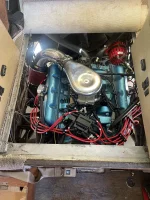
If the electronics on your FiTech system are in the engine compartment, the heat in the compartment may be negatively affecting it . It might get worse as the temperatures in Florida increase as the sun gets stronger.
The equinox is only one week away.
IMG_2932.webp
Jim Bounds and Jason Stryker have recommended using the FiTech system with a remote FiTech control box installed inside the coach under the driver's seat.
They said that their previous FiTech installations were having control unit problems from heat, so they switched to the remote control box version. They have not had problems with that version.
That is how I installed mine.
IMG_3239.webp
See if you can find a way to protect the control system from the engine's heat.

I have Jim's COOP 455 installed.

The pumps should be high pressure.
IMG_2958.webp
I have paired FiTech high pressure electric fuel pumps.

What do you have? You need high pressure fuel pumps. You need them for FiTech to work properly and you need very good filtration. Check out my fuel filter installation.

If you are bobbing around Florida, stop by Palmetto if you are near Tampa Bay.
 
Last edited:
The high pressure pump sits inside the canister which has to be full of gasoline to operate correctly. I have installed a return for this canister. Some folks have encountered problems with hot soak and running gas through the canister was the solution.
Richard,
Early models of FiTech Fuel Commander (FC) had the fuel pressure regulator inside the FC tank along with the high pressure pump. So the regulator just dumped the excess fuel right back into the litre or so of fuel in the FC. The heat generated by the pumping of fuel and the pump motor it self would cause enough heat in the FC tank that some said the fuel was boiling in there.

Some modified their FC system to return fuel to the main fuel tanks of the coach so that cool fuel was always being pumped into the FC tank. Driving at highway speeds in cooler climates would keep the FC tank cool, while puttering around city streets in FL... well not so much. Later models of the FC were designed to only return fuel to the main tanks.

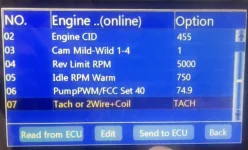
There is a setting in the FiTech setup computer that varied the power to the high pressure pump in the FC. This setting could have been changed by accident causing the high pressure fuel pump not to deliver enough fuel pressure.

I'm not a FiTech fan, but these are a couple of issues I recall from early adopters.
 
  • Like
Reactions: tmsnyder
Last year I took my coach across OK, TX, etc when the outside temps were running around 110. My early FiTech unit (controller on the injection unit) performed perfectly with no heat related issues. I use the original air cleaner assembly which is probably causing the FiTech unit to see somewhat more heat than an external air intake. I do have a return from my FiTech canister to the tanks and an electric pump runs gas through it continually. I've never run the system without that return and have never experienced any hot soak, etc problems. That being said, definitely have the controller in a cooler spot if possible.

Pull the top off the canister and investigate the high pressure pump. Could be clogged or rusted. Check the fuel filter for the high pressure side. Should be able to blow through it freely when removed. Verify you feed system is actually supplying fuel. Etc, and so on. High side needs about 50 psi to run right.
 
My 76 Eleganza II has been running fine for the last couple of months, drove down from Vermont mid January and I'm currently bopping around Florida. The coach has been heavily worked over by the PO, some good, some not so much, but it's been running well until 3 days ago.

The fuel pressure gauge had been steady at 38-40 psi since I've had it, then very recently after running for awhile at 55 mph in 85° weather I noticed psi dropping some and the engine would stumble. I'd switch tanks and flip the AUX fuel pump switch and it'd recover and run alright. I thought it might be vapor lock, but it's not that hot out and the coolant doesn't get above 180°. Then things deteriorated.

The pressure would drop to 20 psi and the engine would die. Early on I could restart it, but the last day running the pressure dropped to 10 psi and that was it. After cooling down for a number of hours or overnight I'd be able to restart it. Then when hot same same.

I've replaced the 2 spin on fuel filters by the low pressure pumps by the tank and they weren't clogged.

I'm not familiar at all with the FiTech, my other coaches have Howells and a carburetor, and I would appreciate input on the usual Fitech suspects.

Sounds like a fuel pump on its way out. They can die that way, low pressure, the car may still run but not well. We just changed the fuel pump in my son's Volvo for just that reason. He was experiencing long cranking to start. Eventually it wouldn't even start.

Fuel pumps do not last forever.
 
  • Like
Reactions: RF_Burns
Sounds like a fuel pump on its way out. They can die that way, low pressure, the car may still run but not well. We just changed the fuel pump in my son's Volvo for just that reason. He was experiencing long cranking to start. Eventually it wouldn't even start.

Fuel pumps do not last forever.
Good people,
The PO removed the Howell EFI that came on the coach because "he didn't like it" and installed a FiTech. That unit was replaced sometime later by FiTech with an updated model. It has run pretty much flawlessly in the year I've been running it. There's a fuel pressure gauge on the dash that had been very steady at 40 psi.

There are 2 separate pumps just in front of the tanks that are in front of the 2 spin on fuel filters. There is no Fuel Commander surge tank. There has always been a "WTF is up with the gas tanks" gauge that only reads fairly accurately when the tanks are near full. The dash tank selector switch switches the pumps. The filters were whistle clean when I replaced them when I was sidelined. The fuel pressure regulator vacuum line did not have any gas in it when I disconnected it, so the diaphragm was not compromised - I replaced the regulator anyway. It is a Bosch 3 bar, 43 psi regulator.

Another new and recent symptom has been pressure in the tanks when I removed the gas cap, and a gurgling as soon as I start adding fuel (not gurgling until fuel starts going down the fill neck).

The ambient temperatures haven't been particularly hot out, ~85° and the coolant temperature has always stayed below 180°. So I tend to doubt it's vapor lock.

The fuel pressure gauge always did its full range sweep on startup and then settled right at 40 psi. There had been a couple of stumbles in prior months that were quickly addressed by switching tanks/pumps with the dash switch - fuel gauge issue and low fuel level.

Just over a week ago the fuel pressure dropped into the mid 30s and it stalled a couple of times. It would start back up. Then a week ago it died while turning onto a side street. I managed to get it started after a few minutes and luckily was able to pull into the immediately adjacent DG parking lot. It would not start after that - I was sidelined.

Now it starts but the fuel pressure doesn't get above ~32-34 psi when cold and I'm not willing to start driving it until I find and fix the issue.

As it seems to be a problem with both pumps, and I don't think both pumps went bad at the same time, I'm starting to suspect an electrical problem.

I'm very open to suggestions, opinions and guesses! TIA!
 
I'm guessing the two pumps are "T'd" together... is there a check valve at the output of each pump so the fuel doesn't travel back into the other pump? Some pumps have internal check valves. You could try pinching off the in or output line of the pump that is not running and see if the pressure returns. If so, the check valves may have some dirt causing them to leak back.

You could also try that on the return line momentarily to see if the regulator is indeed working.

As far as "pressure in the tanks" when you remove the filler cap, are you sure its pressure you are hearing and not a vacuum? If your EVAP system is not working, you could be developing a vacuum in the tanks causing the pumps to starve for fuel. That would effect both tanks. Try running the coach with the cap loose and see if the fuel pressure problem goes away. if so, troubleshoot your EVAP system.
 
  • Like
Reactions: mech0001
Could be there's only those two pumps. Make sure that's the case. Check voltage to your pumps, both running and not running to ensure your supply voltages and grounds are good.
 
  • Like
Reactions: Richard RV
Richard, have you checked with Fitech about the running pressure? I have a separate Fuel pressure regulator mounted on the frame rail just in front of the tanks. Pressure is regulated there and excess gas/pressure is returned to the front (reserve) tank. According to Fitech, your pressure regulator should be Bosch 0280160557. and runs at 43psi. Have you checked the pressure on the new regulators. Are they Bosch and producing 43lbs?
BTW, that regulator is used in 1998-2003 VW Beetles. are you sure you have the 30003 because the 30002 and the 30004 use a 58lb regulator.
 
  • Like
Reactions: Richard RV
Richard, have you checked with Fitech about the running pressure? I have a separate Fuel pressure regulator mounted on the frame rail just in front of the tanks. Pressure is regulated there and excess gas/pressure is returned to the front (reserve) tank. According to Fitech, your pressure regulator should be Bosch 0280160557. and runs at 43psi. Have you checked the pressure on the new regulators. Are they Bosch and producing 43lbs?
BTW, that regulator is used in 1998-2003 VW Beetles. are you sure you have the 30003 because the 30002 and the 30004 use a 58lb regulator.
Yep, it's a 30003, marked on the handheld, and the Bosch regulator is the same part number you listed, 43 psi.

I figure I'll "follow the fuel" and start back at the pumps by the tank and work my way forward. It'll have to be up on the lift here at Sirum's. I also have to check out the macerator and tank plumbing so it'll be a 2 for 1.

Good seeing you yesterday!
 
Could be there's only those two pumps. Make sure that's the case. Check voltage to your pumps, both running and not running to ensure your supply voltages and grounds are good.

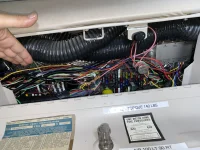
Checking voltages and grounds is the first order of business. I'll do what I can today from the topside, then it's up on the lift. I'm currently going through the PO's scrawled and sparse notes, and trying to figure out his electrical rats nest.

IMG_7137.webp

The glove compartment! 😵‍💫
IMG_7142.webp
 
Good people,
The PO removed the Howell EFI that came on the coach because "he didn't like it" and installed a FiTech. That unit was replaced sometime later by FiTech with an updated model. It has run pretty much flawlessly in the year I've been running it. There's a fuel pressure gauge on the dash that had been very steady at 40 psi.

There are 2 separate pumps just in front of the tanks that are in front of the 2 spin on fuel filters. There is no Fuel Commander surge tank. There has always been a "WTF is up with the gas tanks" gauge that only reads fairly accurately when the tanks are near full. The dash tank selector switch switches the pumps. The filters were whistle clean when I replaced them when I was sidelined. The fuel pressure regulator vacuum line did not have any gas in it when I disconnected it, so the diaphragm was not compromised - I replaced the regulator anyway. It is a Bosch 3 bar, 43 psi regulator.

Another new and recent symptom has been pressure in the tanks when I removed the gas cap, and a gurgling as soon as I start adding fuel (not gurgling until fuel starts going down the fill neck).

The ambient temperatures haven't been particularly hot out, ~85° and the coolant temperature has always stayed below 180°. So I tend to doubt it's vapor lock.

The fuel pressure gauge always did its full range sweep on startup and then settled right at 40 psi. There had been a couple of stumbles in prior months that were quickly addressed by switching tanks/pumps with the dash switch - fuel gauge issue and low fuel level.

Just over a week ago the fuel pressure dropped into the mid 30s and it stalled a couple of times. It would start back up. Then a week ago it died while turning onto a side street. I managed to get it started after a few minutes and luckily was able to pull into the immediately adjacent DG parking lot. It would not start after that - I was sidelined.

Now it starts but the fuel pressure doesn't get above ~32-34 psi when cold and I'm not willing to start driving it until I find and fix the issue.

As it seems to be a problem with both pumps, and I don't think both pumps went bad at the same time, I'm starting to suspect an electrical problem.

I'm very open to suggestions, opinions and guesses! TIA!
It is good that you do not have the FiTech surge tank. Jason Stryker used to recommend it but he told me that he no longer does. He says that the internal components are not corrosion resistant. In many cases, they did corrode and caused failures in the system.
 
Richard,
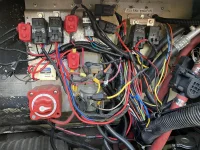
Check to be sure the terminal on the horn relay is fed power with a fusible link. It appears in the top photo that your PO removed the "Chassis Battery Positive" terminal and made all his connections on the left side terminal of the Boost relay.

From what I can see the horn relay appears to be fed by a red #12 (guessing) wire from the left side terminal of the boost relay. If so, you have no over-current protection for your main wiring harness. It should be fed with a #16 fusible link wire and also there should be no fuse in that feed wire, just the fusible link.
 
Richard,
Check to be sure the terminal on the horn relay is fed power with a fusible link. It appears in the top photo that your PO removed the "Chassis Battery Positive" terminal and made all his connections on the left side terminal of the Boost relay.

From what I can see the horn relay appears to be fed by a red #12 (guessing) wire from the left side terminal of the boost relay. If so, you have no over-current protection for your main wiring harness. It should be fed with a #16 fusible link wire and also there should be no fuse in that feed wire, just the fusible link.
Thanks Bruce. 🫡

Being able to start the engine with the battery disconnect switch off also points to PO Follies. I have much work to do.

You're still in Mexico? How about taking a minor detour and coming to Florida to show off your electrical diagnosis prowess? Unlimited beer and pizza on me! Think about it. 😉
 
Good people,
The PO removed the Howell EFI that came on the coach because "he didn't like it" and installed a FiTech. That unit was replaced sometime later by FiTech with an updated model. It has run pretty much flawlessly in the year I've been running it. There's a fuel pressure gauge on the dash that had been very steady at 40 psi.

There are 2 separate pumps just in front of the tanks that are in front of the 2 spin on fuel filters. There is no Fuel Commander surge tank. There has always been a "WTF is up with the gas tanks" gauge that only reads fairly accurately when the tanks are near full. The dash tank selector switch switches the pumps. The filters were whistle clean when I replaced them when I was sidelined. The fuel pressure regulator vacuum line did not have any gas in it when I disconnected it, so the diaphragm was not compromised - I replaced the regulator anyway. It is a Bosch 3 bar, 43 psi regulator.

Another new and recent symptom has been pressure in the tanks when I removed the gas cap, and a gurgling as soon as I start adding fuel (not gurgling until fuel starts going down the fill neck).

The ambient temperatures haven't been particularly hot out, ~85° and the coolant temperature has always stayed below 180°. So I tend to doubt it's vapor lock.

The fuel pressure gauge always did its full range sweep on startup and then settled right at 40 psi. There had been a couple of stumbles in prior months that were quickly addressed by switching tanks/pumps with the dash switch - fuel gauge issue and low fuel level.

Just over a week ago the fuel pressure dropped into the mid 30s and it stalled a couple of times. It would start back up. Then a week ago it died while turning onto a side street. I managed to get it started after a few minutes and luckily was able to pull into the immediately adjacent DG parking lot. It would not start after that - I was sidelined.

Now it starts but the fuel pressure doesn't get above ~32-34 psi when cold and I'm not willing to start driving it until I find and fix the issue.

As it seems to be a problem with both pumps, and I don't think both pumps went bad at the same time, I'm starting to suspect an electrical problem.

I'm very open to suggestions, opinions and guesses! TIA!

I would check the ground strap to the engine from the frame, and the ground connection at the pump to the frame. (I'm guessing the pumps are grounded to the frame)

To check this, run a wire from your "-" terminal on the battery to near your pumps, then run the pumps and measure voltage between the wire and the pumps "-" wire. You should read 0.00 VDC. If it's anything other than a tenth or so, there's a problem with the ground.
 
  • Like
Reactions: Richard RV
I would check the ground strap to the engine from the frame, and the ground connection at the pump to the frame. (I'm guessing the pumps are grounded to the frame)

To check this, run a wire from your "-" terminal on the battery to near your pumps, then run the pumps and measure voltage between the wire and the pumps "-" wire. You should read 0.00 VDC. If it's anything other than a tenth or so, there's a problem with the ground.
Thanks, Todd. Good way to do it.