The Ferrigno Family's 1976 Palm Beach

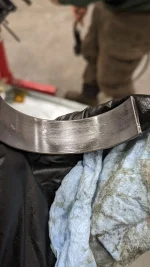
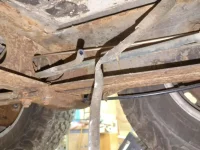
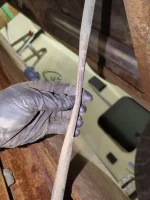
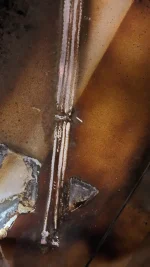
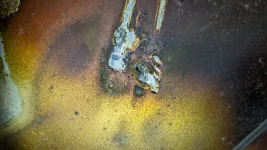
One thing I found odd was this propane hose routing. It kinda cut under the corner of the tank and wanted to get hung up. Is this the normal routing? Seems sloppy to me. There's a zip tie, so someone has been there before...

No, that is not the factory routing. What you have was probably done by a PO when they installed a LPG refrigerator. From the factory the only LPG appliances were on the driver's side. Pages 422-424 of the 1978 assembly manual show the correct routing. Looks like you have also lost your LPG line exhaust heat shield.
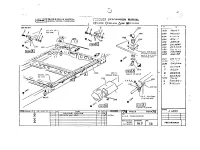
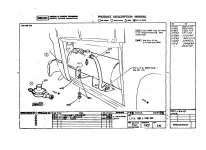
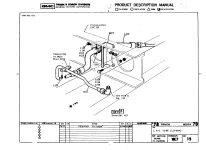
Factory Assembly Manual.webp

Factory Assembly Manual.webp
 
No, that is not the factory routing. What you have was probably done by a PO when they installed a LPG refrigerator. From the factory the only LPG appliances were on the driver's side. Pages 422-424 of the 1978 assembly manual show the correct routing. Looks like you have also lost your LPG line exhaust heat shield.


View attachment 10465

View attachment 10466
View attachment 10467
That photo of the propane hose is on the driver's side, so no exhaust shield needed. Thanks for the diagram. I'll have to compare it in place and see if I can figure what they've done. I don't particularly care for the current hose routing, and it makes me wonder what they've done to the hard lines.

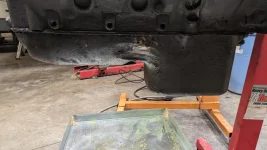
 
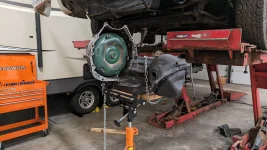
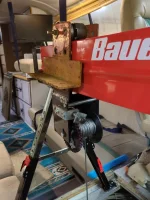
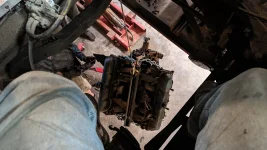
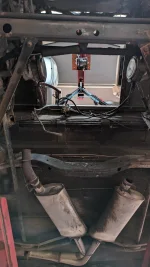
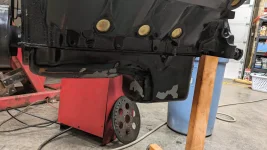
Tonight we dropped the engine and trans out the bottom! Everything went pretty well. I used a steel sawhorse with adjustable legs, a homemade trolley made from Subaru timing belt idlers and pallet rack brackets, and a worm gear hand winch.

1000004170.webp

1000004174.webp

1000004173.webp

1000004175.webp
 
I'm liking the HF steel sawhorse technique. My brother mentioned seeing a recent youtube where the guy used those same sawhorses.

Nice trolley and winch setup!
 
  • Like
Reactions: pvfjr
I'm liking the HF steel sawhorse technique. My brother mentioned seeing a recent youtube where the guy used those same sawhorses.

Nice trolley and winch setup!
Thanks! Yes, Spiritof76 was the video. IIRC he just used a come-along to support the engine while pulling the trans. I decided to take it a step or two further. I liked the adjustable leg length so I could level out the beam and keep the trolley from getting out of control. It all worked out really well.
 
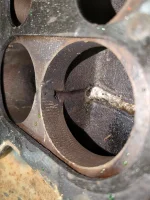
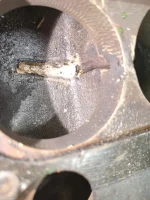
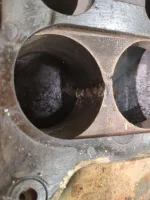
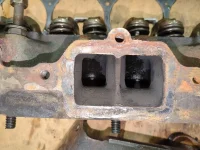
Engine teardown has revealed some things. Heck, just taking off the carb revealed things. The intake had been poorly welded, and a large bead of weld had actually broken off out of its groove and gone through the engine. The motor made a nice snack out of that steel caterpillar, and there were pulverized remnants stuck in the carbon in the exhaust ports. Real nice. But, that doesn't account for our knock.
1711775666461.webp

1711775696769.webp

1711775744135.webp
 
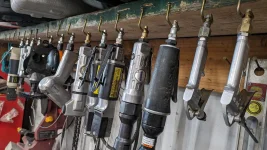
Then I got distracted and did some shop organizing. Sometimes you just can't stand the way certain things are anymore, and something must be done! I'm glad I did; it's extremely convenient and works very well. A satisfying result.

1711775846520.webp

1711775893243.webp


Back at it: It appears there was no shortage of oil leaks over the years. Yeesh.

1711775937424.webp

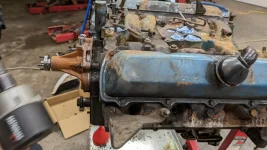
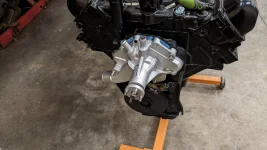
I guess I should've painted that water pump last year. I was in a rush, but still...
1711776032178.webp

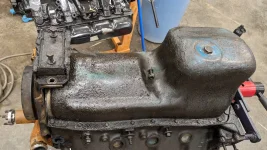
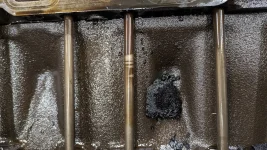
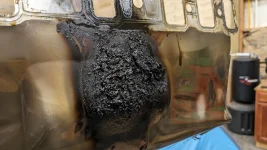
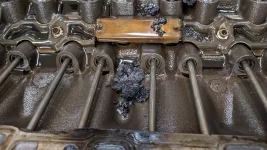
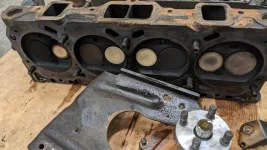
This thing was still running the turkey tray, and had some decent carbon cookies growing in there. One got so thick, it started rubbing one of the #5 pushrods! You can see the wear marks from the pushrod spinning against the carbon cookie on the under side of the turkey tray. At least it was still spinning.
1711776159263.webp

1711776204481.webp

1711776215931.webp


No sludge though, so that's good.

1711776189724.webp
 
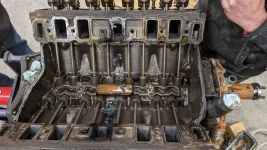
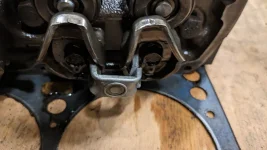
We opened up the bottom end, expecting to find some jiggly rod bearings--especially on #7. No dice. That puzzled me. We spent a ton of time rotating the bottom end and listening to some clicking sounds we were hearing, but were having trouble isolating them. It sounded noisy toward the back end, but we couldn't find any play. I also found a busted rocker bridge. Both bolts were tight, so it couldn't move around, and each rocker still had a good fulcrum in the proper position, so I can't say it'd be a source for noise. Weird though. Note: it didn't move out of position until we loosened it.
1711776652873.webp


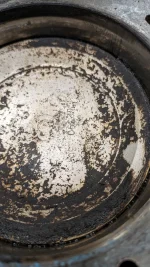
Turns out, this motor is .030" over already. Pistons seem to rock in their bores an awful lot, especially #7 and #8. I can't find my bore gauges, so I'm unable to see if it's all in spec, but I'm suspicious. Cylinder walls still had some crosshatch, so if it's out of spec, it was rebuilt that way.
1711776469211.webp


More teardown...
Looks like some valve stem seals were leaking, and sludging up some of the exhaust valves.

1711776838197.webp

1711776859261.webp


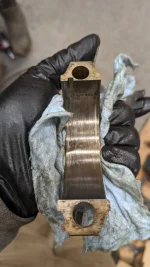
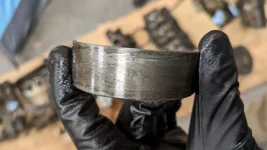
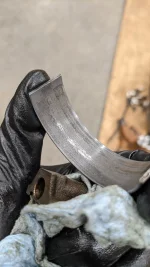
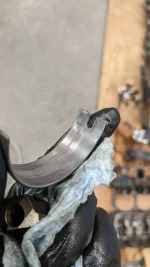
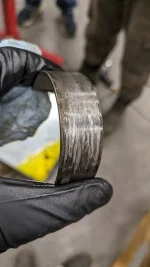
Curiosity got the better of us, and we decided to go ahead and pull the 7&8 rod bearings. What's strange, is the inside of the cap and the outside of the bearing look kinda worn. They weren't "spun" since the tangs were still intact and they were in position. The inside of the bearings looked like they had been pitted, then worn over. Some scratched/gouges from metal particulates were present. I could feel them with my fingernail, so...not good.

1711777027237.webp

1711777046827.webp

1711777062873.webp

1711777074895.webp

1711777088008.webp

1711777103457.webp
 
That was enough exploration of the old engine. The good news is, it's a great core. Damages are minimal. It wasn't a severe knock after all, I just knew it sounded like an engine that couldn't be trusted to haul 12,000 lbs to Yellowstone and back. When we couldn't find jiggly rods I was worried I'd jumped the gun on pulling the motor, but, I've found enough things I don't like to justify my actions at this point.

Now turning the focus back to things I'm actually going to fix in the near future, here are some wonderful vapor lines for your viewing pleasure. Side note: I need new body pads, and I don't mean maybe!

1711777338555.webp

1711777359768.webp


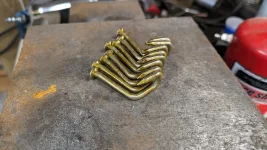
The floor had even come down far enough to cause the hose clamps to start gouging into the aluminum sheet. They actually wore through, and were into the foam. The rubber hoses had atrophy, and were loose on the nipples. The vapor nipples had succumbed to the body pressure, and cracked where they attach to the tank. Those will both need brazed.

1711777494079.webp

1711777508788.webp
 
I didn't get much done last weekend. I turned 40, and my son turned 7. We had a joint party with lots of family over, and my son requested a "Fat Batman" cake, so I was obliged to fulfill his request. I don't want to admit how long it took...

Batman couldn't wait for the party to get started, and got into the cake a little early.

1711778315858.webp

1711778347768.webp

1711778368830.webp


Now I need to figure out if there's any reason to swap oil pans. I'm leaning toward "no". IIRC, I was told this new engine had a Toronado pan, and they were different. They look the same to me. Maybe I'm missing something here.
1711778536080.webp

1711778545538.webp
 
  • Like
Reactions: Kendra and EricS
There seems to be a much higher instance of #7 rod bearing going bad, mine was bad as well and took the crank with it. Has anyone figured why this is and a fix for it?

My '77 xPB needed body pads badly as well. I went with thicker pads while redoing them for a bit more clearance.
 
  • Like
Reactions: pvfjr
I couldn't leave the new water pump looking so rusty, so I cleaned it up, painted it and transferred it over to the new engine.
1000004332.webp


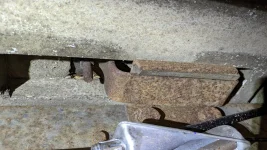
One crucial next step will be body pads. I can't reinstall the fuel tanks without doing that. I've found the first design element on the GMC that I can truly and unapologetically declare dumb. These body hold-down strap bolts. Are these carriage bolts? They just spin. The heads are under the flooring, which is under the furnace, cabinets, dinette bench, couch...
Stupid. Just stupid.

PXL_20240331_052906446.webp
 
I couldn't leave the new water pump looking so rusty, so I cleaned it up, painted it and transferred it over to the new engine.
View attachment 10537


One crucial next step will be body pads. I can't reinstall the fuel tanks without doing that. I've found the first design element on the GMC that I can truly and unapologetically declare dumb. These body hold-down strap bolts. Are these carriage bolts? They just spin. The heads are under the flooring, which is under the furnace, cabinets, dinette bench, couch...
Stupid. Just stupid.

View attachment 10538
One fellow removed the bolts holding the inverted "J" brackets to the frame, rather than dealing with the bolts through the floor.

Be sure to raise the front end and set on stands. Also set the rear on stands and release the rear air bags. This will unload the suspension so the body can be raised off the frame without the suspension pushing the frame back up against the body.

Use several jacks positioned as close to the outer body to raise all of one side of the coach at the same time. Jacking up one cross-stinger at a time forces that stringer to lift the whole body weight causing it to bend. Just my experience.

I have a write-up on this to put in Resources, But I have not finished it. I need to get some additional photos when I return home in a couple of weeks. PM me your email if you would like my document so far.
 
One fellow removed the bolts holding the inverted "J" brackets to the frame, rather than dealing with the bolts through the floor.

Be sure to raise the front end and set on stands. Also set the rear on stands and release the rear air bags. This will unload the suspension so the body can be raised off the frame without the suspension pushing the frame back up against the body.

Use several jacks positioned as close to the outer body to raise all of one side of the coach at the same time. Jacking up one cross-stinger at a time forces that stringer to lift the whole body weight causing it to bend. Just my experience.

I have a write-up on this to put in Resources, But I have not finished it. I need to get some additional photos when I return home in a couple of weeks. PM me your email if you would like my document so far.
I thought about unbolting those inverted J brackets from the frame, but that only gets me half way there (the disassembly half). The body is essentially sitting on the frame at this point, and yet, there doesn't appear to be any slack in those hold-down straps. I think if I unbolt the brackets, raise the coach and stuff some body pads in there, I won't be able to get the brackets bolted back on.

I'm thinking of making a socket that holds a die, and using that to chase the threads in those tight spaces. Then I might work on a custom 9/16" socket combo that allows me to ratchet the nuts down while holding the end of the bolt. I'll probably grind some flats on the ends of the bolts. Between PB Blaster, some heat, freshly chased threads, and some custom tools, maybe I can get the whole operation done from underneath. I really have no desire to tear into the interior.

My strategy for actually lifting the coach body is as you describe. I'm probably going to have 4-5 jacks for a side. I planned to unbolt both sides, but just rock it and do one side at a time. Bogie brackets will be sitting on blocks. In the front, I'm planning to chain the frame/suspension down to the lift/rack so it doesn't raise up on me. It's already sitting pretty high with the whole drivetrain removed.
 
Many of the body pads on our coach were just plain missing so in places the body was sitting on the frame. I put our coach on ramps, then used a 6" piece of 2X4 with a bottle jack and lifted the body one pad at a time enough to take the old pad out or enough to put the new pad in. Slid the new pad in place and let the body down on the new pad. Did not do one whole side at a time. Just one pad at a time. Then using self taping screws, fastened the pad permanently to the body so it would not move or fall out over time. I had planned for a whole day to do this task. It actually only took me about 2 hours to do the whole pad replacement. Much easier than I thought. JWID
 
  • Like
Reactions: Kendra and tmsnyder
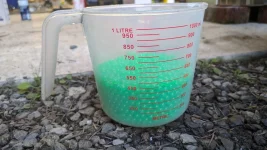
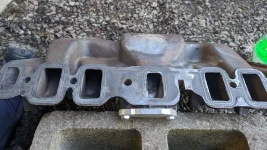
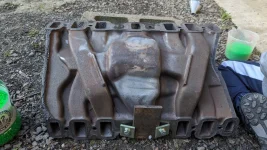
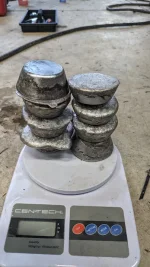
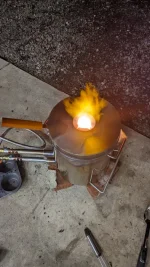
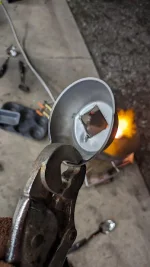
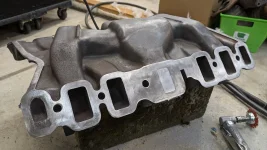
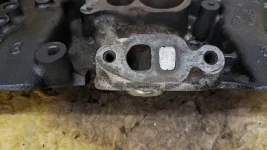
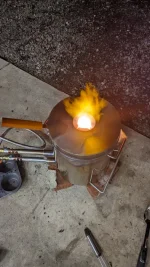
Just in case anyone wanted to know, a Toronado crossover passage holds about 500 mL of airsoft BBs! I wanted to be sure I was melting the appropriate amount of aluminum, so that's what I came up with. I had to multiply by the Al specific gravity of 2.7, then add in a fudge factor for dross and spillage. I think I ended up melting about 1800g of aluminum for this pour, and had a comfortable amount of leftovers. Now please excuse the big photo dump, but I thought it was a fun and interesting process so here we go...

1713200869742.webp

1713200888612.webp

1713200898770.webp


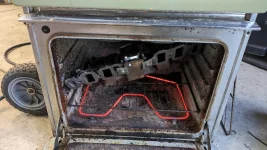
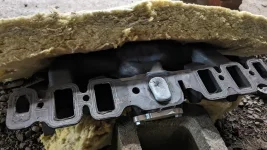
I preheated the intake to 500F in a period-correct oven (I'm sure that's important, for best results).

1713200911291.webp


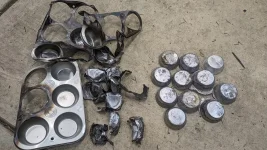
I made a custom funnel that nestled into the port. It was just a left over cup from the muffin tin I'd destroyed with my refinement process.

1713200920076.webp 1713200940470.webp 1713201138299.webp

1713200970534.webp


I ground down the excess aluminum on the fill side. No porosity! I was fairly pleased, given all the pitfalls I've read about for first-time aluminum casters.

1713201426243.webp

Exhaust port on the right filled nicely. EGR port on the left leads to the primary bores. I'll make a gasket for this block-off plate to ensure there are no vacuum leaks.
1713200988936.webp

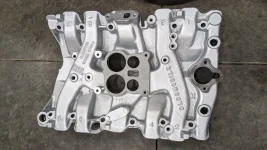
Obviously the paint in the middle of the intake wasn't happy (same fate it would have suffered anyway, right?)

I cleaned up the intake with my blast cabinet and repainted it. I'm going to say that intake is officially sorted!

1713201006441.webp
 

Attachments

  • 1713200932173.webp
    1713200932173.webp
    81.8 KB · Views: 3
  • Like
Reactions: Kendra and dsmithy