The electric GMC fully imagined -

You might want to consider looking into hub drive. Orbis wheel makes a hub motor that cranks out 50 hp. Fortunately you have 6 wheels so you could deploy 300 hp. With respect to going electric, I’d say it’s inevitable and something to look forward to. Just think about it! Every RV carries around 3 types of fuel: gasoline/diesel, propane, electric. Unifying into one singular source will be such an improvement.
The GMC chassis is actually a skateboard chassis when you look at it, IMHO you already have a really good foundation to build upon.
I’ve always wondered about hub drive for a temporary assistance for the front wheel drive. It would help in off road traction issues like grass.
I can now understand how full electric would be hard to reach for our RV’s. Just the weight numbers and potential elevation challenges for electric in mountain driving are near impossible to overcome without large money and charge times. I’m seeing GM and now Ford are pulling back from EV’s? Wht are they doing that? Is there other engine developments happening?
I wonder about the ammonia burning engines for our application.

TG
 
From an Engineers perspective I can't help but wonder what the facination is with electric vehicles other than golf carts.

As far as the Ammonia engines; Toyota has some of the bugs worked out but the problem there is Ammonia can only deliver about half the power of gasoline or diesel, and much of the maintenance would be very hazzardous. Not to mention that an accident could kill or injure many people if there is a leak. Again, not very practical.

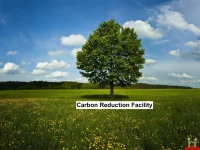
When you take the politics out of the issue there is a very simple way to reduce the carbon footprint. John F Kennedy had the right program, just a little to early.
Carbon Reduction Facility.webp
 
This is what the USA looks like when CO2 levels are lower (about 200ppm)
ice.jpg

This is 2,000ppm
dino.png
 
Last edited:
Well that looks promising. I have a couple of older brothers who have mentioned the idea of spending time in the national parks and helping do maintenance in the park. Maybe a tree planting crew? Anyhow, I’m wondering if that aerial photo was taken during the height of the stay at home order during the pandemic?

TG
 
This is what the USA looks like when CO2 levels are lower (about 200ppm)
View attachment 9675

This is 2,000ppm
View attachment 9677
Nice images, but I have taken the time to review a lot of "Factual" information. For example: The wood burning in the California fires three years ago (using the governments own figures) produced more CO2 than the human race could produce in the next 278 Years; in just that one year. Yet, the snow pack at the poles has been stedaily increasing for the last 7 years. We have had three more years of sucessive fires, and this years fire in Canada dwarfed all previous fires.
 
  • Haha
Reactions: tmsnyder
Most people don't know that when there was that 2000ppm of CO2, there was also 30%+ of O2. That is what enabled the dragon flies with a 2' wingspan.
Matt_C
Dont forget the Dinosaurs! It has always amazed me that they cant figure out that those huge Dinosaurs couldn't handle the 10%+ drop in the Oxygen level. With all the theories I never heard one about suffocation.

Any of us driving above 6000 ft with alcohol enriched fuel know about our Dinosaurs are sufficating for lack of fuel and Oxygen.
 
Roady,
The current theory gaining traction is that is was a two stage hit. A combination of the dust the the rock threw up into the air and this was not that different than when Yellowstone blew its top a few thousand year ago and that also shut down a lot of photosynthesis so the plants that the herbivores needed failed. That domino effect crashed a lot of the life on earth.
Matt_C
 
Dont forget the Dinosaurs! It has always amazed me that they cant figure out that those huge Dinosaurs couldn't handle the 10%+ drop in the Oxygen level. With all the theories I never heard one about suffocation.

Any of us driving above 6000 ft with alcohol enriched fuel know about our Dinosaurs are sufficating for lack of fuel and Oxygen.
I think they know. It was just probably more due to the 10000 (?) or so year winter
 
Speaking of Dinosaurs: In a press release this weekend the White House announced the shift to Hydrogen powered vehicles; apparently shifting away from EV vehicles. For us, that probably would not be more difficult than converting to CNG or Propane. I know everyone thinks of the Hindenberg when they think of Hydrogen, but that is not what caused the Hindenberg disaster. That shiny coating on the Hindenberg was actually a Aluminum based Rocket fuel. The thin aluminum built up a huge static charge and once ignited burnt like Rocket fuel.

Hydrogen when released rises very rapidly unless confined, so would probably be a less safety issue than gasoline.
 
Roady,
The current theory gaining traction is that is was a two stage hit. A combination of the dust the the rock threw up into the air and this was not that different than when Yellowstone blew its top a few thousand year ago and that also shut down a lot of photosynthesis so the plants that the herbivores needed failed. That domino effect crashed a lot of the life on earth.
Matt_C
I dont disagree with those theories. Those theories come from people with PHD's. I worked directly with nearly 40 PHD's and most of them made things much to complicated. Animals evolve to the limits of their environments. The Dino's were no different. Take any animal and drop the oxygen level 10% or more (probably more in the first few days, or weeks) and it will faint; pass out. To make things worse the sudden flash of heat would have produced significant amounts of Nitrous Oxide (poisonous, and an anestecic) and CO2. The fires would have increased and prolonged this.
 
For moving heavy loads efficiently, trains use diesel over electric. And city buses use diesel over electric. That might be the way to go....
I’m currently building a Class 8 drayage truck charging station at Port Newark (NJ). Drayage trucks on a single charge can efficiently move cargo from the docks to the distribution points and back. Over the road (OTR) semi trucks will most likely be hydrogen. Pantograph style bus chargers may become the norm for city busses, when a bus stops to pick up passengers, a pantograph mechanism will temporarily dock to the bus for a quick jolt. This eliminates the need for large batteries. I installed the level 3 bus chargers and coordinated the Proterra bus delivery for Newark and JFK airports. The proterra busses have ~740kWh capacity and operate for an 8 hour shift between parking lots and terminals, never exceed 25mph (theoretically) and struggled to reach the full 8 hours of operation during peak heat and cold days.
 
Some thoughts that are entirely my own, informed by my profession but expressly without any authority or non-public policy awareness from my current employment:

One of the as-yet-unknowns in the conversion to electric vehicles is how road construction and maintenance will be funded. Presently, the Highway Trust Fund gets its money from federal fuel taxes, and most states get their matching funds and their maintenance funds from state fuel taxes. One reason EV's have been cheaper is that people are not paying motor fuel taxes, but that is not a sustainable situation. Expect a mileage-based tax. I wouldn't mind that as a replacement, because motor fuel taxes are mileage-based. My fear is that it will be in addition, and the relative amounts manipulated to punish people for doing whatever is perceived at the time as the wrong thing.

Highway funding is a state-administered federal-aid program, meaning that states spend the money and the federal government reimburses them according to authorization formulas and decisions of what the federal participation can be for any given project. The Highway Trust Fund generally does not pay for maintenance or for the day-to-day costs of operations (with some exceptions).

The notion that we must be 100% this or that seems to me impractical. For those living in dense suburban areas (dense enough that most trips are measured in tens of miles or less, but not so dense that owning a car is otherwise impractical), EV's are quite practical at present. The charging stations usually run at night when other electric appliances are typically not running as much, and so the present impact on the grid isn't so much about capacity as about duty cycle and daily variation. As EV use scales up, this gets much more complicated, but we will surely find out given the present popularity of EV's for suburban local driving (and EV production is at capacity and backlogged, so the market is actively expressing an opinion on the matter).

The sweet spot for EV technology is for local vehicles that are never very far from charging stations, and that can be fully charged overnight, and that have a lot of speed variability to maximize the effects of regenerative braking and minimize the effects aerodynamic drag per mile driven. This is a large group and constituency, and the source of much of the vehicle-borne emissions, particularly in cities. It seems to me that conversions to EVs in that constituency will cross the Pareto Front: The 20% that attains 80% of the potential benefits. And the market will find that equilibrium, it seems to me, without governmental help.

One point about the cost of electricity for EV's, both in terms of generation and delivery: If demand increases faster than supply, the cost will go up. And so far, demand growth exceeding capacity growth for EV charging is the only likely outcome until we find better ways of generating and delivering electricity at all scales.

Nobody in the freight business cares about EV operation unless it will reduce costs, and they will keep track of those costs in far more detail and also more holistically than most of us. The jury is still out on the long-term cost of EV ownership, even without considering the cost of propulsion. Most around here who are buying non-hybrid EV's have the wherewithal to buy them new and trade them in frequently because they like the features, performance, and image. I rather doubt they are keeping track of dollar costs with any less degree of self-delusion as a GMC owner. I suspect a lot of EVs with depleted batteries will become cheap, but the question will be whether batteries and major electronic components will be available to sustain them in the aftermarket. Until that works itself out, marginal communities that depend on older used cars and their own ability to maintain them will not be nearly as well served by the conversion. What they are expected to do in response to that greater difficulty is subject to its own political discourse (to put it mildly). Local delivery trucks are probably the only freight-moving sector that will benefit materially from the EV conversion--they will probably wear out in all other dimensions before the batteries lose their recharging capacity.

Where there is a bigger policy question at present is in the safety arena. It is commonly accepted at the policy level that the only way traffic fatalities will reach zero (which is the current stated goal at the federal level) will be to remove drivers' hands from steering wheels. That is going to be a much more difficult problem for us to solve with our coaches. My concern isn't that the government will mandate it, but that insurance companies will (severely) punish those whose vehicles require human operation. It would be a lot more difficult to retrofit Level 5 vehicle automation in a GMC than to convert it to EV operation. But I think we still have a couple of decades, even assuming that driverless vehicles will be as universally safe as their proponents imagine, which to some extent flies in the face of traffic theory, particularly as traffic density continues to increase. I suspect the freight industry is more giddy about the future or automated trucks than it is about EV trucks.

All of this overlays the standing belief among many at the policy level that roads attract congestion, and therefore are bad for quality of life. The likely outcome of that is increased congestion. We saw a reduction recently as many people started working from home during the pandemic, but I suspect that trend is stable or reversing now and we are already back on the congestion-growth trajectory in places that have reasonable economic growth. Meaning: We hope congestion continues to increase, because the alternative will mean economic hard times precluding the need for trips in the first place. (I have removed a slide from a presentation that merely stated--to roadway operators--that "congestion is the enemy".)

You'll pardon me if I do not engage any resulting debate about whether these trends and policy positions are good or bad. I'm not yet retired :)

Rock "not his real name" Dummy
 
  • Like
Reactions: dsmithy
I can answer the federal road tax question…fuel tax is a self regulating tax, the more you drive, the more fuel/tax you buy/pay this pays for your “fair share” of road infrastructure. Along comes EV. No fuel tax. The annual registration fee for an EV is exorbitantly high, in an effort to make up for the fuel tax not paid. Some states are annually adjusting ther registration fees based on actual mileage.
 
To answer the “used battery” question…there is an evolution coming. Tesla recycles their own batteries. However a new market will emerge for “second life” batteries. Mobility batteries are constant cycling from high demand, high heat/recharge/acceleration cycles. This strain greatly limits the battery’s durability for long term mobility, however, that same battery, once it is no longer suited for mobility, is a fantastic candidate for stationary storage. Tesla power wall, etcetera. Battery storage can be used for demand/load peaking, frequency correction, power factor correction assemblies. The next 10 years will be interesting to watch.
 
  • Like
Reactions: eserv
One of the as-yet-unknowns in the conversion to electric vehicles is how road construction and maintenance will be funded. Presently, the Highway Trust Fund gets its money from federal fuel taxes, and most states get their matching funds and their maintenance funds from state fuel taxes. One reason EV's have been cheaper is that people are not paying motor fuel taxes, but that is not a sustainable situation. Expect a mileage-based tax. I wouldn't mind that as a replacement, because motor fuel taxes are mileage-based. My fear is that it will be in addition, and the relative amounts manipulated to punish people for doing whatever is perceived at the time as the wrong thing.
Rick, you're right. Florida is already looking to tax electric car owners to make up for the lack of fuel tax collected from them.