An Experiment in Sound

sailor man

Well-known member
Jan 12, 2021
687
323
63
Palmetto, FL
Before I bought my coach, I had the previous owner drive me around. The dash ac was not running, so the dual air fans were blowing. He turned on the generator so that he could turn on the salon air conditioner. Even when the coach was not moving and the engine was running, I could barely hear him. As soon as the coach started to move with the added air and air sound, all bets were off.

Later, after the purchase, when the coach was plugged in, I had to run both roof top HVAC units. The noise was deafening. I was wearing my hearing aids and I have a 30% hearing loss below 1200 cycles. I dialed the hearing back twice to the loud crowd setting and the sound was still far too much.

I been to think that I had made a huge mistake in buying the coach. My wife and I both drive plud=g in hybrids and we are used to a very quiet driving experience. We seldom hear the car's engines and the loudest sounds are from the tires. I research which tires are the quietest, have the best adhesion and stopping distance.

What could I do. I'm in Florida and the hvac units will always be running. I can't live like this!

I had to get rid of the roof top units!

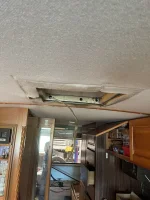
IMG_1263.webp
In this position, it is certainly easier to service the hvac units.

Whatever their noise is, it is behind us and the entire coach's body blocks their sound.

My Apple Watch is continuously recording the decibel level of the sound of the surrounding environment. The iPhone's built in "Health" app records "Environmental Sound Levels". and 7 Day exposure. Zooming in for the last week, the average sound level is 65 db but the daily range was between 31 dB and 103 dB. I also get noise notifications.

Drilling down in the apt:
OK:

Exposure to sounds below 80 dB should not affect your hearing.
Loud:
Repeated, long-term exposure to loud sounds can lead to permanent damage. Consider using hearing protection or move to a quieter area. Sound levels as low as 74dB can be considered loud if you're exposed continuously for over 5 days.

Exposure limits derived from World Heath Organization recommendations.

To get this data, you have to turn on "Environmental Sound Measurements".

My alarm Noise Threshold is at 90 dB., 30 min/day.

Many of you already have hearing issues like Claude & I do. A minority of people who need hearing aids get them.

Driving and living in a GMC Motorhome's loud environment exposes us to permanent hearing damage.

A lot of us have iPhones and some have Apple Watches. If we can put together a large enough sample group recording data, we might be able to determine which sound deadening alterations are the most effective and/or economical.

I will try to put together an Excell file for recording data.
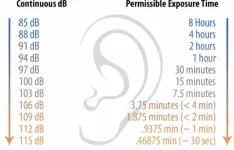
1758452770642.webp
1758453325348.webp
Are you exceeding these limits when you drive your coach?

Many of us can drive more than 8 hours in a day.
 
Last edited:
Before I bought my coach, I had the previous owner drive me around. The dash ac was not running, so the dual air fans were blowing. He turned on the generator so that he could turn on the salon air conditioner. Even when the coach was not moving and the engine was running, I could barely hear him. As soon as the coach started to move with the added air and air sound, all bets were off.

Later, after the purchase, when the coach was plugged in, I had to run both roof top HVAC units. The noise was deafening. I was wearing my hearing aids and I have a 30% hearing loss below 1200 cycles. I dialed the hearing back twice to the loud crowd setting and the sound was still far too much.

I been to think that I had made a huge mistake in buying the coach. My wife and I both drive plud=g in hybrids and we are used to a very quiet driving experience. We seldom hear the car's engines and the loudest sounds are from the tires. I research which tires are the quietest, have the best adhesion and stopping distance.

What could I do. I'm in Florida and the hvac units will always be running. I can't live like this!

I had to get rid of the roof top units!

View attachment 16571
In this position, it is certainly easier to service the hvac units.

Whatever their noise is, it is behind us and the entire coach's body blocks their sound.

My Apple Watch is continuously recording the decibel level of the sound of the surrounding environment. The iPhone's built in "Health" app records "Environmental Sound Levels". and 7 Day exposure. Zooming in for the last week, the average sound level is 65 db but the daily range was between 31 dB and 103 dB. I also get noise notifications.

Drilling down in the apt:
OK:

Exposure to sounds below 80 dB should not affect your hearing.
Loud:
Repeated, long-term exposure to loud sounds can lead to permanent damage. Consider using hearing protection or move to a quieter area. Sound levels as low as 74dB can be considered loud if you're exposed continuously for over 5 days.

Exposure limits derived from World Heath Organization recommendations.

To get this data, you have to turn on "Environmental Sound Measurements".

My alarm Noise Threshold is at 90 dB., 30 min/day.

Many of you already have hearing issues like Claude & I do. A minority of people who need hearing aids get them.

Driving and living in a GMC Motorhome's loud environment exposes us to permanent hearing damage.

A lot of us have iPhones and some have Apple Watches. If we can put together a large enough sample group recording data, we might be able to determine which sound deadening alterations are the most effective and/or economical.

I will try to put together an Excell file for recording data.
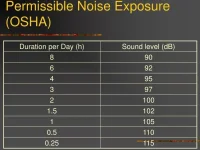
View attachment 16572
View attachment 16573
Are you exceeding these limits when you drive your coach?

Many of us can drive more than 8 hours in a day.
In my Architectural Practice, I have considerable experience in acoustical issues in various building types and there are unique issues in every one of them.
Some deal with comfort, some with privacy, some with security, some with musical fidelity and so many others.

Stadiums
Theaters
Legal Offices
Medical Offices & Treatment Rooms
Apartment Buildings & Apartments
Condos
Dormitories
Restaurants
Museums
Yachts
& others

I am sure that as you read the list above, you can think of the unique acoustical demands each building type requires.

I am addressing the GMC Motorhome as another new "building type". I plan to analyze the issues that are particular to our beloved coaches. I am sure each of you have their own "pet peeve". Please share it with me.

Sometimes it just as simple as adding a vibration adsorbing mount of a piece of equipment.
 
  • Like
Reactions: Marco K.
In my Architectural Practice, I have considerable experience in acoustical issues in various building types and there are unique issues in every one of them.
Some deal with comfort, some with privacy, some with security, some with musical fidelity and so many others.

Stadiums
Theaters
Legal Offices
Medical Offices & Treatment Rooms
Apartment Buildings & Apartments
Condos
Dormitories
Restaurants
Museums
Yachts
& others

I am sure that as you read the list above, you can think of the unique acoustical demands each building type requires.

I am addressing the GMC Motorhome as another new "building type". I plan to analyze the issues that are particular to our beloved coaches. I am sure each of you have their own "pet peeve". Please share it with me.

Sometimes it just as simple as adding a vibration adsorbing mount of a piece of equipment.
Sometimes it's as simple as noise canceling AirPods. Although my coach is quiet enough to have a conversation on the highway in a normal speaking voice, I use AirPods on long drives. I think it reduces fatigue.
 
  • Like
Reactions: Marco K.
Sometimes it's as simple as noise canceling AirPods. Although my coach is quiet enough to have a conversation on the highway in a normal speaking voice, I use AirPods on long drives. I think it reduces fatigue.
Since I have Starkey Edge AI hearing aids, I reduce the amplification to the crowd setting which reduces the surrounding sound. I then turn up the radio and everything is much better if I am driving alone. However, nobody wants to drive with me when I do that.
 
After working in an industry making and testing petrochemical equipment using up to 100,000 hp gas turbines driving centrifugal compressors to 13,000 lbs per sq in inside our test facility hitting 160 dB I find my GMC quiet while driving without hearing aids.
 
After working in an industry making and testing petrochemical equipment using up to 100,000 hp gas turbines driving centrifugal compressors to 13,000 lbs per sq in inside our test facility hitting 160 dB I find my GMC quiet while driving without hearing aids.
Everything is relative. Just ask Albert Einstein.
 
Hey Sailor man, are you saying that the mini-split AC's you installed are that loud, or the old roof top AC's were that loud? As I age, I do see hearing aids in my near future. The idea that running around in the GMC may actually be doing further harm to my hearing is concerning.
 
Hey Sailor man, are you saying that the mini-split AC's you installed are that loud, or the old roof top AC's were that loud? As I age, I do see hearing aids in my near future. The idea that running around in the GMC may actually be doing further harm to my hearing is concerning.
I don't yet know about the mini-splits. I am picking up the reconditioned 51.2vdc batteries this morning. The mini-splits should be operational next week and I will be able to judge and measure the sound level.
The roof top units were so loud, even on shore power, that I would rather sweat that turn them on, even in the hottest days.
 
Yes,double hearing protection.Plugs and muffs but even with that you were left weak after a while.I’ve been following your build and find it quite fascinating and proves I might be more normal some owners. Thanks for the updates and keep them coming.
 
Noise was so bad in my first coach that when I restored the second coach sound was a priority. I use dynamatcockpit floors all the way up to under the dash and behind each door panel all the way up to the window. I installed two inches of closed cell foam insulation over and around each wheel well and and enclose the generator compartment with two inches of closed cell foam installation. I chose carpet just for the sound attenuation. I used a commercial quarter inch closed cell foam padding with a commercial grade carpet throughout.

The results were remarkable. I cannot only hold a conversation but listen to nice music throughout the motorhome while driving.

It just takes a lot of insulation to keep the noisy stuff out and the peace in.
 
  • Like
Reactions: pvfjr and Kendra
Engine Intake noise is a big deal since it's right below you. I used the Specter aluminum intake and remote duramax air filter and the difference was HUGE. That stock filter is a noisy little beast
 
Engine Intake noise is a big deal since it's right below you. I used the Specter aluminum intake and remote duramax air filter and the difference was HUGE. That stock filter is a noisy little beast
I found that adding a removable layer of insulated carpeting running from underneath the dashboard, over the engine access hatch, and down one of the steps helped mitigate a lot of the low frequency noise coming from the engine compartment. It also covers any grease spots that refuse to be lifted after cleaning the carpeting below.

After watching a bunch of reviews and comparative tests featuring various brands of sound deadening mats (and being on a budget), I installed Amazon's surprisingly effective sound deadening sheets (it comes in three sizes) under the driver and passenger areas, on the underside of the engine hatch cover in areas where it would not interfere with engine hoses or other conduits, and on the firewall. I haven't measured the loudness yet, but it's certainly quieter than I remember it being beforehand.

P.S. I found that I had to use 3M's High-Strength 90 Adhesive Spray to aid in adhesion. The weight of the sound mats was such that some would slowly curl away from the underside of the driver/passenger areas in the wheel wells. After spraying with 3M 90 spray, and re-attaching the mats in question, the issue was resolved.

IMG_5927.webpAmazon Basics Car Sound Deadening Mat 10x16.webpAmazon Basics Car Sound Deadening Mat 18x32.webpAmazon Basics Car Sound Deadening Mat.webp
 
Last edited:
I found that adding a removable layer of insulated carpeting running from underneath the dashboard, over the engine access hatch, and down one of the steps helped mitigate a lot of the low frequency noise coming from the engine compartment. It also covers any grease spots that refuse to be lifted after cleaning the carpeting below.

After watching a bunch of reviews and comparative tests featuring various brands of sound deadening mats (and being on a budget), I installed Amazon's surprisingly effective sound deadening sheets (it comes in three sizes) under the driver and passenger areas, on the underside of the engine hatch cover in areas where it would not interfere with engine hoses or other conduits, and on the firewall. I haven't measured the loudness yet, but it's certainly quieter than I remember it being beforehand.

P.S. I found that I had to use 3M's High-Strength 90 Adhesive Spray to aid in adhesion. The weight of the sound mats was such that some would slowly curl away from the underside of the driver/passenger areas in the wheel wells. After spraying with 3M 90 spray, and re-attaching the mats in question, the issue was resolved.View attachment 16639View attachment 16640View attachment 16641View attachment 16642
I wonder how the density of this material (described as a butyl rubber compound) compares to mass-loaded vinyl (which I used successfully for my cockpit floor to reduce noise - search for my post about it).
 
  • Like
Reactions: Marco K.
I found that adding a removable layer of insulated carpeting running from underneath the dashboard, over the engine access hatch, and down one of the steps helped mitigate a lot of the low frequency noise coming from the engine compartment. It also covers any grease spots that refuse to be lifted after cleaning the carpeting below.

After watching a bunch of reviews and comparative tests featuring various brands of sound deadening mats (and being on a budget), I installed Amazon's surprisingly effective sound deadening sheets (it comes in three sizes) under the driver and passenger areas, on the underside of the engine hatch cover in areas where it would not interfere with engine hoses or other conduits, and on the firewall. I haven't measured the loudness yet, but it's certainly quieter than I remember it being beforehand.

P.S. I found that I had to use 3M's High-Strength 90 Adhesive Spray to aid in adhesion. The weight of the sound mats was such that some would slowly curl away from the underside of the driver/passenger areas in the wheel wells. After spraying with 3M 90 spray, and re-attaching the mats in question, the issue was resolved.

View attachment 16643View attachment 16639View attachment 16641View attachment 16642
I used the same stuff on the underside of my new engine hatch. I had the benefit of attaching to clean, fresh plywood though. I did it on a hot day, rolled it out very firmly, but was still concerned with edge peeling, so I ran some stainless T50 staples through the edges and a few in the middles. Hopefully that keeps it in place.

I've wanted to do the same job to the remaining subfloor in the cockpit, but I'm dreading the job. I should've done it when I had the engine and transmission out!
 
  • Like
Reactions: Marco K.
I used the same stuff on the underside of my new engine hatch. I had the benefit of attaching to clean, fresh plywood though. I did it on a hot day, rolled it out very firmly, but was still concerned with edge peeling, so I ran some stainless T50 staples through the edges and a few in the middles. Hopefully that keeps it in place.

I've wanted to do the same job to the remaining subfloor in the cockpit, but I'm dreading the job. I should've done it when I had the engine and transmission out!
It's not as nasty a job as you imagine, @pvfjr. I used a small camping chair to sit on while the front of the coach was jacked up with the wheels and liners off (I'd been working on some other stuff, as it happens). I also had the windows open and the sound system playing music to work to, so time flew by.
:)

I will try the T50 staple thing if the mats being to peel again over time.
 
It's not as nasty a job as you imagine, @pvfjr. I used a small camping chair to sit on while the front of the coach was jacked up with the wheels and liners off (I'd been working on some other stuff, as it happens). I also had the windows open and the sound system playing music to work to, so time flew by.
:)

I will try the T50 staple thing if the mats being to peel again over time.
We are all talking about loudness. Loudness is is am individual personal assessment of sound which depends on the quality of each person's hearing capability. The only definitive way to determine the amount of sound is to record the actual decibel levels
.
Acoustical design depends on how sound is transmitted. It does not help just to put in adsorbent material. One must analyze how sound is transmitted
.
Sound transmission through air requires just a small opening in any sound barrier. We often had issues through a partition when electrician would install back to back junction boxes providing an connecting air path through a sound deadening wall construction. Look for any place where there is a small hole providing a clear air passage.

The most difficult issue is the sound transmission through the vibration of materials. It is called conductive transmission.

When I had to design a Privacy Room in an office building for a doctor's consultation room or a critical sound privacy room in a lawyer's office, I would run the wall all the way up to the underside of the floor deck above.

Beads of sealant (2) are applied under the sill and head framing members and a bead of sealant is also applied under the bottom and top edges of gypsum board.

To reduce sound transmission, I would specify (1) sheet of 5/8" gypsum board on one side of the partition and (2) layers of 1/2" gypsum board on the other side. That reduces the sympathetic vibration Transmission through the materials.

In some special security walls, I would specify a layer of 1/8" to 1/4" thick lead sheet between the (2) 1/2" gypsum sheets.

If we consider the true acoustical nature of the GMC Motorhome, we can use the analogy that is really an empty 55 gallon drum fastened to and aluminum ladder. At the contact pints there is a shock absorbent material to isolate the two structural elements.

The body of the coach is a welded aluminum frame completely that completed encircles the interior space. So the frame is a complete sign body frame and the vibration in any single location is transmitted trough the frame to every member. Therefore any vibration, such as that generated by the roof top hvac unit is vibrating the entire body.

The flow of the body is plywood, from the floor to the belt line is fiberglass and above the belt line aluminum sheet.

This is a drum or a violin without an opening to left the sound out.

We are trapped in a sealed sound chamber that is a resonating air chamber. It is like being in the lungs of an opera singer.

By removing the removing the rooftop hvac units from my coach and supporting directly on the chassis, the major source of the sound chamber's vibration has been eliminated.

The roughly 24 places there the body was connected to the steel chassis originally had 1" compressible pads to isolated the body from the chassis acoustically. In the nearly 50 years since the assembly, the pads have been so crushed that they can no longer function as intended.

Thanks to Jim Bounds, I have replaced these pads with hockey pucks to restore the lost function to isolate the conduction of vibratory sound.

I am considering installing 1/4" thick lead sheets under the carpeting that isolates the engine compartment.

Wishing the body sound chamber, significant sound adsorption material should be considered. Think about what the upholstery is. Cloth is better than leather. Is i there carpeting the floor and what ids the underlayment? Carpeted overhead is a good choice. Hard surfaces are sound reflectors.

Snc this is getting rather long, I think that I will address the chassis and road sound issues in another subsequent posts.IMG_2032.webp
As you can see, the overhead I'm my coach is carpeting.
 
Last edited:
We are all talking about loudness. Loudness is is am individual personal assessment of sound which depends on the quality of each person's hearing capability. The only definitive way to determine the amount of sound is to record the actual decibel levels
.
Acoustical design depends on how sound is transmitted. It does not help just to put in adsorbent material. One must analyze how sound is transmitted
.
Sound transmission through air requires just a small opening in any sound barrier. We often had issues through a partition when electrician would install back to back junction boxes providing an connecting air path through a sound deadening wall construction. Look for any place where there is a small hole providing a clear air passage.

The most difficult issue is the sound transmission through the vibration of materials. It is called conductive transmission.

When I had to design a Privacy Room in an office building for a doctor's consultation room or a critical sound privacy room in a lawyer's office, I would run the wall all the way up to the underside of the floor deck above.

Beads of sealant (2) are applied under the sill and head framing members and a bead of sealant is also applied under the bottom and top edges of gypsum board.

To reduce sound transmission, I would specify (1) sheet of 5/8" gypsum board on one side of the partition and (2) layers of 1/2" gypsum board on the other side. That reduces the sympathetic vibration Transmission through the materials.

In some special security walls, I would specify a layer of 1/8" to 1/4" thick lead sheet between the (2) 1/2" gypsum sheets.

If we consider the true acoustical nature of the GMC Motorhome, we can use the analogy that is really an empty 55 gallon drum fastened to and aluminum ladder. At the contact pints there is a shock absorbent material to isolate the two structural elements.

The body of the coach is a welded aluminum frame completely that completed encircles the interior space. So the frame is a complete sign body frame and the vibration in any single location is transmitted trough the frame to every member. Therefore any vibration, such as that generated by the roof top hvac unit is vibrating the entire body.

The flow of the body is plywood, from the floor to the belt line is fiberglass and above the belt line aluminum sheet.

This is a drum or a violin without an opening to left the sound out.

We are trapped in a sealed sound chamber that is a resonating air chamber. It is like being in the lungs of an opera singer.

By removing the removing the rooftop hvac units from my coach and supporting directly on the chassis, the major source of the sound chamber's vibration has been eliminated.

The roughly 24 places there the body was connected to the steel chassis originally had 1" compressible pads to isolated the body from the chassis acoustically. In the nearly 50 years since the assembly, the pads have been so crushed that they can no longer function as intended.

Thanks to Jim Bounds, I have replaced these pads with hockey pucks to restore the lost function to isolate the conduction of vibratory sound.

I am considering installing 1/4" thick lead sheets under the carpeting that isolates the engine compartment.

Wishing the body sound chamber, significant sound adsorption material should be considered. Think about what the upholstery is. Cloth is better than leather. Is i there carpeting the floor and what ids the underlayment? Carpeted overhead is a good choice. Hard surfaces are sound reflectors.

Snc this is getting rather long, I think that I will address the chassis and road sound issues in another subsequent posts.View attachment 16654
As you can see, the overhead I'm my coach is carpeting.
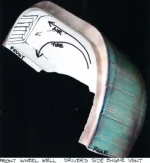
1758921556486.webp
In the photo above the blue surface is the sounddeadenig and absorbent material.
Think that it is a very good idea to add the sound adsorbent material to the rear surface of the wheel well. It can be a combination of thin lead sheet and a sound absorbent material.
Most car wheel well installations have the adsorbent material on the wheel side mostly because of space limitations like the 1966 Olds Tornado which was 78.5" wide.
We have the same motor and transmission but or coach is 96" wide. That means that we should have an additional 8.75" of clearance on each side for sound isolation techniques.
Most of the comments about the Audi approach have the sound insulation on the tire side which cause nasty waste and gunk accumulation and cleaning issues. Put the sound absorbing material on the engine side is certainly more effective and simpler regarding fas less maintenance. The added surface facing the engine will also reduce the engine sound decibels.